
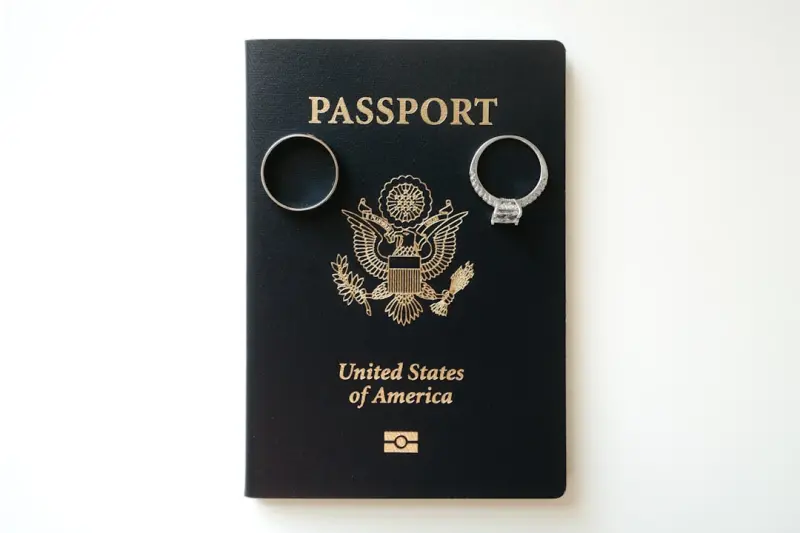
When you sign a marriage license, you’re not just swapping vows—you’re stepping into a web of statutes, treaties, and cultural norms that can feel like a legal labyrinth. As someone who has spent the better part of a decade untangling cross‑border family disputes, I’ve learned that the biggest surprises often come from the places you never expected to look. This post pulls back the curtain on the often‑overlooked challenges of international marriages, from the nitty‑gritty of document authentication to the geopolitical twists that can turn a honeymoon into a courtroom drama.
The Hidden Costs of “I Do” Across Borders
Most couples assume that once the officiant says “I do,” the paperwork is done. In reality, an international marriage can trigger a cascade of fees: translation services, apostilles, consular fees, and even double taxation in some jurisdictions. Understanding these costs up front can save you months of back‑and‑forth with bureaucrats. For example, a U.S. citizen marrying a French partner must navigate both the U.S. Department of State’s authentication process and the French civil status registry. Miss one step, and you could face delayed residency permits or, worse, an invalid marriage under local law.
Document Authentication: Apostilles vs. Consular Legalization
Two words that send chills down any legal planner’s spine: apostille and consular legalization. The apostille is a simple certificate attached to a public document, recognized by the 1961 Hague Convention. If either spouse’s country isn’t a signatory, you’ll need consular legalization—a multi‑step process involving the foreign ministry, the embassy, and often a local notary. The difference is more than semantics; it determines whether your marriage will be recognized for tax filing, inheritance, and even child custody.
Residency and the “Spouse Visa” Quagmire
Securing a spouse visa can be a test of patience and paperwork. Many countries require proof of a “genuine relationship,” which translates to a mountain of joint bank statements, lease agreements, and photos. Some nations, like the United Arab Emirates, also demand a minimum income threshold for the sponsoring partner. Failing to meet these criteria can result in visa denial, forcing couples to live apart or risk illegal residency—a scenario that can jeopardize future naturalization applications.
Property Rights and Community vs. Separate Property Regimes
When you own property in two different legal systems, the rules governing ownership can clash dramatically. In the United States, most states operate under a “separate property” regime, meaning assets acquired before marriage remain individual. Conversely, many civil law countries—Germany, Spain, Brazil—adhere to “community property” principles, automatically sharing marital assets acquired during the union. A misstep here can affect everything from mortgage eligibility to inheritance rights. Couples often mitigate risk by drafting a prenuptial agreement that explicitly outlines property division under both legal frameworks.
Children’s Citizenship: A Puzzle of Nationality Laws
Children born to international couples can inherit multiple citizenships, but that’s not always a gift. Some nations, like Japan, prohibit dual citizenship beyond the age of 22, forcing a choice that can impact future education, travel, and military obligations. Moreover, certain countries require the child’s nationality to match that of the parent who holds the primary residence. Ignoring these nuances can lead to statelessness—a legal limbo where a child lacks basic rights such as a passport or access to public services.
Divorce Across Borders: Why “One Law to Rule Them All” Doesn’t Exist
If the marriage survives the honeymoon phase, the next legal hurdle could be divorce. International divorces are notoriously complex because each jurisdiction has its own grounds for dissolution, waiting periods, and asset division rules. For example, a couple married in Mexico but residing in Canada may find that Canadian courts will not enforce a Mexican divorce decree unless it meets specific criteria, such as proper service and equitable distribution. This can trap spouses in a legal limbo, paying alimony or child support in two countries simultaneously.
Enter Virtual Mediation: A New Frontier for Cross‑Border Couples
Traditional courtroom battles are costly, time‑consuming, and emotionally draining. Virtual mediation is emerging as a pragmatic solution, allowing couples to negotiate settlements across time zones via secure video platforms. Mediators trained in both jurisdictions can help parties navigate conflicting laws, draft joint custody plans that respect each country’s standards, and even draft cross‑border property settlements that stand up in both courts. While not a panacea, virtual mediation offers a less adversarial path that preserves relationships—especially when children are involved.
AI and the Rise of Algorithmic Sentencing in Family Law
Artificial intelligence isn’t just for criminal courts. Algorithmic sentencing tools are being piloted in family courts to assess risk in child custody cases, calculate equitable asset distribution, and predict the likelihood of future disputes. While these tools promise efficiency, they raise red flags about bias, transparency, and the erosion of judicial discretion. International couples must stay vigilant, ensuring that any AI‑driven recommendation aligns with the cultural and legal expectations of both parties.
Strategic Use of Prenuptial Agreements in a Global Context
Prenuptial agreements are no longer the domain of the ultra‑wealthy; they’re becoming essential for anyone tying the knot across borders. A well‑crafted prenup can specify which jurisdiction’s law governs property division, designate a neutral venue for dispute resolution, and even outline how future inheritances will be treated. However, the enforceability of prenups varies dramatically. Some countries, like Italy, require a notary to witness the agreement, while others, such as India, may deem certain clauses void if they conflict with public policy. Tailoring a prenup to accommodate both legal systems can protect assets and reduce future litigation.
The Role of Cultural Competence in International Marriage Law
Legal expertise alone isn’t enough. Understanding cultural nuances—whether it’s the significance of dowry in South Asian traditions or the concept of “marriage as a family contract” in Middle Eastern societies—can be the difference between a smooth process and a cultural faux pas. Attorneys who blend legal acumen with cultural empathy can anticipate potential friction points, such as differing expectations around gender roles, and advise clients accordingly.
Practical Checklist for Couples Embarking on an International Marriage
- Research Both Legal Systems: Identify marriage, residency, and tax requirements in both countries.
- Secure Document Authentication Early: Determine whether an apostille or consular legalization is needed.
- Draft a Cross‑Border Prenup: Engage lawyers familiar with both jurisdictions.
- Plan for Children’s Citizenship: Assess dual‑nationality implications and future obligations.
- Consider Virtual Mediation: Establish a neutral platform for potential disputes.
- Stay Informed About AI Tools: Evaluate how algorithmic assessments might affect your case.
- Budget for Hidden Costs: Factor in translation, travel, and legal fees.
Looking Ahead: The Future of International Marriage Law
Global mobility shows no signs of slowing down, and with it, the demand for clear, harmonized marriage regulations will only increase. International bodies like the Hague Conference on Private International Law are working on conventions to streamline recognition of foreign marriages, but progress is incremental. In the meantime, couples and their counsel must navigate a patchwork of rules with foresight, flexibility, and a willingness to adopt technology—like virtual mediation—without losing sight of the human element that makes marriage, at its core, a deeply personal commitment.

I am Madden Persons, a content writer and digital influencer dedicated to crafting impactful stories and building authentic online connections. With a strategic approach to content creation, I develop engaging articles, digital campaigns, and social media narratives that help brands elevate their online presence and connect meaningfully with their target audiences.
Passionate about modern digital trends and audience engagement, I specialize in translating complex ideas into compelling content that sparks conversation, drives results, and strengthens brand identity.
Related Posts

Subscription Services & Marriage Law: Who Owns the Shared Stream?
The blog delves into how modern subscription services, crypto wallets, and digital assets are reshap... Read More

The Evolution of Marriage Law: Navigating Trends, Challenges, and Insights
The institution of marriage has undergone significant transformations in recent years. Learn about t... Read More

Digital Assets and the Marital Estate: A Modern Marriage Law Guide
Digital assets—from cryptocurrencies to NFTs and virtual land—are redefining marital property la... Read More
Top Posts

Reclaiming Your Digital Life After Divorce
Discover essential strategies to purge shared accounts, safeguard smart devices, and use digital evidence wisely, helping you move forward confidently after div...Read More

Predictive Policing: Constitutional Risks and Defense Strategies
A deep dive into the constitutional pitfalls of predictive policing, offering practical defense strategies and policy insights to safeguard civil liberties agai...Read More

The Future of Search Engine Optimization: Trends to Watch
The future of SEO is rapidly evolving. Stay ahead of the curve with our expert analysis on the latest trends and insights to improve your online visibility and ...Read More

Why Marriage Law is Evolving Faster Than Your Wedding Playlist
Marriage law isn’t static; tech, crypto, and modern families demand fresh legal strategies. Discover key trends and actionable steps to protect your partnersh...Read More
0 Comments
Post Comment
You will need to Login or Register to comment on this post!