
Beyond the Crash: How Drones and Delivery Robots Are Redefining Personal Injury Law
When I first stepped onto a construction site as a junior paralegal, the most common injury I saw was a bruised ankle from a stray piece of equipment. Fast‑forward a decade, and the same site might be buzzing with autonomous drones delivering tools overhead while a sleek delivery robot glides along the perimeter. The injuries that follow are no longer the predictable sprains and strains of yesterday—they’re new, complex, and testing the very foundations of personal injury law.
In this piece, I’ll walk you through three emerging fronts where technology is reshaping liability, causation, and compensation: autonomous aerial drones, ground‑based delivery robots, and the data‑driven health ecosystem that records every impact in real time. By the end, you’ll see why traditional doctrines need a surgical update and what plaintiffs, defendants, and insurers should be doing right now to stay ahead of the curve.
The Sky Isn’t the Limit Anymore—Drones as Accident Catalysts
Drones have moved from hobbyist gadgets to commercial workhorses in under five years. They inspect bridges, map disaster zones, and even transport medical supplies across congested cities. But with altitude comes risk. A miscalibrated GPS, a software glitch, or a sudden gust can turn a harmless survey into a headline‑making crash.
Why the legal landscape is stuck: The strict liability framework that governs traditional aviation incidents assumes a human pilot in the cockpit. Courts, however, are still wrestling with whether a fully autonomous system can be treated as a “pilot” for purposes of negligence analysis. In most jurisdictions, the answer is “not yet,” leaving plaintiffs to chase the manufacturer, the operator, or the software developer—often all at once.
Consider the case of Decoding the Tax Revolution Behind AI‑Powered Business Models. While that article focuses on tax implications, it underscores a broader truth: AI‑driven platforms are blurring the lines of responsibility. The same logic applies when an AI‑controlled drone crashes into a pedestrian. Who owns the algorithm? Who maintains the hardware? Who can be sued?
Key takeaways for litigators:
- Identify the “operator”: Many drone deployments contract third‑party service providers who, in turn, outsource the flight control software. Tracing the chain of command is essential.
- Document software updates: A firmware patch deployed the day before an accident can be a game‑changer in proving negligence.
- Leverage telematics data: Modern drones log flight paths, altitude, and sensor readouts with millisecond precision. That data is the new “black box” for personal injury claims.
Ground‑Level Risks: Delivery Robots on City Streets
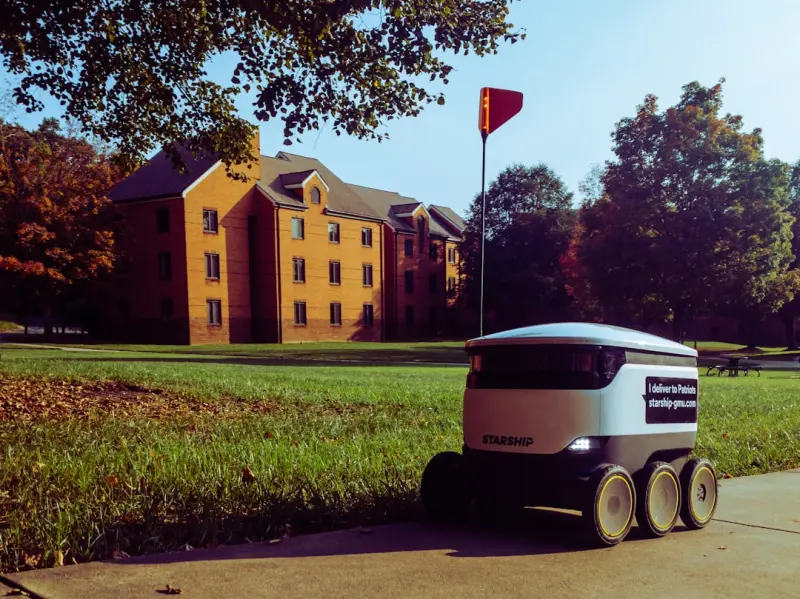
Imagine you’re waiting for a pizza, and the autonomous delivery robot that brings it to your doorstep bumps into your child’s stroller. The robot’s wheels are designed to stop at the first sign of an obstacle, yet a sudden jolt still occurs. Who pays?
Traditional premises‑liability rules hold property owners responsible for hazards on their land. But when the hazard is a robot owned by a third‑party logistics firm, the analysis shifts. Courts are beginning to treat these robots as “mobile equipment,” which triggers occupiers’ liability—a doctrine originally designed for forklifts and maintenance carts.
What makes this scenario uniquely challenging is the blended ownership model. The robot’s chassis might be manufactured by Company A, its navigation software licensed from Company B, and its operating fleet managed by Company C. The victim’s attorney must untangle this web to identify the proper defendant(s).
One practical strategy emerging from early case law is the “joint and several liability” approach. If multiple parties contributed to the malfunction—say, a software bug and a failure to perform routine maintenance—courts may hold each party liable for the full amount of damages, leaving them to sort out contribution among themselves later. This is a powerful tool for plaintiffs, but it also signals to manufacturers the need for tighter quality‑control pipelines.
Data‑Driven Injuries: The Wearable Health Revolution
Wearable devices have turned our bodies into live data streams. A fall, a collision, or even a subtle whiplash now triggers an instant alert to a cloud‑based health platform. On the surface, that sounds like a win for victims—immediate documentation, real‑time medical triage, and a paper trail for insurers.
Yet the legal community is still catching up. The recent Who Owns Your Health Data? discussion highlighted a fundamental tension: Who owns the data generated at the moment of injury? The individual, the device manufacturer, the health‑app provider, or the insurer who pays the claim?
When an injury occurs, the data can be a double‑edged sword. On one hand, it provides undeniable proof of impact—accelerometer spikes, heart‑rate anomalies, and GPS coordinates. On the other, if the data is stored on a proprietary server, plaintiffs may need a court order to access it, raising privacy concerns and potential delays.
Strategic advice for claimants:
- Secure consent early: Encourage clients to include data‑release clauses in their wearable’s terms of service, or to proactively grant access to their legal counsel.
- Preserve metadata: The timestamp, device ID, and firmware version can all be critical in establishing authenticity and pinpointing product defects.
- Consider third‑party validation: Independent forensic analysts can corroborate the raw data, shielding it from claims of tampering.
Re‑Evaluating Causation in an Automated World
Causation—proving that a defendant’s conduct caused the injury—has always been the linchpin of personal injury law. In the era of autonomous technology, causation becomes a layered puzzle:
- Design defect: Was the drone’s collision‑avoidance algorithm flawed?
- Manufacturing defect: Did a faulty sensor on a delivery robot miss a child’s foot?
- Maintenance lapse: Was the robot’s battery overdue for replacement, leading to erratic behavior?
- Operational error: Did a remote operator override safety protocols?
Each layer may involve a different legal entity. The “but‑for” test—asking whether the injury would have occurred “but for” the defendant’s conduct—now requires a multi‑disciplinary analysis blending engineering, software engineering, and traditional tort principles.
The Role of Insurance: From Traditional Policies to Cyber‑Physical Coverage
Insurance carriers are scrambling to adapt. Classic general liability policies often exclude “electronic” or “cyber” incidents, leaving a gap for accidents caused by software glitches. In response, insurers are rolling out “cyber‑physical” policies that combine traditional bodily injury coverage with cyber risk protection.
Key policy language to watch for includes:
- “Product liability” endorsements that explicitly cover autonomous hardware.
- “Data breach” clauses that address loss or manipulation of sensor logs.
- “Exclusion for acts of God” re‑drafted to differentiate natural forces from algorithmic failures.
For plaintiffs, understanding the insurer’s policy can unlock additional avenues for recovery, especially when the defendant’s primary liability is shielded by corporate structures or limited‑liability entities.
Practical Steps for Law Firms Today
To stay competitive in this rapidly evolving arena, firms should consider the following operational upgrades:
- Technical training: Partner with engineers or hire consultants who can decode sensor logs, firmware updates, and AI decision trees.
- Digital evidence preservation: Implement a standardized protocol for seizing cloud‑based data, including chain‑of‑custody documentation.
- Cross‑jurisdictional research: Some states have already enacted statutes defining “autonomous vehicle” liability; others rely on case law. A comparative matrix can reveal favorable forums.
- Client education: Publish plain‑language guides on how wearable data can protect their claims, and advise on privacy settings that won’t jeopardize evidence.
Looking Ahead: The Legislative Frontier
Legislatures are beginning to act. A handful of states have introduced “Autonomous Systems Liability” bills that codify strict liability for certain categories of drones and robots used in public spaces. While these proposals are still in draft form, they signal a shift from case‑by‑case adjudication to a more predictable statutory regime.
What does that mean for the courtroom? Potentially fewer “who’s‑responsible” battles and more focus on damage quantification—medical expenses, lost wages, and pain and suffering. However, until those statutes become law, attorneys must continue to wield the traditional tools of discovery, expert testimony, and meticulous fact‑finding.
Conclusion: Embrace the Complexity
The convergence of drones, delivery robots, and wearable health tech has turned personal injury law into a multidisciplinary battlefield. The old playbook—relying on eyewitness testimony, simple accident reconstruction, and clear‑cut negligence—no longer suffices. Instead, successful practitioners will be those who can bridge the gap between law and technology, translating gigabytes of sensor data into compelling narratives for judges and juries.
If you’re reading this as a fellow attorney, consider how your firm can integrate technical expertise early in the case lifecycle. If you’re a potential client, know that the modern personal injury claim is more data‑rich—and potentially more powerful—than ever before. The future may be autonomous, but the pursuit of justice remains very much a human endeavor.

Liam James Professor with a PHD. & content creator with a passion for sparking curiosity and sharing knowledge. Driven by the joy of learning and storytelling, I bring ideas to life in every project. Always exploring, always teaching.
Related Posts
Personal Injury in the Gig Economy: Who’s Liable When the Platform Fails?
A deep dive into gig‑economy personal injury law, covering classification, insurance gaps, data ri... Read More

When the Home Becomes the Hazard: Personal Injury Law in the Remote Work Era
Remote work has turned living rooms into workplaces, creating new injury risks. This article examine... Read More

When Nature Strikes: Protecting Your Rights After a Disaster Injury
Discover essential steps to protect your rights and claim compensation after suffering a personal in... Read More
Top Posts
Navigating the Legal Frontier of Metaverse Real Estate
The metaverse is booming, but virtual land transactions bring complex legal issues. This article breaks down ownership, zoning, taxes, IP, compliance, and dispu...Read More

AI-Generated Creations: Navigating Copyright in the Age of Machine Creativity
AI‑generated art is reshaping copyright law. Learn practical strategies to claim ownership, protect your work, and navigate the evolving legal landscape....Read More

Navigating Modern Family Law: Tech, Emotion & Strategy
A deep dive into the evolving world of family law, exploring tech‑driven solutions, emotional intelligence, and real‑world strategies for modern parents fac...Read More

Employment Law in 2024: Kris M. Chen’s Insightful Take on the Shifting Workplace
Kris M. Chen breaks down the biggest 2024 employment law shifts—from hybrid work and privacy to AI hiring and gig‑economy classification—offering practica...Read More
0 Comments
Post Comment
You will need to Login or Register to comment on this post!