
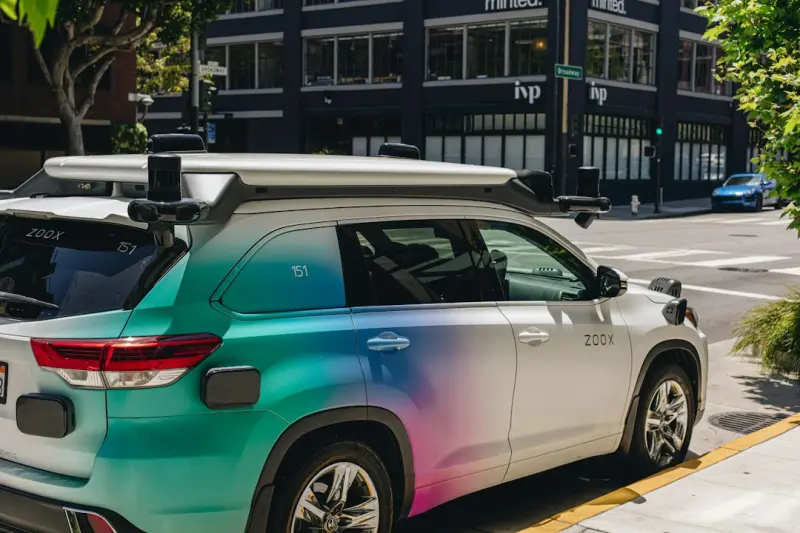
Driving the Future: Unpacking the Legal Labyrinth of Autonomous and Electric Mobility
When I first stepped onto a test track in a self‑driving sedan, the quiet hum of electric motors was accompanied by a chorus of legal questions echoing in my mind. As a lawyer who’s spent years navigating the twists and turns of automotive regulation, I’ve learned that the next generation of vehicles is rewriting the rulebook—literally. From algorithms that decide who brakes first to batteries that are leased rather than owned, the industry is confronting a cascade of novel liabilities, privacy concerns, and consumer‑protection challenges. In this deep dive, I’ll unpack three emerging fronts that are reshaping automotive law today: autonomous vehicle liability, data privacy in connected cars, and the burgeoning model of electric‑vehicle (EV) battery leasing.
1. Autonomous Vehicle Liability – From Driver Fault to Manufacturer Fault
Traditional car accidents are governed by well‑established doctrines: negligence, comparative fault, and the driver’s duty of care. But when a vehicle can steer, accelerate, and even park without human input, the fault line shifts. The first question that surfaces is who bears responsibility when the “brain” of the car makes a mistake?
- Product‑liability theory. In many jurisdictions, the default assumption is that the manufacturer is a strict product‑liability defendant. If an autonomous system’s software or sensor suite fails to detect an obstacle, the vehicle’s maker can be held liable, even if the human occupant had the option to take control.
- Negligence of the operator. Some states retain a “driver‑in‑the‑loop” requirement, meaning the occupant must remain ready to intervene. Failure to do so could constitute negligence on the part of the driver, potentially sharing liability with the manufacturer.
- Third‑party contributors. Companies that provide mapping data, AI training sets, or over‑the‑air (OTA) updates also enter the liability equation. If a map error leads to a collision, the data provider might face claims.
Insurance carriers are scrambling to adapt. Traditional auto policies, which assess risk based on driver history, are ill‑suited for a scenario where a machine is the primary decision‑maker. Some insurers are launching “autonomous risk” endorsements that separate hardware, software, and OTA‑update coverage, but the market remains in flux.
For manufacturers, the strategic imperative is twofold: document every software version and OTA update, and embed robust logging mechanisms. These logs become the evidentiary backbone in any post‑accident litigation, helping to demonstrate whether the autonomous system behaved as designed or whether a software defect existed.
2. Data Privacy and the Connected Car – The New Frontier of Consumer Rights
Every mile you travel in a modern vehicle generates data—speed, location, driver behavior, even biometric signals from seat‑embedded sensors. While this data fuels services like predictive maintenance and personalized infotainment, it also creates a sprawling privacy landscape that regulators are only beginning to map.
In the United States, the California Consumer Privacy Act (CCPA) and the Virginia Consumer Data Protection Act (VCDPA) have extended consumer‑privacy rights to telematics data. In Europe, the General Data Protection Regulation (GDPR) imposes strict consent and data‑minimization obligations. Manufacturers must therefore answer three critical questions:
- What data are we collecting? A clear inventory is essential. Distinguish between data needed for safety (e.g., crash‑avoidance sensor feeds) and data harvested for marketing or third‑party services.
- How are we obtaining consent? Opt‑in mechanisms must be granular. A driver should be able to consent separately to location tracking, usage‑based insurance, and infotainment personalization.
- What safeguards are in place? Encryption, secure OTA pipelines, and regular penetration testing are not optional—they are legal imperatives. A breach that exposes driver locations could trigger class‑action suits under both state and federal privacy statutes.
Because connected cars are essentially computers on wheels, the cybersecurity liability discussion that dominated the industry last year now dovetails directly into privacy compliance. A failure to protect data can be construed as negligence, and courts are increasingly willing to award damages for privacy infringements that arise from inadequate security measures.
Practical steps for compliance include:
- Adopting a “privacy by design” framework for all new software releases.
- Publishing transparent privacy notices that explain data collection in plain language.
- Providing easy‑to‑use dashboards where owners can view, download, or delete their data.
3. The Rise of EV Battery Leasing – Who Owns the Power?
Battery costs remain the single biggest expense in an electric vehicle. To lower upfront prices, manufacturers are increasingly offering battery‑as‑a‑service (BaaS) models, where the car is sold but the battery is leased. At first glance, this looks like a win‑win: consumers get a lower sticker price, and manufacturers retain control over the battery’s lifecycle.
However, this model introduces a complex web of consumer‑protection, warranty, and environmental‑law questions:
- Disclosure requirements. The lease agreement must clearly delineate what constitutes a “battery failure” versus normal degradation. Vague language can trigger claims of deceptive practices under the Federal Trade Commission’s (FTC) rules on advertising.
- Warranty parity. If the vehicle’s powertrain is covered under a standard warranty, the battery lease must offer comparable remedies—repair, replacement, or prorated refunds—otherwise owners may allege unequal treatment.
- End‑of‑life obligations. Battery leasing creates a custodial responsibility for the lessor to manage recycling or second‑life applications. Failure to comply with the Resource Conservation and Recovery Act (RCRA) or equivalent state statutes can result in significant penalties.
From a legal standpoint, the lease is a hybrid contract that blends elements of a service agreement with traditional sale warranties. Courts are beginning to treat battery lease disputes as “consumer credit” cases, meaning the Truth in Lending Act (TILA) may apply if financing is bundled with the lease.
Manufacturers should therefore:
- Draft clear, stand‑alone battery lease documents that are presented before the vehicle purchase.
- Include detailed degradation schedules and performance benchmarks.
- Establish a transparent process for battery return, inspection, and recycling, with costs disclosed up front.
4. Regulatory Compliance for Pilot Programs – Testing on Public Roads
Before autonomous technology reaches full deployment, companies must run pilot programs on public streets. These tests trigger a mosaic of regulations:
- State autonomous‑vehicle statutes. Over 30 states have enacted specific statutes outlining permitting, reporting, and insurance requirements for testing.
- Federal Motor Vehicle Safety Standards (FMVSS). Even experimental vehicles must meet baseline safety standards, unless a waiver is obtained.
- Local ordinances. Cities may impose speed limits, time‑of‑day restrictions, or require a human safety driver on board.
Non‑compliance can lead to injunctions, hefty fines, and reputational damage. Companies typically appoint a “regulatory liaison” whose sole job is to maintain a live matrix of all applicable rules and to file the required notices (often called “NPRM filings”) well before the first test mile.
5. Dealerships in the Age of Mobility‑as‑a‑Service (MaaS)
Traditional franchised dealerships are feeling the pressure of new mobility models—ride‑hailing platforms, car‑sharing fleets, and subscription services (see our earlier coverage on car subscription legal pitfalls). While the subscription space has been explored, the broader Mobility‑as‑a‑Service ecosystem raises fresh franchise‑law questions:
- Territorial rights. Manufacturers may grant exclusive rights to a dealer for a particular “mobility hub,” but overlapping services (e.g., a dealer‑managed car‑share) can create disputes under the Federal Trade Commission’s Franchise Rule.
- Advertising compliance. Promoting a vehicle as part of a subscription or ride‑share fleet must be accurate. Misleading claims about availability, pricing, or service levels can trigger state consumer‑protection actions.
- Data sharing obligations. If a dealership collects usage data from a fleet it manages, it may be subject to the same privacy duties outlined earlier for manufacturers.
Dealerships that adapt by becoming “mobility hubs”—offering charging stations, fleet maintenance, and subscription enrollment—must renegotiate franchise agreements to reflect these new revenue streams and ensure compliance with both state franchise statutes and emerging federal guidance.
6. Practical Checklist for Companies Steering Through the New Legal Terrain
Whether you’re a Tier‑1 supplier, an OEM, or a mobility‑service startup, the following checklist can help you stay on the right side of the law:
- Map your data flows. Document every sensor, data point, and third‑party recipient. Conduct a privacy impact assessment (PIA) before launching new features.
- Update insurance programs. Work with carriers to obtain autonomous‑risk endorsements, and consider cyber‑liability policies that cover data breaches.
- Standardize software logs. Implement immutable, time‑stamped logs that capture decision‑making processes for autonomous functions.
- Draft clear consumer contracts. Separate vehicle purchase agreements from battery lease, subscription, or data‑usage contracts. Use plain language and provide side‑by‑side comparisons of costs.
- Engage regulators early. Submit test‑track permits, safety‑case documentation, and compliance reports well before field trials commence.
- Train your staff. Legal, compliance, and engineering teams should hold joint workshops on emerging statutes, case law, and industry standards.
The legal landscape of automotive innovation is evolving at breakneck speed, but the core principle remains unchanged: clarity, transparency, and proactive risk management are the keys to keeping the wheels turning without a courtroom stop.
Conclusion – Steering Toward a Safer, More Transparent Future
As the lines between vehicle, software, and service blur, the law must catch up. Autonomous liability, data privacy, and battery‑leasing models each demand fresh legal frameworks that balance innovation with consumer protection. By taking a systematic, forward‑looking approach—embedding rigorous documentation, robust privacy safeguards, and crystal‑clear contracts—companies can not only avoid costly litigation but also build trust with the drivers who will one day hand over the wheel to an algorithm.
We’re standing at a crossroads where technology can redefine mobility, and the legal profession has an unprecedented opportunity to shape that future responsibly. Buckle up; the ride has only just begun.

Allison Jarvis is a dynamic digital media and marketing professional dedicated to driving brand growth through impactful storytelling. With a sharp eye for market trends and a passion for data-driven strategies, she specializes in building cohesive online identities that resonate with modern audiences. Allison blends creative content production with robust analytics to maximize engagement and deliver measurable ROI. She continuously explores emerging digital tools to keep her projects ahead of the curve.
Related Posts

Who’s at the Wheel When the Car Drives Itself? Liability in the Autonomous Era
A deep dive into who bears responsibility when autonomous cars crash, covering manufacturers, softwa... Read More

The Intersection of Automotive Law and Family Law: Understanding Liability in Vehicle Accidents
The intersection of automotive law and family law is complex. Understand liability in vehicle accide... Read More

The Legal Roadmap for Car Subscription Services: Pitfalls and Best Practices
A deep dive into the emerging legal landscape of car subscription services, covering contract nuance... Read More
Top Posts

Ransomware’s Legal Revolution: How Criminal Law Is Catching Up
Ransomware has moved from a niche threat to a global crisis, forcing criminal law to evolve. This article delves into the challenges of evidence, jurisdiction, ...Read More

When Bytes Meet Bedside: Navigating Medical Law in the Digital Age
Telemedicine's boom has turned hospitals into data hubs, sparking fresh legal battles. Dive into the evolving world of medical law, where digital consent, cyber...Read More

The Power of Semantic Topic Clusters: A Data‑First Blueprint for SEO Success
Learn a data‑first approach to SEO by creating semantic topic clusters that combine pillar pages, structured data, and continuous testing, driving authority a...Read More

Divorce in the Digital Age: SaaS, Data, and Security
A practical guide for divorcing partners on handling shared software subscriptions, safeguarding personal data, and mitigating cybersecurity risks in the digita...Read More
0 Comments
Post Comment
You will need to Login or Register to comment on this post!