
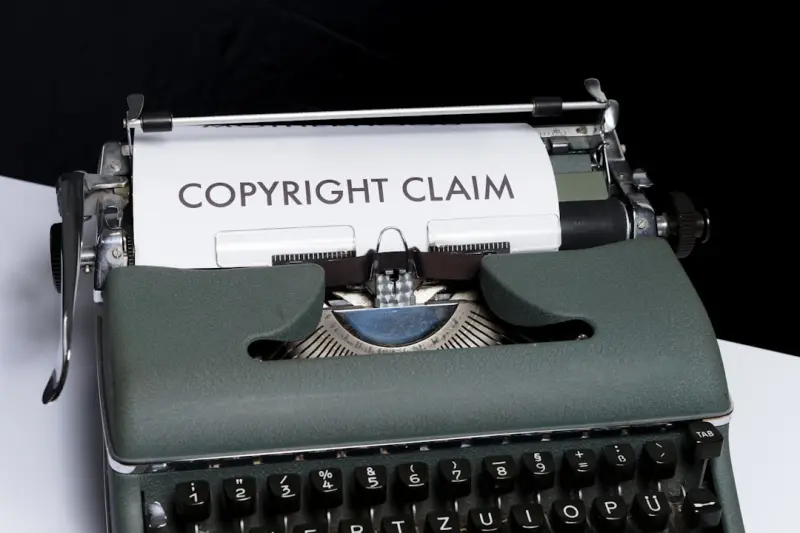
AI‑Generated Works and the Copyright Conundrum
When I first started practicing intellectual property law, the idea of a machine “creating” something worthy of protection seemed like sci‑fi fodder. Fast forward a decade, and generative AI tools are churning out music, code, artwork, and even legal briefs at a speed that would make any seasoned attorney dizzy. The question that now occupies boardrooms, courtrooms, and coffee‑shop debates is simple on its face but devilishly complex in practice: who owns the rights to something an algorithm produced?
The Traditional Framework Meets a Digital Rebel
Copyright law, at its core, protects “original works of authorship” fixed in a tangible medium. Originality has always been tethered to human creativity—an author’s skill, judgment, and personal touch. The United States Copyright Office’s policy statements explicitly require a “human author” for registration. Yet AI generators blur that line. When a user prompts a text‑to‑image model with “a sunset over a neon‑lit city,” the output often feels like a collaborative artwork: the user supplied the concept, the model supplied the execution.
Courts are now grappling with this split‑personality. In the landmark case Authors Guild v. Google Books, the court recognized a transformative use argument, but the decision hinged on human‑driven digitization, not machine‑authored content. The recent Thaler v. Perlmutter decision (the “Stephen Thaler” case) swung the pendulum toward recognizing AI as an inventor for patent purposes, but the court ultimately denied the claim, citing the lack of statutory language for non‑human inventors. That outcome underscores a crucial point: the legal system is still anchored in the idea that creativity is a human act.
Three Real‑World Scenarios That Test the Boundaries
- Commercial Stock Media Platforms – Platforms now sell AI‑generated images as royalty‑free assets. When a designer downloads such an image and incorporates it into a brand campaign, who holds the underlying copyright? The platform? The user who supplied the prompt? Or the AI’s creator?
- Open‑Source Code Generators – Tools like GitHub Copilot suggest snippets of code based on massive datasets of publicly available repositories. Developers incorporate these snippets into proprietary software. Are they inadvertently inheriting hidden licenses or infringing on original authors’ rights?
- AI‑Authored Music – Services can generate full tracks in seconds. A marketing agency commissions a custom jingle, receives an AI‑generated file, and releases it globally. Without a clear author, who can enforce or defend against infringement claims?
Why Existing Doctrines Fall Short
Two doctrinal pillars—work for hire and derivative works—offer partial guidance but not a complete solution.
Under the work‑for‑hire doctrine, a client can own a work created by an employee or an independent contractor if a written agreement specifies it. This works well when a human creator is involved, but AI tools are typically licensed, not employed. The model’s output, therefore, doesn’t neatly fit the “employee” definition, and the license between the user and the AI provider often retains certain rights for the provider.
Derivative‑work analysis asks whether the new work incorporates protected expression from an earlier work. AI models trained on copyrighted material raise the specter of “latent copying.” If the model reproduces a recognizable element of a protected photograph, is the resulting image a derivative work? Courts have yet to carve out a consistent test, leaving creators in legal limbo.
Practical Steps for Companies and Creators
While the jurisprudence evolves, businesses can mitigate risk by adopting a layered approach:
- Clear Licensing Agreements – When procuring AI services, negotiate terms that grant you full ownership or exclusive licenses to the outputs. Pay attention to clauses that reserve the provider’s right to reuse or monetize the same content elsewhere.
- Prompt Documentation – Keep a record of the prompts, parameters, and any human edits. This “creation log” can demonstrate the degree of human contribution, bolstering a claim of authorship.
- Content Audits – Run AI‑generated outputs through similarity‑checking tools to flag potential infringement before publication. For code, integrate static analysis tools that detect snippets matching known open‑source licenses.
- Risk‑Based Segmentation – Use AI for low‑stakes assets (e.g., internal mockups) and retain human creators for high‑value, brand‑defining materials.
Strategic Opportunities: Turning the Challenge into a Competitive Edge
Intellectual property law isn’t just about avoidance; it can be a catalyst for innovation. Companies that master AI‑generated IP can create new revenue streams:
- AI‑Owned Collections – Build a library of AI‑generated visual assets and register them under a corporate entity, effectively treating the AI as a “tool” and the corporation as the author.
- Licensing AI‑Generated Music – Offer subscription‑based access to royalty‑free tracks, with clear contractual language that the licensee holds exclusive commercial rights.
- Hybrid Human‑AI Works – Position works as “co‑created” and market them as cutting‑edge collaborations, appealing to audiences who value both tech and artistry.
Cross‑Disciplinary Insights: SEO, Data, and the IP Landscape
Even the world of search engine optimization is feeling the ripple effects. As search algorithms become more adept at parsing AI‑generated content, the line between original and synthetic material blurs. This dynamic is explored in Zero-Click Searches: Owning the SERP Without a Click, where the author argues that controlling the snippet—whether human‑crafted or AI‑crafted—can become a brand’s most valuable asset.
Similarly, the rise of structured data as a ranking signal, as discussed in Why Structured Data Is Your New SEO Superpower, intersects with IP strategy. Embedding rich metadata about the creator, licensing terms, and usage rights directly into the HTML can help search engines—and courts—recognize the provenance of AI‑generated works, reinforcing ownership claims.
Looking Ahead: Legislative Horizons
Lawmakers are already drafting proposals to address AI‑driven creativity. Some jurisdictions, like the United Kingdom, are considering a “computer‑generated works” category that would grant copyright to the person who makes the necessary arrangements for the creation (often the user or the AI developer). In the United States, the Copyright Office’s ongoing public comment period invites stakeholders to shape policy that balances innovation with the rights of traditional creators.
Until statutes catch up, the prudent path is a hybrid of contractual foresight, diligent documentation, and strategic risk management. The AI copyright conundrum isn’t a passing fad; it’s a structural shift that will redefine the value of creativity in the digital age.
Final Thoughts: Embrace the Ambiguity, Own the Outcome
As someone who has watched the law evolve from the analog era to today’s algorithmic reality, I’ve learned that uncertainty is the crucible of opportunity. The AI‑generated IP frontier is riddled with unanswered questions, but each question is also a doorway to new business models, novel licensing structures, and fresh ways to protect and monetize creativity. The key is to stay ahead of the curve—document your prompts, negotiate robust contracts, and leverage the cross‑functional insights that link SEO, data, and IP into a cohesive strategy. In doing so, you won’t just navigate the AI copyright maze; you’ll turn it into a competitive advantage.

Kris M. Chen is a dedicated legal paralegal based in Texas, specializing in delivering comprehensive case management and litigation support. Known for a meticulous approach to legal research and document preparation, Kris plays a vital role in navigating complex legal workflows and ensuring seamless trial preparation.
Related Posts
When AI Becomes the Artist: Rethreading Copyright in the Age of Generative Machines
A deep dive into the copyright challenges posed by AI‑generated content, practical strategies for ... Read More

Patents in the Age of 3D Printing: Protecting the DIY Revolution
The article examines the clash between traditional patent protections and the rise of 3D printing, o... Read More

Guarding Innovation in a Remote‑First World: IP Strategies for the Modern Enterprise
This article outlines practical IP safeguards for remote‑first companies, covering open‑source l... Read More
Top Posts
Digital Legacies: Rethinking Trusts in the Era of Virtual Assets
A comprehensive guide for lawyers and families on designing trusts that safeguard digital assets like crypto and NFTs, integrating privacy safeguards, tax strat...Read More
Parametric Insurance: Speed, Data, and the Legal Tightrope
A deep dive into parametric insurance’s rapid payouts, data‑driven triggers, and the legal safeguards needed to protect consumers and insurers alike....Read More
Embedding Insurance Law Into SaaS DNA: A Strategic Playbook for Modern Platforms
Insurance law is no longer a peripheral concern for SaaS companies. This article shows how integrating policy‑by‑API, privacy‑by‑design, and climate‑r...Read More
When Algorithms Review Your Work: Employment Law in the Age of AI Performance Management
The article examines how AI-powered performance tools intersect with employment law, offering practical compliance steps, bias‑mitigation strategies, and guid...Read More
0 Comments
Post Comment
You will need to Login or Register to comment on this post!