
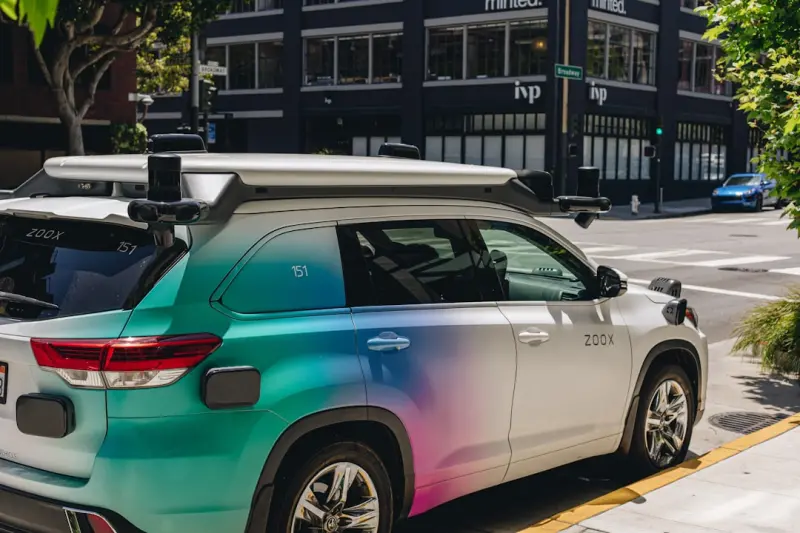
Why Autonomous Fleets Challenge Traditional Automotive Law
The rise of driverless ride‑sharing fleets is forcing courts to reinterpret long‑standing doctrines such as negligence, product liability, and the definition of “driver” in ways that were once purely theoretical; judges now grapple with questions about who bears responsibility when an algorithm makes a split‑second decision that leads to a collision. Legal scholars argue that the conventional “owner‑operator” model no longer fits, because the vehicle’s software, the data it generates, and the third‑party service platforms all intersect to create a tangled web of potential defendants, each with different exposure thresholds and insurance requirements. Moreover, the rapid deployment of these fleets is outpacing legislative bodies, leaving regulators to rely on case law and agency guidance, a situation that can result in a patchwork of state‑by‑state rulings that complicate compliance for companies operating across borders.
Compounding the doctrinal confusion is the emergence of real‑time telemetry that records every nuance of a vehicle’s performance, from brake pressure to AI confidence scores, turning each trip into a digital forensic record; this data is both a shield and a sword, providing evidence that can exonerate manufacturers while simultaneously exposing them to new privacy claims under emerging data‑protection statutes. Privacy advocates are already challenging the permissibility of mass data collection, arguing that drivers and passengers have a reasonable expectation of anonymity even when they voluntarily engage a shared service, a stance that could reshape consent standards in the automotive sector. As courts begin to treat telemetry as admissible evidence, the line between accident reconstruction and invasive surveillance blurs, forcing firms to adopt robust data‑governance policies or face costly litigation.
Insurance markets, too, are scrambling to price risk in an environment where traditional actuarial models, which rely heavily on driver behavior histories, are rendered obsolete by algorithms that continuously learn and adapt; insurers must now assess the reliability of software updates, the security of over‑the‑air patches, and the potential for cyber‑attacks that could hijack vehicle control systems. This shift is prompting the development of new policy structures that blend traditional liability coverage with cyber‑risk endorsements, creating a hybrid product that demands expertise in both automotive and information‑security law. The resulting regulatory uncertainty not only inflates premiums but also spurs a competitive advantage for companies that can demonstrate rigorous compliance frameworks, a factor that investors are increasingly scrutinizing.
Beyond the United States, international jurisdictions are experimenting with their own approaches, from the European Union’s emphasis on stringent data‑privacy safeguards under the GDPR to Asian markets that are drafting vehicle‑specific safety standards that incorporate AI audit trails; these divergent regulatory philosophies mean that multinational operators must navigate a complex mosaic of compliance obligations, each with its own enforcement mechanisms and penalties. Companies that adopt a proactive stance—by integrating cross‑border legal counsel early in product development—can mitigate the risk of costly retrofits or abrupt market withdrawals, a strategy that aligns with the broader industry trend toward “privacy‑by‑design” and “safety‑by‑design” principles. In this fluid legal landscape, staying ahead of the curve is less about reacting to lawsuits and more about embedding compliance into the very architecture of autonomous fleet operations.
Protecting Your Business in the Era of Connected Cars
For automotive enterprises, the first line of defense lies in drafting contracts that explicitly allocate risk among manufacturers, software providers, and service operators, a practice that mirrors the strategic precision found in Strategic Asset Protection but is tailored to the unique challenges of connected vehicle ecosystems; clear clauses on software updates, data ownership, and indemnification can preempt disputes before they arise. By establishing rigorous service‑level agreements (SLAs) that define acceptable downtime, patch deployment windows, and liability caps for cyber‑incidents, firms create a contractual safety net that courts are more likely to enforce, especially when the language reflects industry‑standard best practices and is supported by comprehensive documentation.
Internally, companies must cultivate a culture of compliance that treats legal risk as an integral component of product development, akin to how Zero‑Click SEO reshapes digital marketing strategies by embedding user intent into the core of content creation; similarly, automotive firms should embed privacy impact assessments, algorithmic audits, and continuous monitoring into the software development lifecycle. This approach not only satisfies emerging regulatory expectations but also provides a defensible record of due diligence, a factor that can significantly reduce punitive damages in the event of a lawsuit. Regular training for engineers on evolving legal standards, combined with cross‑functional review boards, ensures that compliance is not a afterthought but a driving force behind innovation.
From a litigation‑avoidance standpoint, leveraging the power of Semantic Content Clusters can enhance a firm’s online presence while simultaneously signaling to regulators and the public a commitment to transparency; publishing detailed whitepapers, FAQs, and policy briefs that explain data‑handling practices and safety protocols creates a repository of evidence that can be referenced in discovery. Moreover, this content strategy improves search visibility, making it easier for stakeholders to find authoritative information, thereby reducing the likelihood of misinformation-fueled legal challenges. By positioning the company as a thought leader, it also builds goodwill that can be persuasive in settlement negotiations.
Finally, proactive engagement with policymakers—through industry associations, public comment periods, and direct lobbying—allows businesses to shape the evolving legal framework rather than merely reacting to it; this collaborative approach mirrors the successful tactics used in other high‑tech sectors where early involvement in rulemaking has yielded favorable outcomes. Companies that invest in building relationships with regulators can gain insights into forthcoming rule changes, enabling them to adjust compliance programs ahead of enforcement actions. In a world where autonomous and connected vehicles are redefining the boundaries of liability, staying ahead of legal developments is not optional—it is a strategic imperative for sustained success.

Steven McClurry is a freelance writer. He loves to write controversial topics and on a wide rang of topics. When is not online he is hanging out at his college campus or playing online games.
Related Posts

Charging the Law: How EV Battery Recycling Is Reshaping Automotive Liability
The post examines how electric‑vehicle battery recycling introduces new environmental, product‑l... Read More

When Your New Car Becomes a Lemon: A Practical Guide to Automotive Law
A step‑by‑step guide to navigating lemon laws, from documentation to avoiding arbitration traps,... Read More

Beyond the Dashboard: Legal Strategies for Autonomous and Electric Fleets
A deep dive into the legal complexities of autonomous and electric fleets, covering liability, data ... Read More
Top Posts

Redefining Family Law in 2026: Compassion Meets Technology
A 2026 guide showing how technology and empathy are transforming family law—offering modern solutions for divorce, custody, and protecting vulnerable families...Read More

Why SEO Strategies Must Evolve in 2024: Insights from a Seasoned Content Engineer
Steven McClurry breaks down the 2024 SEO landscape, revealing why semantic clusters, structured data, and AI‑optimized content are essential for staying ahead...Read More

The Hidden Legal Battles Shaping Modern Employment
Employment law now spans AI hiring, workplace surveillance, gig worker classification, non‑compete enforcement, and mental‑health duties—key areas every H...Read More

Who’s at the Wheel When the Car Drives Itself? Liability in the Autonomous Era
A deep dive into who bears responsibility when autonomous cars crash, covering manufacturers, software providers, owners, insurance shifts, and emerging regulat...Read More
0 Comments
Post Comment
You will need to Login or Register to comment on this post!