
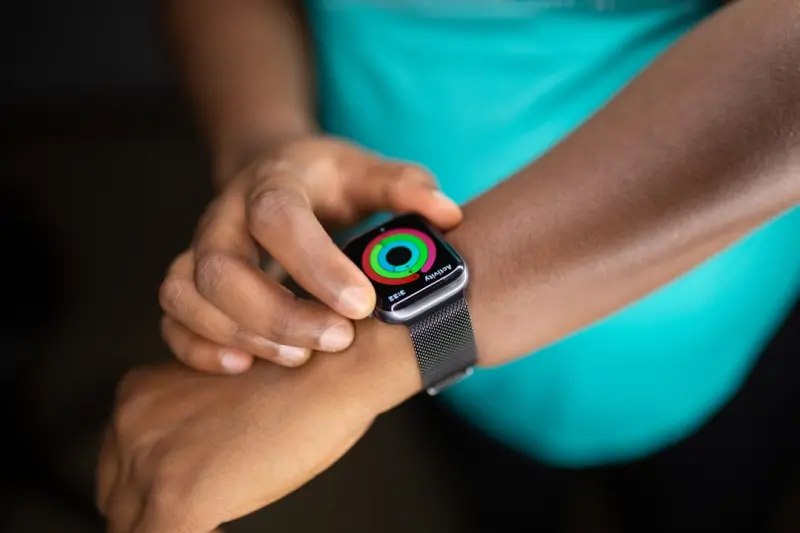
From the Wrist to the Courtroom: Unpacking the Legal Quagmire of Wearable Health Technology
When I first slipped a sleek fitness tracker onto my wrist during a weekend hike, I was thrilled by the promise of real‑time heart‑rate alerts and personalized activity goals. Little did I imagine that the same glittering device could later appear on a lawyer’s docket, a regulator’s agenda, and even a courtroom bench. Wearable health tech has sprinted from niche gadgetry into the mainstream of medical care, chronic disease management, and employee wellness programs. With that rapid adoption comes a tangled web of legal questions that are only beginning to surface.
Why Wearables Matter to Medical Law
Wearables—smart watches, continuous glucose monitors, ECG patches, and even smart clothing—collect biometric data at a granularity that traditional medical devices never could. This data can be used to:
- Inform clinical decisions in real‑time.
- Power insurance underwriting models.
- Drive employer‑sponsored wellness incentives.
- Feed third‑party health‑data marketplaces.
Each of these uses triggers distinct legal obligations, from informed consent to data‑privacy compliance, from product liability to anti‑discrimination statutes. The stakes are high: a faulty heart‑rate alarm could miss a life‑threatening arrhythmia, while an improperly shared step‑count could affect an employee’s promotion prospects.
Consent in the Age of Continuous Monitoring
Traditional medical consent is a one‑off interaction: a patient signs a form before a procedure, acknowledging risks and benefits. Wearables upend that model by continuously gathering data, often outside the clinical setting. This raises two core questions:
- Scope of Consent: How far does a user’s “I agree” to a Terms of Service stretch? Does it cover future algorithmic analyses, predictive modeling, or resale to third parties?
- Revocability: Can a user withdraw consent for data that has already been aggregated and anonymized?
The answer is not yet settled in most jurisdictions. Some courts are beginning to treat continuous data collection as a series of “mini‑consents,” requiring periodic reaffirmation. Practitioners and device manufacturers should therefore build in clear, user‑friendly mechanisms for users to pause or delete data, and they must document each consent action to demonstrate good faith compliance.
Data Privacy: Beyond HIPAA
Health‑related data from wearables is often subject to HIPAA only when the device is integrated into a covered entity’s electronic health record (EHR). Most consumer‑grade wearables, however, are sold directly to individuals and processed by private companies that sit outside the HIPAA sphere. This creates a privacy vacuum that state statutes like the California Consumer Privacy Act (CCPA) and the Illinois Biometric Information Privacy Act (BIPA) begin to fill.
Under BIPA, for example, any entity that collects biometric identifiers—including heart‑rate or blood‑oxygen readings—must obtain a written release and provide a retention schedule. Failure to comply can trigger statutory damages of up to $5,000 per violation. That means that a single data breach affecting a thousand users could expose a company to millions in liability.
Product Liability: When a Sensor Fails
Wearable manufacturers traditionally relied on the “low‑risk” classification of their devices. However, as regulators reclassify certain wearables as medical devices—for instance, continuous glucose monitors (CGMs) used for insulin dosing—the standard of care escalates. The U.S. Food and Drug Administration (FDA) now requires rigorous pre‑market approval for many of these products, and courts are increasingly applying the strict liability framework used for high‑risk medical devices.
Consider a scenario where a smartwatch’s ECG algorithm misclassifies a benign rhythm as atrial fibrillation, prompting an unnecessary emergency department visit. The user could sue for false‑positive‑induced harm, citing negligent software design. Conversely, a false negative that fails to detect a life‑threatening arrhythmia could lead to a malpractice‑style claim, despite the device being a “consumer” product.
Employer‑Sponsored Wellness Programs: Incentives or Discrimination?
Many employers now integrate wearables into wellness programs, offering premium discounts or cash rewards for hitting step goals. While the intent is to promote health, the practice can intersect with the Americans with Disabilities Act (ADA) and the Genetic Information Nondiscrimination Act (GINA). If a wearable reveals a medical condition—say, elevated blood pressure—a well‑meaning incentive could inadvertently pressure an employee to conceal a disability, or could be used to justify adverse employment decisions.
Legal scholars are still debating whether wellness program data falls under the same protections as medical records. The safest approach is to design programs that are truly voluntary, fully anonymized, and free of any linkage to compensation or promotion decisions. Moreover, clear policies should spell out how data will be stored, who can access it, and how it will be destroyed after the program ends.
Insurance Underwriting: The Double‑Edged Sword of Predictive Analytics
Insurance companies have been quick to recognize the value of wearable data for risk stratification. By accessing a policyholder’s daily activity levels, sleep patterns, and heart‑rate variability, insurers can refine premium calculations. However, this raises concerns under the Fair Credit Reporting Act (FCRA) and emerging state statutes that restrict the use of health data for pricing.
Some jurisdictions have begun to ban the use of “non‑medical” wearable data for underwriting. In such places, insurers must obtain explicit consent and provide an opt‑out mechanism. Failure to do so could be construed as an unfair trade practice, opening the door to class‑action litigation.
Third‑Party Data Brokers: The Invisible Middlemen
Beyond the direct relationship between a consumer and a device maker, a whole ecosystem of data brokers aggregates and resells wearable data. These brokers often claim that data is “de‑identified,” yet recent studies have shown that biometric datasets can be re‑identified with surprisingly little auxiliary information. This creates a legal minefield: does de‑identification truly shield a broker from liability, or could they be deemed a “covered entity” under privacy statutes?
Legal counsel advising health‑tech firms should therefore conduct a data‑flow analysis, mapping each handoff of biometric information. Contractual safeguards—like data‑use restrictions, audit rights, and indemnification clauses—can mitigate exposure, but they are no substitute for compliance with the underlying statutory framework.
Regulatory Outlook: From Guidance to Binding Rules
The FDA’s recent Digital Health Innovation Action Plan signals a shift from voluntary guidance to more prescriptive regulations for wearables that claim clinical utility. Expect the agency to tighten post‑market surveillance, require real‑world evidence studies, and enforce more robust cybersecurity standards.
Internationally, the European Union’s Medical Devices Regulation (MDR) already treats many wearables as Class IIa or IIb devices, demanding a CE mark and a conformity assessment. Companies that sell globally must juggle divergent compliance regimes, each with its own liability implications.
Practical Steps for Stakeholders
Below is a concise checklist that can help manufacturers, employers, insurers, and legal teams navigate this evolving terrain:
- Perform a risk classification early. Determine whether the device falls under FDA medical‑device rules or stays in the consumer realm.
- Implement layered consent. Use clear, jargon‑free language for each data‑use scenario and allow users to modify preferences at any time.
- Adopt privacy‑by‑design principles. Encrypt data at rest and in transit, minimize data collection, and enforce strict access controls.
- Conduct regular third‑party audits. Verify that data brokers comply with contractual and statutory obligations.
- Stay abreast of state privacy statutes. Monitor developments in BIPA, CCPA, and emerging legislation that may affect data‑use practices.
- Document compliance. Keep meticulous records of consent logs, data‑retention schedules, and security assessments to demonstrate good faith in the event of litigation.
- Engage multidisciplinary counsel. Combine expertise in medical law, privacy law, product liability, and employment law to craft a holistic compliance strategy.
Case Study: A Wearable‑Induced Lawsuit That Turned the Industry on Its Head
In a landmark case last year, a patient sued a leading smartwatch manufacturer after the device failed to alert her to a dangerous drop in blood oxygen saturation during sleep. The plaintiff argued that the device’s marketing implied a medical‑grade warning system, while the manufacturer insisted it was a “wellness” product.
The court applied a hybrid test, looking at the device’s intended use, marketing language, and the sophistication of the consumer. It concluded that the company had effectively marketed a medical device without the requisite FDA clearance, rendering it liable for negligence and breach of warranty. The judgment resulted in a multi‑million‑dollar settlement and spurred a wave of regulatory warnings across the industry.
This case underscores the importance of aligning product positioning with regulatory status. A seemingly innocuous marketing claim—“helps monitor your health”—can be interpreted as a medical promise, exposing the company to heightened liability.
Future Trends: From Wearables to Implantables
As the line between external wearables and implantable devices blurs, the legal challenges will only intensify. Imagine a sub‑cutaneous glucose sensor that streams data directly to a cloud‑based AI that adjusts insulin pumps autonomously. Such systems will demand integrated oversight, merging medical‑device regulation, data‑privacy law, and even cybersecurity statutes.
In the coming years, we can expect:
- Greater FDA involvement in the pre‑market review of AI‑enhanced wearables.
- New state‑level biometric privacy laws that extend beyond facial recognition to heart‑rate and motion data.
- Expanded employee‑rights litigation as workers challenge mandatory wellness monitoring as an invasion of privacy.
- Increased insurance litigation over the use of wearable data in underwriting, especially where adverse decisions are made without transparent explanations.
Conclusion: Legal Vigilance Is the New Vital Sign
Wearable health technology promises to democratize health monitoring, empower patients, and reduce costs. Yet, without a robust legal framework, the very data that can save lives may also become a source of litigation, discrimination, and regulatory headaches. By treating consent, privacy, and liability as core design pillars—not afterthoughts—companies can turn compliance into a competitive advantage.
As we watch the next wave of smart patches, bio‑sensing textiles, and AI‑driven health insights roll out, the legal community must stay as agile as the technology itself. In the end, the most valuable metric may not be steps taken or calories burned, but the degree to which we protect the rights and well‑being of those whose bodies become data sources.

Related Posts

The Intersection of Medical Law and Family Dynamics: A Complex Web of Rights and Responsibilities
The intersection of medical law and family dynamics is a complex and multifaceted issue, touching on... Read More

How Digital Disruption Is Redefining Medical Law
Medical law is undergoing a rapid transformation as AI, telehealth, and digital data reshape... Read More

When Medicine Meets the Courtroom: Emerging Legal Frontiers in Health Care
A deep dive into the evolving legal landscape of health care, covering telehealth consent, AI diagno... Read More
Top Posts

Privacy by Design: Embedding Legal Safeguards into SaaS
Privacy by design transforms compliance from a legal hurdle into a market advantage. This guide shows SaaS leaders how to embed data‑minimization, cross‑bor...Read More

When AI Becomes a Witness: Deepfake Evidence and the Future of Family Court
Deepfake technology is entering family courts, threatening the authenticity of video evidence in custody disputes. This article examines legal challenges, pract...Read More

Beyond Consent: Reimagining Privacy in Immersive Tech
Immersive technologies are harvesting unprecedented data—from physiological signals to real‑world environment mapping. This article breaks down the hidden p...Read More

Nurturing Emotional Resilience in Children During Custody Transitions
A heartfelt guide on empowering children with resilience tools, consistent narratives, and supportive rituals to navigate custody changes confidently....Read More
0 Comments
Post Comment
You will need to Login or Register to comment on this post!