
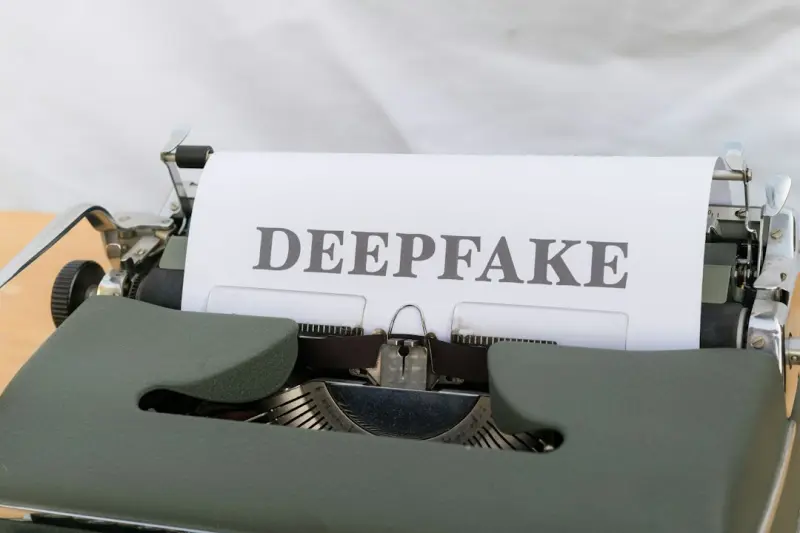
When Deepfakes Turn Criminal: Legal Challenges in the Age of Synthetic Media
Imagine scrolling through your social feed and stumbling on a video of a well‑known CEO “confessing” to embezzlement, or a politician “making” a wildly inflammatory statement that never actually happened. The footage looks impeccably real—down to the subtle eye‑movement and the grain of the background. The outrage is instant, the fallout is immediate, and the legal system is left scrambling to decide: Is this a crime, and if so, how do we prosecute it?
Welcome to the world of deepfakes, the AI‑generated synthetic media that’s reshaping criminal law faster than any courtroom drama could have imagined. As a former federal prosecutor turned legal tech consultant, I’ve watched the tools that once belonged in a sci‑fi lab become the everyday weapons of fraudsters, extortionists, and political agitators. In this post, I’ll walk you through the most pressing legal challenges posed by deepfakes, the current toolbox prosecutors and defenders are using, and the policy reforms that could keep our justice system from being out‑paced by the next generation of AI.
Why Deepfakes Are More Than Just a Tech Curiosity
Deepfakes are not merely funny memes. They are high‑fidelity fabrications that can be weaponized in three distinct ways:
- Identity theft and fraud. Bad actors can impersonate a target’s voice or likeness to siphon money, gain unauthorized access, or manipulate business decisions.
- Defamation and character assassination. A fabricated video showing a public figure committing a heinous act can devastate careers and trigger violent backlash.
- Extortion and blackmail. Threatening to release a fabricated compromising video unless a demand is met has become a new form of digital coercion.
Each of these use‑cases intersects with traditional criminal statutes—fraud, extortion, harassment, and even conspiracy—but the evidentiary landscape is dramatically altered. The question “Did the defendant actually do the thing in the video?” is now moot; the video is a synthetic artifact. What remains is the intent, the manipulation, and the impact.
The Evidentiary Quagmire
Criminal prosecutions hinge on proof beyond a reasonable doubt. In the era of deepfakes, establishing that proof involves a new set of forensic disciplines:
- Digital forensics. Analysts must dissect metadata, pixel-level inconsistencies, and AI‑generation signatures to prove that a piece of media is fabricated.
- Chain‑of‑custody challenges. When a video is posted on a platform that strips metadata, establishing a reliable trail becomes a Herculean task.
- Expert testimony. Courts now regularly hear from AI‑researchers who can explain generative adversarial networks (GANs) in layman’s terms—a far cry from the traditional ballistics or fingerprint experts of the past.
Fortunately, the legal community isn’t starting from scratch. The digital evidence and the future of criminal law movement has already begun to lay out standards for authenticity, preservation, and admissibility. However, those frameworks were conceived before the proliferation of synthetic media at scale. Updating them to address deepfakes is a race against the technology’s own evolution.
Statutory Gaps and Emerging Legislation
Most jurisdictions lack statutes that specifically criminalize the creation or distribution of malicious deepfakes. Instead, prosecutors rely on a patchwork of existing laws:
- Computer fraud statutes. When a deepfake is used to obtain money or confidential information, statutes like the Computer Fraud and Abuse Act (CFAA) can be invoked.
- Identity theft laws. Some states have broadened “identity theft” to include the misuse of a person’s likeness, even without monetary gain.
- Harassment and stalking statutes. Repeatedly sending a fabricated compromising video to a victim can satisfy the elements of cyber‑stalking.
Several states—California, Texas, and New York among them—have introduced “deepfake” bills that criminalize the non‑consensual creation of synthetic pornography and political misinformation. While these are promising steps, the legislation often stops short of covering corporate fraud or financial manipulation, leaving a dangerous blind spot.
Privacy Law as a Double‑Edged Sword
Privacy statutes, particularly those governing biometric data, can provide an ancillary shield against deepfake abuse. The privacy law landscape is increasingly recognizing facial and voice prints as personal data. When a deepfake uses someone’s biometric likeness without consent, it can trigger violations under statutes like the Illinois Biometric Information Privacy Act (BIPA).
However, privacy law also complicates investigations. Law‑enforcement requests for raw video files may run afoul of data‑protection regulations, especially when the footage is stored on cross‑border cloud platforms. Navigating these conflicting duties demands a nuanced approach that respects both victims’ rights and procedural safeguards.
The Role of Platforms: From Gatekeepers to Partners
Social media giants and video‑hosting services sit at the epicenter of deepfake distribution. Their content‑moderation policies—often opaque and reactive—determine whether a harmful synthetic video goes viral or is taken down swiftly. Recent high‑profile incidents (think fabricated political speeches that trended for days before being debunked) expose the inadequacy of “notice‑and‑takedown” alone.
Legal scholars are urging a shift toward proactive detection. By integrating AI‑driven deepfake detection tools into their upload pipelines, platforms can flag potentially synthetic content before it reaches the public sphere. Moreover, establishing transparent reporting mechanisms for victims can accelerate the removal process and preserve evidence for law‑enforcement.
Prosecutorial Strategies in the Deepfake Era
When the evidence is a synthetic video, prosecutors must pivot from “what the video shows” to “what the defendant did.” Successful cases have employed the following tactics:
- Focus on the act of creation. Proving that the defendant used AI software, hired a specialist, or otherwise orchestrated the deepfake satisfies the actus reus element.
- Demonstrate intent. Text messages, emails, or financial transfers that reveal a plan to use the deepfake for fraud or extortion establish mens rea.
- Leverage victim impact statements. Even if the video is fake, the real-world harm—lost business deals, reputational damage, emotional distress—creates a compelling narrative for a jury.
In practice, these strategies require a multidisciplinary team: criminal investigators, digital forensics experts, and sometimes even data‑science consultants who can speak the language of the AI models used to generate the fake.
Defense Considerations: The New “Alibi”
Defendants accused of deepfake‑related crimes face a paradox. On one hand, they can argue that the video is synthetic, undermining the prosecution’s narrative. On the other, they must confront the underlying conduct—whether they actually commissioned the fake or used it to threaten.
Effective defenses often revolve around:
- Challenging forensic methodology. Questioning the reliability of detection algorithms, especially when standards are still emerging.
- Statutory ambiguity. Highlighting that the alleged conduct does not neatly fit any existing criminal statute.
- Consent and context. In cases involving satire or parody, the First Amendment may provide a shield, though the line is razor‑thin when the content is malicious.
Policy Recommendations: Staying Ahead of the Curve
To ensure that criminal law does not become a relic in the face of synthetic media, I propose four concrete policy actions:
- Enact comprehensive deepfake statutes. Laws should criminalize the non‑consensual creation and distribution of synthetic media for fraud, extortion, or reputational harm, regardless of the platform used.
- Standardize forensic protocols. National bodies (e.g., NIST) must develop and disseminate validated methods for deepfake detection, ensuring courts have reliable scientific backing.
- Mandate platform cooperation. Legislation should require large platforms to implement AI‑driven detection at scale and to preserve original files for a defined period for potential investigations.
- Protect victims’ privacy. Any data collection for deepfake investigations must be narrowly tailored, with strict oversight to prevent secondary misuse of biometric data.
These steps are not just about punitive measures; they’re about safeguarding the integrity of public discourse, protecting individuals from digital exploitation, and preserving the rule of law in a landscape where seeing is no longer believing.
Looking Forward: The Human Element Remains Central
Technology will continue to outpace legislation, but the core of criminal law—intent, harm, accountability—remains a human construct. As deepfakes become more sophisticated, the legal system’s greatest asset will be its ability to adapt the timeless principles of justice to new mediums.
Lawyers, investigators, and policymakers must cultivate a deep understanding of both the technical underpinnings of synthetic media and the societal impacts of its misuse. By doing so, we can turn the deepfake threat from a chaotic loophole into a manageable facet of modern criminal law—one that protects victims, deters bad actors, and upholds the credibility of our courts.
In the meantime, stay vigilant. When you see a video that feels too shocking to be true, remember: the law is already working behind the scenes to uncover the truth, and the next breakthrough in forensic AI might be the very tool that brings a deepfake criminal to justice.

Kris Kennel is a Paralegal outside of Austin, Texas where he spends most of his time helping users with legal matters that concern them. When he is not working he enjoys time with his wife and kids.
Related Posts
Beyond the Badge: How Biometric Surveillance is Redefining Criminal Law
Biometric surveillance—from facial recognition cameras to emotion‑detecting wearables—is rapid... Read More

Beyond the Badge: How Digital Forensics Is Redefining Criminal Law
The article examines the transformative impact of digital forensics, artificial intelligence, and da... Read More

Cyber Fraud Surge: Defense Tactics in the Digital Age
Cyber fraud is reshaping criminal law. In this deep dive, I reveal how prosecutors build cases, the ... Read More
Top Posts

Medical Law in 2024: Kris M. Chen’s Insider Forecast on the Biggest Shifts
Kris M. Chen breaks down the most critical medical law developments of 2024, offering practical insights on telehealth, AI diagnostics, data privacy, and more....Read More

The Hidden Tax Burdens of Subscription-Based Business Models
Subscription services grow fast, but they bring hidden tax complexities—from nexus drift to variable taxability. This guide reveals the pitfalls and provides ...Read More

Remote Work’s Impact on Child Custody Arrangements
Remote work is changing the way parents share physical custody. This article outlines practical scheduling, legal, financial, and emotional strategies to create...Read More
Beyond the Courtroom: How Online Dispute Resolution Is Reshaping the Legal Landscape
Online dispute resolution (ODR) is rapidly becoming a strategic tool for law firms and courts, offering speed, cost savings, and new data-driven insights while ...Read More
0 Comments
Post Comment
You will need to Login or Register to comment on this post!