
Why Floods Are Redefining Insurance Law
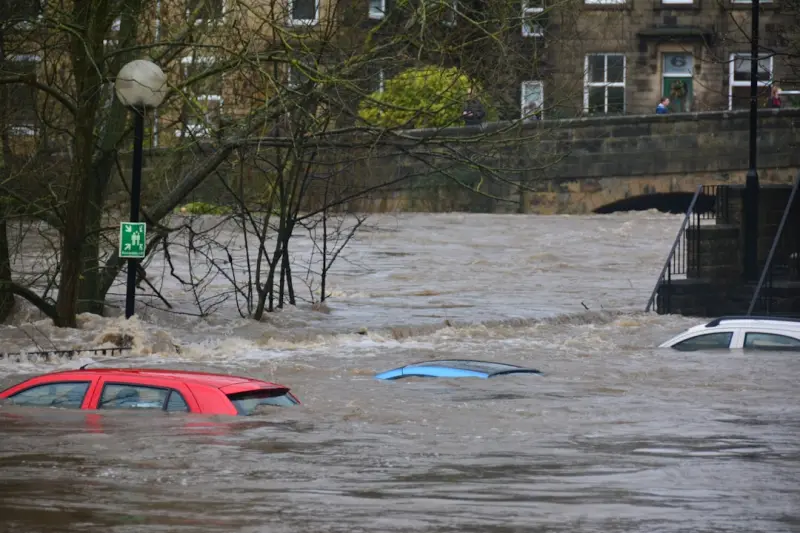
Every spring I watch the river swell and the news flash another community under water, and I can’t help but notice how quickly the old playbook for property insurance is cracking. The frequency and severity of flood events are no longer statistical outliers; they are the new normal, and insurers are scrambling to rewrite exclusions that once seemed iron‑clad. In my practice I see policyholders staring at dense clauses that speak of “acts of God” while the government pushes for “climate‑related hazards,” and the resulting ambiguity fuels a courtroom firestorm. The legal community must now ask whether traditional indemnity language can survive a world where a single storm can devastate an entire county, and the answers will shape the next generation of coverage.
The Hidden Pitfalls of Policy Language
When a flood damages a home, the first thing insurers do is pull the policy apart, searching for the tiniest loophole that might excuse payment. Decades‑old wording such as “flood caused by external water” is being challenged by experts who argue that rising sea levels and storm surges are internalized risks, and courts are split on how to interpret them. I often advise clients to look for “aggregate limits” and “sub‑limit provisions” that can silently cap payouts, turning a full‑scale disaster into a modest check that barely covers cleanup. The problem is compounded when insurers invoke “force majeure” clauses that were never designed for climate change, leaving homeowners stranded without recourse. Understanding these nuances before a storm hits can be the difference between financial ruin and a viable path to recovery.
When Bad‑Faith Claims Surface
In recent years I have witnessed a surge in litigation that frames claim denials as bad‑faith claims in insurance law, and the trend is only accelerating as policyholders become more educated about their rights. Insurers sometimes delay investigations, request irrelevant documents, or misrepresent coverage limits, all tactics that can trigger punitive damages under state statutes. My experience shows that plaintiffs who can demonstrate a pattern of unreasonable behavior—such as shifting the burden of proof onto the insured after a clearly covered event—stand a strong chance of prevailing. However, proving bad faith requires a meticulous record of every phone call, email, and adjuster note, because courts demand a clear evidentiary trail. This is why I always tell my clients to keep a detailed log from the moment water seeps through the foundation, documenting every interaction with the insurer.
The Rise of Parametric Insurance
One of the most exciting developments I’ve observed is the emergence of emerging insurance models that pay out based on objective triggers rather than loss assessments. Parametric policies, for example, release funds automatically when a river reaches a pre‑determined gauge level, bypassing the lengthy adjuster process that often stalls traditional claims. While this approach promises speed and transparency, it also introduces new legal questions about accuracy of data sources, calibration of thresholds, and the insurer’s duty to update parameters in light of evolving climate data. In practice, I have helped clients negotiate contracts that include “data verification clauses” to guard against erroneous payouts, and I advise insurers to embed clear amendment mechanisms to keep policies aligned with scientific forecasts. The result is a hybrid model that blends certainty with flexibility, but only if both parties understand the underlying mechanics.
Documentation: Your Most Powerful Weapon
When floodwaters recede, the race begins to document every damaged item, every repair invoice, and every communication with the insurance carrier. I cannot stress enough that photographs taken with timestamps, receipts for emergency board‑up services, and even weather reports from the National Weather Service become the backbone of a successful claim. Courts have repeatedly ruled that the burden of proof lies with the insured to establish the extent of loss, and failure to produce contemporaneous evidence often results in reduced settlements. Moreover, insurers are increasingly using AI tools to sift through claim files, flagging inconsistencies that may be harmless but appear suspicious to an algorithm. By maintaining an organized, digital repository of all evidence, policyholders can counteract automated red‑flag systems and demonstrate the legitimacy of their losses.
AI‑Driven Underwriting and Its Legal Implications
The insurance industry is rapidly adopting AI‑driven underwriting to price flood risk, leveraging satellite imagery, predictive modeling, and even social media signals. While these technologies promise more accurate premiums, they also raise concerns about transparency and discrimination. In my practice I have seen insurers rely on proprietary algorithms that they refuse to disclose, leaving consumers unable to challenge unfair rating decisions. Some jurisdictions are beginning to require “explainability” standards, obligating insurers to provide a clear rationale for premium adjustments based on AI outputs. As a result, policyholders now have a new avenue for legal recourse: challenging algorithmic bias under consumer protection statutes. Staying ahead of this wave means demanding data access clauses in your policy and consulting legal counsel before accepting any AI‑generated rate.
Regulatory Shifts and the Role of Government Aid
Federal and state regulators are responding to flood crises with a patchwork of reforms, from tightening building codes to expanding the National Flood Insurance Program’s coverage limits. However, these measures often create a complex overlay of public and private obligations that can confuse claimants. For instance, when a homeowner receives a disaster assistance grant, insurers may argue that the grant offsets the claim value, leading to disputes over “offset provisions” in the policy. I advise clients to review any government aid agreements carefully, ensuring that they do not inadvertently waive their right to full insurance recovery. Additionally, emerging legislation is mandating that insurers disclose how they incorporate climate projections into rate setting, which could level the playing field but also increase premium volatility. Understanding these regulatory currents is essential for anyone looking to navigate the post‑disaster landscape.
Practical Steps for Policyholders Before the Next Flood
Preparation is the cornerstone of protecting your home and your claim. First, conduct a thorough policy audit with a qualified attorney to identify exclusions, sub‑limits, and any ambiguous language that could be leveraged against you. Second, consider augmenting standard coverage with a parametric endorsement or a rider that specifically addresses rising water levels, ensuring that the trigger criteria are clearly defined. Third, establish a real‑time documentation system—smartphone apps that capture photos, voice notes, and timestamps can become vital evidence. Fourth, stay informed about your insurer’s AI underwriting practices and request a written explanation of any premium changes. Finally, keep a log of all communications and be ready to invoke bad‑faith remedies if you encounter unreasonable delays or denials. By taking these proactive steps, you position yourself not only to survive the flood but also to emerge with the compensation you rightfully deserve.
Looking Ahead: The Future of Flood Insurance Law
As climate patterns continue to shift, the legal framework governing flood insurance will evolve in tandem, blending traditional indemnity principles with innovative risk‑transfer mechanisms. I anticipate a future where courts regularly recognize parametric triggers as standard, where regulators enforce algorithmic transparency, and where bad‑faith statutes are expanded to cover systemic denial practices. For attorneys, insurers, and homeowners alike, the challenge will be to balance rapid technological adoption with the timeless need for fairness and clarity in contracts. The stakes are high, but with vigilant documentation, strategic policy enhancements, and a willingness to challenge unfair practices, the law can adapt to protect those most vulnerable to nature’s growing fury.

Steven McClurry is a freelance writer. He loves to write controversial topics and on a wide rang of topics. When is not online he is hanging out at his college campus or playing online games.
Related Posts

Navigating the New Frontier of Insurance Law: From Climate Perils to Digital Risks
Insurance law is evolving fast. From rising climate‑related premiums to cyber‑risk policies and ... Read More
Embedded Insurance: The Legal Frontier Shaping Tomorrow’s Coverage
Embedded insurance is redefining risk transfer in the digital era. This article unpacks the legal co... Read More
Insurance Law in 2026: AI, Climate Risk, and the Rise of Personalized Policies
In 2026, insurance law is being reinvented by AI, climate risk, and hyper‑personalized policies. M... Read More
Top Posts
When Medicine Meets the Courtroom: Emerging Challenges in Medical Law
A deep dive into the shifting landscape of medical law, highlighting telehealth risks, AI-driven diagnostics, and strategies for healthcare providers to navigat...Read More

Navigating Liability in the Age of Tele‑Health, AI Diagnostics, and Data Privacy
Medical law now grapples with cross‑state tele‑health licensing, AI‑driven diagnostic errors, and complex data‑privacy consent. This article breaks down...Read More

Tax Strategies Every Remote Freelancer Should Know
A comprehensive guide revealing the tax challenges remote freelancers face—and actionable steps to dodge pitfalls, maximize deductions, and secure financial s...Read More

Why Divorce Isn’t Just About Property Anymore
Why Divorce Isn’t Just About Property Anymore When a marriage ends, the conversation traditionally revolves around who gets the house, the car, and the saving...Read More
0 Comments
Post Comment
You will need to Login or Register to comment on this post!