
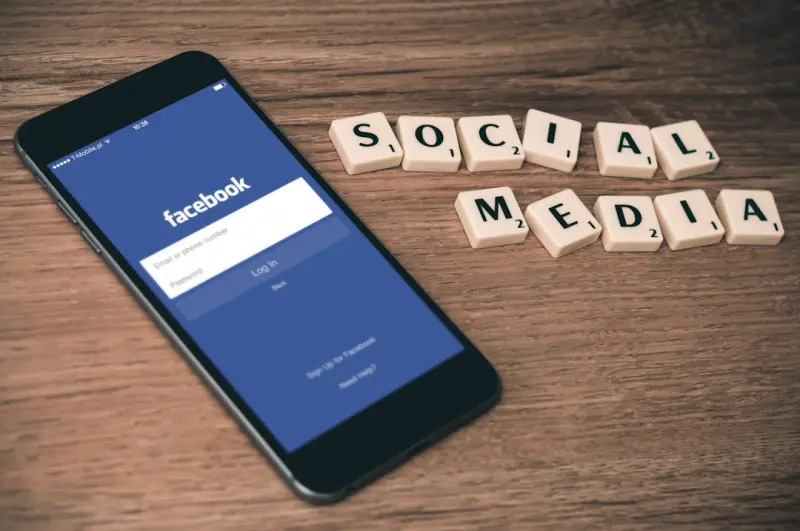
Why Social Media Has Become a Crime Scene
Every time a user scrolls, likes, or shares, a digital breadcrumb is left behind, and in the courtroom those crumbs can turn into a full‑blown evidentiary feast for prosecutors. I’ve watched jurors gasp when a seemingly innocuous Instagram story is replayed as proof of intent, and I’ve felt the chill of a defense team scrambling to argue that a meme was taken out of context. The shift from physical surveillance to a landscape where social media evidence is harvested in seconds forces us to rethink the boundaries of privacy, the chain of custody, and the very definition of “reasonable expectation.” In my practice, the first question I ask a client is not “What did you do?” but “What did the internet capture about you?” because that answer often determines whether the case moves forward or stalls at the discovery stage.
The Legal Minefield of Posts, Tweets, and TikToks
When a prosecutor subpoenas a suspect’s Twitter feed, the courtroom drama resembles a modern‑day treasure hunt, with each tweet potentially hiding a motive, an alibi, or a confession hidden behind a 280‑character limit. I’ve learned that the context surrounding a post—time stamps, geotags, and even the comment thread—can be just as incriminating as the words themselves, especially when a hashtag becomes a rallying cry for illegal activity. The challenge for defense attorneys is to demonstrate that the digital snapshot is either misleading, incomplete, or obtained without proper warrant, a battle that often hinges on the nuances of the Fourth Amendment in the age of screens. As I navigate these waters, I constantly reference the data‑driven policing playbook, because the same algorithms that flag suspicious behavior online can also be turned against a defendant if not scrutinized carefully.
Collecting Digital Footprints: Best Practices for Defense
In the early stages of a criminal defense, I advise my clients to freeze their social media accounts, change passwords, and consider a forensic preservation order before any warrant is served. This proactive stance is crucial because once a platform’s servers are accessed, metadata—such as device identifiers, IP addresses, and login histories—can be extracted and used to build a timeline that the prosecution will parade before a judge. A well‑crafted preservation request not only protects the client’s rights but also forces the state to reveal the exact scope of their search, which can uncover overreach. Moreover, partnering with a digital forensics expert who can authenticate screenshots and verify the integrity of archived posts often becomes the linchpin in challenging the admissibility of social media evidence. The goal is to turn the prosecution’s own reliance on technology into a double‑edged sword that highlights procedural gaps.
Prosecution’s Playbook: From Hashtags to Convictions
Prosecutors have become adept at weaving a narrative from fragmented online chatter, turning a single retweet into a chain of events that suggests premeditation or gang affiliation. They often employ social‑media analysts who map out networks, track the diffusion of a threatening phrase, and even use sentiment analysis to argue that a defendant’s online persona reflected a “dangerous mindset.” In court, these analysts present heat maps and interaction graphs that can sway a jury more powerfully than traditional eyewitness testimony, because visual data feels objective and scientific. Yet, the reliability of these tools is still contested, and I frequently call out the lack of standardized methodology, arguing that without clear validation, such evidence should be treated as circumstantial at best. By dissecting the prosecution’s digital strategy, I can expose inconsistencies and demonstrate that a meme shared in a private group does not automatically equate to a criminal act.
Privacy vs. Transparency: The Fourth Amendment in the Age of Screens
The Constitution’s shield against unreasonable searches was drafted long before the invention of the selfie, yet courts are now forced to interpret “search” in a world where a single swipe can reveal a person’s entire social network. I spend countless hours arguing that a blanket subpoena for all of a suspect’s posts violates the principle of particularity, especially when the state cannot specify which posts are relevant to the alleged crime. Recent appellate decisions have begun to carve out exceptions for “publicly posted” content, but the line blurs when users employ “friends‑only” settings that are easily bypassed by sophisticated data‑scraping tools. The balance is delicate: society demands transparency to prevent wrongdoing, while individuals cling to the expectation that their online expressions remain private unless a warrant is properly issued. This tension drives much of the litigation I see, and it underscores the need for clearer legislative guidance on digital privacy.
Case Studies: When Likes Turned Into Liability
One of the most striking cases I handled involved a defendant whose “like” on a Facebook post advocating for violent protest was introduced as evidence of intent to commit a riot. The prosecution argued that the like was an endorsement, while my team demonstrated that the client’s profile settings recorded only a passive interaction, not a concrete plan. In another matter, a defendant’s TikTok video showing a staged “prank” with a replica weapon was used to suggest a willingness to threaten, yet the footage was later revealed to be part of a comedy series, highlighting the perils of taking viral content at face value. These scenarios illustrate how courts are still learning to differentiate between genuine threats and performative online behavior, a distinction that can mean the difference between a conviction and an acquittal. The lessons from these cases have informed my approach: always contextualize the content, and never assume a click equals culpability.
Expert Voices: Judges, Tech Specialists, and the Courtroom
Judges across the country are now receiving specialized training on how to assess digital evidence, but the learning curve remains steep, and rulings can be inconsistent. I often bring in independent tech consultants to testify about the authenticity of a screenshot, the possibility of deep‑fake manipulation, or the reliability of platform APIs, ensuring the bench hears a balanced view beyond the prosecutor’s narrative. Meanwhile, seasoned jurors have expressed confusion when presented with algorithmic charts, prompting me to simplify complex data into plain‑language analogies that a twelve‑year‑old could grasp. This collaborative approach—melding legal strategy with technical expertise—has become essential in safeguarding the rights of defendants whose only “crime” may be an ill‑judged post. The courtroom is evolving into a hybrid space where lawyers must be as comfortable with digital forensics as they are with cross‑examination.
Future Trends: AI‑Generated Deepfakes and the Next Legal Frontier
Looking ahead, the rise of AI‑generated deepfakes promises to flood the courtroom with synthetic videos that appear indistinguishable from reality, a scenario that could upend the credibility of visual evidence overnight. I am already advising clients to secure their digital identities, monitor for unauthorized use of their likeness, and consider civil actions against platforms that enable malicious manipulation. On the prosecution side, law enforcement agencies are investing in AI tools to detect deepfakes, yet the technology is a moving target, and courts will need robust standards for admissibility. The interplay between emerging tech and criminal law will demand new statutes, updated evidentiary rules, and perhaps most importantly, a cultural shift that recognizes the limits of what a screen can truly convey. As we stand on the brink of this digital transformation, the responsibility falls on attorneys, judges, and legislators alike to ensure that the quest for truth does not get lost in a sea of fabricated pixels.

Allison Jarvis is a dynamic digital media and marketing professional dedicated to driving brand growth through impactful storytelling. With a sharp eye for market trends and a passion for data-driven strategies, she specializes in building cohesive online identities that resonate with modern audiences. Allison blends creative content production with robust analytics to maximize engagement and deliver measurable ROI. She continuously explores emerging digital tools to keep her projects ahead of the curve.
Related Posts

The Digital Detective: How AI Is Redefining Criminal Defense
AI isn’t just a buzzword—it’s now a courtroom ally. Discover how digital tools are altering in... Read More

Cryptocurrency’s Dark Side: Navigating Money‑Laundering in Criminal Law
A deep dive into the rise of crypto‑enabled money laundering, the investigative tools reshaping pr... Read More

Predictive Policing and the Criminal Justice System: A Defense Lawyer’s View
Predictive policing promises efficiency, but its algorithmic shadows raise serious constitutional co... Read More
Top Posts

Beyond Overtime: How Data‑Driven Surveillance Is Redefining Employee Rights
The rise of real‑time analytics and AI in the workplace challenges traditional labour law. This article dissects digital surveillance, employee classification...Read More

Legal Action to Take When You're Being Sued For an Inheritance
Inheriting property, assets, or funds is often intended to bring closure after a loved one’s passing. However, when disputes arise and you find yourself facin...Read More
Digital Nuptials: Redefining Marriage Law for the Connected Era
A deep dive into the emerging legal challenges couples face in the digital age, from AI‑drafted prenups and blockchain‑based vows to privacy clauses for wed...Read More

The Impact of Family Law on SEO Strategies: A Comprehensive Analysis
Understanding the complex relationship between family law and SEO is crucial for developing effective online marketing campaigns. Learn how to create accurate, ...Read More
0 Comments
Post Comment
You will need to Login or Register to comment on this post!