
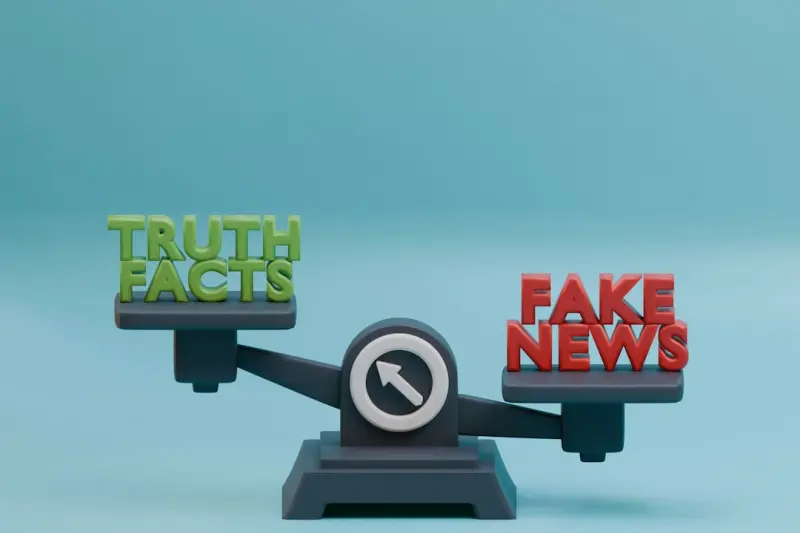
When I first stumbled upon a hyper‑realistic video of a CEO announcing a massive layoff—only to discover it was a deepfake—I realized we were standing at the crossroads of technology and truth. As a lawyer who spends more time debugging contract clauses than my own coffee machine, I’ve learned that the law often lags behind innovation, but it also has a knack for catching up—sometimes with a spectacularly creative twist. This post dives into the legal quagmire that deepfake technology is carving out, from defamation and privacy to intellectual property and election integrity. Buckle up; the reality you thought you knew is about to get edited.
What Exactly Is a Deepfake?
In the simplest terms, a deepfake is synthetic media—usually video or audio—generated by artificial intelligence techniques such as generative adversarial networks (GANs). These models can superimpose a person’s likeness onto another’s performance, making it appear as if they said or did something they never did. The technology has become more accessible: a hobbyist with a consumer‑grade GPU can now produce a five‑second clip that fools most human viewers.
While the novelty factor is entertaining (think of the endless parodies on social media), the legal stakes are anything but playful. Deepfakes can be weaponized for political propaganda, corporate sabotage, blackmail, and even fraud. The question on every lawyer’s mind is: how does existing law address content that never existed but looks convincingly real?
Defamation in the Age of Fabricated Faces
Defamation law traditionally hinges on three elements: a false statement, publication to a third party, and damage to reputation. Deepfakes complicate the "false statement" component because the content is not a mere falsehood—it's a fabricated reality. Courts have begun to wrestle with this nuance. In a recent case involving a fabricated video of a politician making inflammatory remarks, the plaintiff argued that the video’s realistic nature amplified the reputational harm.
Key takeaways for practitioners:
- Actual Malice Standard: For public figures, the plaintiff must prove that the creator acted with actual malice—knowledge of falsity or reckless disregard for truth. Deepfakes, by their nature, often involve a conscious decision to mislead, making the malice threshold easier to meet.
- Publication Scope: Social media platforms amplify the reach of deepfakes, satisfying the "publication" requirement almost automatically.
- Damages: Courts are beginning to recognize that the psychological impact of seeing one's likeness misused can constitute harm, even if no monetary loss is immediately evident.
For businesses, the lesson is clear: monitor brand mentions across the internet, employ AI‑driven detection tools, and be ready to issue swift retractions or cease‑and‑desist letters.
Privacy and the Consent Conundrum
Deepfakes also raise profound privacy concerns. The unauthorized use of someone’s likeness can infringe on the right of publicity, a state‑based doctrine that protects an individual’s commercial value. In many jurisdictions, consent is a cornerstone of lawful use of a person’s image. However, deepfakes blur the line between “use” and “misrepresentation.”
One emerging legal theory treats deepfake creation as a violation of privacy consent challenges already being debated in sensor‑rich environments. The argument is that consent should extend to how one’s biometric data—facial features, voice patterns—is harvested and recombined.
Practical steps for organizations include:
- Consent Clauses: Update media release forms to explicitly cover AI‑generated content.
- Data Minimization: Limit the collection of facial and voice data to what’s strictly necessary.
- Transparency Policies: Clearly disclose if AI tools are used to generate synthetic media in marketing or internal communications.
Intellectual Property: Who Owns the Synthetic Creation?
Intellectual property (IP) law faces a paradox with deepfakes. On one side, the underlying AI model may be protected by software patents or trade secrets. On the other, the output—often a mashup of existing copyrighted works—might infringe on multiple rights simultaneously.
Consider a deepfake that uses a celebrity’s voice to read a copyrighted novel. The voice performance could be a violation of the celebrity’s right of publicity, while the text itself may be an unauthorized derivative work. Courts have yet to develop a unified approach, but a few principles are emerging:
- Transformative Use: If the deepfake adds significant new expression, it might qualify for fair use. However, most “face‑swap” deepfakes are merely substitutive, offering little transformation.
- Joint Infringement: Parties that provide the AI model, the training data, and the final output can be held jointly liable for infringement.
- License Gaps: Many existing licenses for stock footage or audio do not contemplate AI‑generated recombinations, creating a gray area that savvy litigators can exploit.
Legal counsel advising tech firms should audit licensing agreements for AI training data and consider drafting “deepfake‑safe harbor” clauses that limit liability when users generate content on the platform.
Election Law: The Ultimate Test of Democratic Resilience
Perhaps the most alarming application of deepfakes is in political campaigns. A manipulated video of a candidate making extremist statements could swing an election before fact‑checkers have time to respond. Existing election statutes often focus on false statements or campaign finance violations, but they rarely address synthetic media.
Some jurisdictions are introducing “anti‑deepfake” statutes that criminalize the creation or distribution of synthetic political content designed to influence voting. These laws typically require:
- A clear intent to deceive voters.
- Labeling of synthetic content as “AI‑generated” when disseminated online.
- Penalties ranging from fines to misdemeanor charges.
In the meantime, election officials are collaborating with tech platforms to flag suspicious videos, but the speed of misinformation often outpaces these safeguards.
Corporate Risk Management: Building a Deepfake Defense Playbook
For businesses, the deepfake threat is both reputational and operational. A fabricated video of a CEO endorsing a competitor’s product, for example, could cause stock price volatility. To mitigate these risks, companies should adopt a multi‑layered approach:
- Monitoring and Detection: Deploy AI tools that can detect inconsistencies in facial movements, audio frequencies, and metadata. Some vendors offer real‑time alerts for brand‑related deepfakes.
- Crisis Response Protocols: Draft press releases and legal statements in advance, so you can swiftly refute false content.
- Employee Training: Educate staff on the existence of deepfakes and how to verify authenticity before sharing media.
- Insurance Coverage: Review cyber‑risk policies to ensure they cover reputational harm from synthetic media. Explore how cyber‑insurance is adapting to these novel threats.
Regulatory Landscape: From Patchwork to Potential Federal Framework
Currently, deepfake regulation resembles a patchwork quilt—state legislatures, the Federal Trade Commission (FTC), and even the Federal Communications Commission (FCC) have taken steps, but there is no comprehensive federal law. The FTC has issued guidance on “deceptive practices” that could apply to deepfakes used in advertising, while the Department of Justice has pursued criminal charges in cases involving election interference.
Legal scholars predict that a future federal framework may combine elements of consumer protection, election integrity, and intellectual property law. Such a framework would likely:
- Mandate clear labeling of AI‑generated content.
- Impose liability on platforms that fail to act on verified deepfake reports.
- Establish a statutory cause of action for victims of non‑consensual deepfake exploitation.
Deepfakes and the Rise of “Synthetic Defamation”
One emerging concept is “synthetic defamation,” where the defamatory act is not a spoken or written statement but a fabricated visual or audio representation. Some jurisdictions are beginning to treat synthetic defamation as a distinct cause of action, recognizing that the visual medium can cause unique harms, such as emotional distress and identity erosion.
Key elements being considered include:
- Proof that the plaintiff’s likeness was used without consent.
- Evidence that the deepfake was created with the intent to harm.
- Demonstrable damages, including mental anguish and loss of professional opportunities.
Law firms specializing in media law are already drafting template complaints to streamline litigation when synthetic defamation claims arise.
The Role of Legal Tech in Combating Deepfakes
Just as legal tech democratizes access to justice, it also equips practitioners with tools to identify and respond to deepfakes. Platforms that combine computer vision, natural language processing, and blockchain provenance tracking are emerging as the first line of defense.
These solutions can:
- Generate cryptographic hashes of authentic video assets, enabling quick verification.
- Provide audit trails that show who accessed, edited, or exported original files.
- Integrate with content management systems to flag any unauthorized derivative works.
Adopting such technology not only helps protect brand integrity but also demonstrates a proactive stance that can be favorable in court.
Future Outlook: From Reactive to Proactive Governance
Deepfakes are unlikely to disappear; instead, they will become more sophisticated. The legal community must shift from a reactive posture—suing after the fact—to proactive governance that anticipates misuse. This includes:
- Embedding AI‑ethics clauses in vendor contracts.
- Collaborating with legislators to craft balanced regulations that protect free expression while curbing malicious manipulation.
- Investing in public awareness campaigns that teach media literacy and verification skills.
In my experience, the most effective defenses are those that combine technology, policy, and a willingness to engage with the public narrative before a deepfake can gain traction. The law may lag, but with strategic foresight, we can keep pace with reality’s most convincing edits.
Deepfakes are not a passing fad; they are a transformative force reshaping how we define truth, identity, and accountability. By understanding the legal terrain now—defamation, privacy, IP, election law, and emerging synthetic defamation—we can craft policies that protect both individuals and institutions in a world where seeing is no longer believing.

Kris M. Chen is a dedicated legal paralegal based in Texas, specializing in delivering comprehensive case management and litigation support. Known for a meticulous approach to legal research and document preparation, Kris plays a vital role in navigating complex legal workflows and ensuring seamless trial preparation.
Related Posts

Riding the Legal Wave: Kris Kennel’s 2024 Outlook on Emerging Law Trends
Kris Kennel breaks down 2024’s top legal trends—from AI‑powered courts and data privacy to the... Read More

Navigating the Digital Divide: How Technology Is Redefining Modern Law
A deep dive into how technology—from AI risk models to virtual hearings—transforms every facet o... Read More
Why Data Portability Clauses Can Be a Legal Minefield for SaaS Providers
Data portability is a regulatory must‑have, but poorly drafted clauses can expose SaaS providers t... Read More
Top Posts

Divorce After the Split: Rebuilding Assets, Health, and Life
Divorce isn’t just about dividing property; it’s a complex overhaul of intangible assets, health coverage, and co‑parenting dynamics. This guide uncovers ...Read More

When Employers Watch: Legal Boundaries of Employee Surveillance in the Hybrid Age
A deep dive into the evolving legal standards for employee surveillance, offering actionable guidance for employers to balance legitimate oversight with privacy...Read More

Rethinking SaaS IP: A Playbook for API‑First Companies
In the API‑driven era, traditional IP tactics fall short. This guide offers a fresh, actionable framework for SaaS companies to safeguard patents, trade secre...Read More

Privacy by Design: A SaaS Playbook for Legal Compliance and Trust
Privacy by design isn’t a buzzword—it’s a systematic approach that embeds legal safeguards into every stage of SaaS development. This playbook outlines co...Read More
0 Comments
Post Comment
You will need to Login or Register to comment on this post!