
When Robots Operate: Untangling Liability in Robotic Surgery
Imagine a surgeon stepping back, letting a gleaming arm of steel and silicon take the reins. The patient’s incision is precise, the bleeding minimal, the recovery swift. It’s the promise of robotic surgery—a blend of cutting‑edge engineering and life‑saving medicine. Yet, as the robot’s scalpel glides, a legal question looms larger than any operating‑room light: who is liable when the machine falters?
In my decade‑long practice navigating the labyrinth of medical law, I’ve watched technology shift the fault‑line of responsibility. From the first laparoscopic tools that demanded a new set of standards to today’s AI‑augmented robotic platforms, each leap forces us to rewrite the rulebook. This post unpacks the emerging fault‑allocation framework for robotic surgery, the regulatory underpinnings, and the practical steps hospitals, surgeons, and manufacturers can take to stay on the right side of the law.
1. The Anatomy of a Robotic System
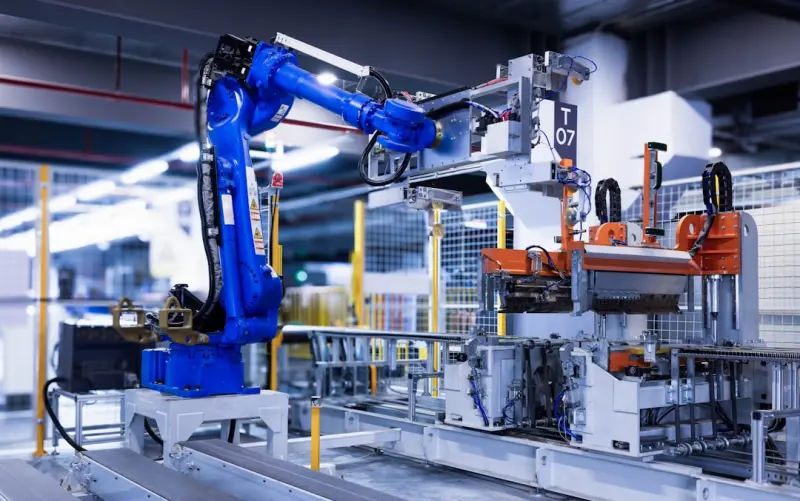
Before we can assign blame, we need to understand the moving parts. A typical robotic surgery platform consists of three layers:
- Hardware: the robotic arms, end‑effectors, and imaging devices.
- Software: the control algorithms, user interfaces, and any AI‑driven decision‑support modules.
- Human Interface: the surgeon’s console, foot pedals, and tactile feedback mechanisms.
Each layer is a potential source of error. A hardware malfunction—say, a joint motor seizing mid‑procedure—can cause immediate injury. A software bug might misinterpret sensor data, leading the robot to cut at the wrong depth. Even the human interface can fail; delayed input from the surgeon due to fatigue or miscommunication can produce catastrophic outcomes.
2. Traditional Medical Malpractice Doctrine Meets Machines
Historically, malpractice hinges on the “standard of care” test: did the practitioner deviate from what a reasonably competent peer would have done? With robots, the line blurs. Courts are forced to ask:
- Was the surgeon exercising appropriate oversight?
- Did the manufacturer meet its duty to provide safe, reliable equipment?
- Is the software developer responsible for algorithmic errors?
In the landmark Doe v. MedTech Robotics case, a patient suffered nerve damage after the robot’s vision system misidentified tissue planes. The jury found the surgeon negligent for not intervening when the system displayed an anomalous warning, but also held the manufacturer partially liable for inadequate training materials. The decision underscored a “shared‑responsibility” model that is fast becoming the norm.
3. Regulatory Landscape: FDA, CE, and Beyond
The Food and Drug Administration (FDA) classifies most surgical robots as Class II medical devices, subject to pre‑market notification (510(k)) and post‑market surveillance. However, the agency’s recent focus on software as a medical device (SaMD) signals a shift: software updates are now treated almost like new devices, requiring rigorous validation.
European regulators, via the CE marking, emphasize “clinical evaluation” and “post‑market performance studies.” Both regimes require manufacturers to maintain detailed logs of device performance, error rates, and corrective actions—data that becomes critical evidence in litigation.
4. The Three‑Tier Liability Matrix
To make sense of potential claims, I like to visualize liability as a three‑tier matrix:
| Tier | Responsible Party | Typical Fault Scenarios |
|---|---|---|
| 1 | Surgeon | Failure to monitor robot, ignoring alarms, inadequate training. |
| 2 | Manufacturer | Defective hardware, insufficient software testing, poor user manuals. |
| 3 | Software Developer | Algorithmic bias, unvalidated updates, inadequate cybersecurity. |
In practice, claims rarely sit neatly in one tier. A surgeon’s “failure to monitor” might be excused if the manufacturer’s manual failed to flag a known glitch. Conversely, a well‑designed device cannot absolve a surgeon who recklessly overrides safety protocols.
5. Informed Consent in the Age of Robots
Informed consent is the cornerstone of medical law, but it must evolve. Traditional consent forms list “risks of surgery,” yet now we must articulate “risk of robotic malfunction.” A robust consent process should include:
- A plain‑language explanation of how the robot functions.
- Disclosure of known failure rates and recent recall history.
- Discussion of the surgeon’s role versus the robot’s autonomy.
- Options to opt‑out of robotic assistance where clinically feasible.
Failure to provide this level of detail can be construed as negligence, especially if the patient suffers an injury that could have been mitigated by choosing a conventional approach.
6. Data Privacy and Cybersecurity: The Silent Threat
Robotic platforms generate terabytes of data—imaging streams, instrument trajectories, patient vitals. This data is a treasure trove for research but also a target for cyber‑attacks. A breach that corrupts intra‑operative data could lead to mis‑diagnosis or, worse, direct manipulation of the robot’s movements.
Hospitals must treat this information under privacy‑by‑design principles, ensuring encryption, access controls, and regular penetration testing. From a legal standpoint, a breach that results in patient harm opens the door to both privacy claims under HIPAA and negligence claims for inadequate security.
7. Insurance Implications: Who Covers the Damage?
Medical malpractice insurers have begun drafting “robotic surgery endorsements” that specifically address device‑related risks. These policies often require hospitals to:
- Maintain up‑to‑date device logs.
- Implement manufacturer‑recommended maintenance schedules.
- Provide documented surgeon training records.
Without these safeguards, insurers may deny coverage, leaving the hospital exposed to potentially multimillion‑dollar judgments.
8. Proactive Risk Management Strategies
Below are actionable steps for each stakeholder:
For Surgeons
- Complete all manufacturer‑provided training modules and renew certifications annually.
- Develop a pre‑operative checklist that includes verification of software version and hardware status.
- Maintain a “read‑back” protocol: verbally confirm critical robot prompts before execution.
For Hospitals
- Implement a centralized device‑management system to track maintenance, software updates, and incident logs.
- Conduct quarterly mock‑drills simulating robot failure to test response protocols.
- Negotiate contracts that include clear indemnification clauses with manufacturers.
For Manufacturers
- Adopt rigorous software validation aligned with IEC 62304 standards.
- Publish transparent failure‑rate data in post‑market surveillance reports.
- Offer real‑time monitoring services that alert hospitals to emerging anomalies.
9. The Future: AI‑Assisted Autonomy
We are on the cusp of robots that not only execute pre‑programmed motions but also make intra‑operative decisions—identifying tumor margins, adjusting suture tension, or even predicting bleeding risk in real time. When AI reaches this level of autonomy, the liability calculus will shift dramatically.
Legal scholars are already debating the concept of “algorithmic personhood,” but until legislation catches up, the “human‑in‑the‑loop” doctrine will remain the default. In other words, no matter how smart the robot becomes, the surgeon must retain ultimate authority and responsibility.
10. Closing Thoughts
Robotic surgery is not a fleeting trend; it is reshaping the very fabric of operative care. As the technology matures, the law must keep pace, ensuring that innovation does not outstrip accountability. By embracing a shared‑responsibility model, fortifying informed consent, and embedding privacy‑by‑design safeguards, we can protect patients while allowing surgeons to harness the full power of robotics.
In my experience, the most resilient institutions are those that treat legal risk not as a hurdle, but as a design parameter—just as engineers treat safety as a core requirement. When surgeons, hospitals, and manufacturers speak the same language of risk mitigation, the operating room becomes a space where precision medicine truly thrives.

Allison Jarvis is a dynamic digital media and marketing professional dedicated to driving brand growth through impactful storytelling. With a sharp eye for market trends and a passion for data-driven strategies, she specializes in building cohesive online identities that resonate with modern audiences. Allison blends creative content production with robust analytics to maximize engagement and deliver measurable ROI. She continuously explores emerging digital tools to keep her projects ahead of the curve.
Related Posts

Cross‑Border Medical Tourism: Legal Pitfalls Every Provider Must Avoid
Medical tourism offers cost savings and access to cutting‑edge care, but it also brings complex le... Read More

Navigating the Legal Minefield of Mobile Health Apps: Risks, Regulations, and Remedies
Mobile health apps promise convenience but bring legal challenges. Discover liability, privacy, and ... Read More

Telemedicine Liability: Mastering Informed Consent and Risk in Virtual Care
Telemedicine’s rise brings legal challenges—learn how to secure informed consent, navigate licen... Read More
Top Posts

The Data Trail in Divorce: How Forensic Accounting and AI Are Redefining Asset Division
Divorce today hinges on digital footprints. This article explores how forensic accountants and AI tools uncover hidden assets—from crypto wallets to social‑...Read More

Privacy Law’s Next Evolution: Data Fiduciary Duties for SaaS Providers
Privacy law is shifting from simple notice‑and‑consent to enforceable data fiduciary duties. This article breaks down the legal trends, practical steps, and...Read More

Telemedicine Informed Consent: Navigating Legal Risks in Virtual Care
A deep dive into telemedicine consent, covering identity verification, data privacy, cross‑state liability, and future AI challenges....Read More

Reinventing Your Career After Divorce: A Practical Roadmap
Learn to turn the challenges of divorce into a launchpad for a new career, with practical steps for skill assessment, networking, education, and protecting your...Read More
0 Comments
Post Comment
You will need to Login or Register to comment on this post!