

When the Factory Floor Turns Into a Battleground: Managing Dangerous Operations in the Age of Autonomous Robotics
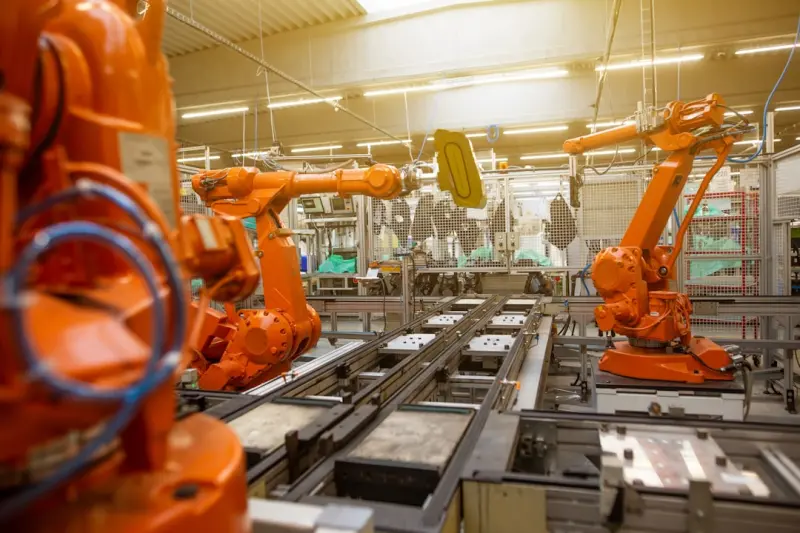
Imagine stepping onto a bustling warehouse floor where towering shelves glide on magnetic rails, drones zip overhead delivering parcels, and a fleet of robotic arms assemble products with the precision of a Swiss watch. It looks like a scene from a futuristic movie, yet it’s the daily reality for many B2B SaaS clients today. The excitement is palpable, but beneath the sleek choreography lies a hidden threat: the potential for these autonomous systems to become dangerous operations when they’re not properly governed.
My name is Madden Persons, and I’ve spent the last decade watching the convergence of software, hardware, and human labor transform industrial environments. I’ve seen how a single mis‑configuration can turn a perfectly calibrated robot into an unpredictable hazard, and I’ve also witnessed the ripple effects of that single event—injuries, production halts, insurance spikes, and reputational fallout that can take months to mend.
In this deep dive, I’ll walk you through the anatomy of a dangerous operation in modern automation, highlight the warning signs that often go unnoticed, and lay out a pragmatic roadmap for building resilient, safe, and compliant robotic workforces. Along the way, I’ll reference a few of our own insights that, while tackling different challenges, share common threads with the safety puzzle we’re solving today.
The Anatomy of a Dangerous Operation
To understand how an operation becomes dangerous, we need to dissect three core components that intersect on the factory floor:
- Technology Stack: Sensors, actuators, control software, and cloud‑based orchestration platforms. Each layer introduces its own failure modes.
- Human Interaction: Operators, maintenance crews, and occasional visitors. Human factors such as fatigue, training gaps, and miscommunication amplify risk.
- Process Governance: SOPs, safety standards, and regulatory compliance frameworks. Weak governance is the breeding ground for unchecked hazards.
When any one of these pillars is compromised, the whole system can slide into a precarious state. For instance, a sensor that drifts out of calibration may send incorrect positional data to a robotic arm, causing it to overshoot its intended path. If the operator isn’t alerted in real time, the arm could collide with a human coworker or a pallet of goods—turning a routine task into a near‑miss or worse.
Key Triggers That Turn Automation Into a Hazard
Below are the most common triggers that have turned otherwise benign automation into dangerous operations:
1. Silent Software Updates
Many SaaS platforms push updates automatically to edge devices. While this keeps systems patched, an update that modifies motion‑control algorithms without thorough regression testing can subtly change acceleration curves, leading to unexpected jerks.
2. Over‑reliance on AI Decision‑Making
Machine‑learning models are now tasked with dynamic routing—deciding which robot picks which item. If the model isn’t trained on edge‑case scenarios, it can assign two robots to the same narrow aisle simultaneously, setting the stage for a collision.
3. Inadequate Real‑Time Monitoring
Legacy SCADA dashboards give a snapshot of system health every few minutes. In fast‑moving environments, that latency is too great; an emergent fault can cause damage before anyone even sees a red flag.
4. Human‑Robot Interface (HRI) Missteps
Operators often use handheld tablets or voice commands to intervene. If the interface isn’t designed with clear feedback loops, an operator may think a stop command was accepted when it wasn’t, leading to a dangerous continuation of motion.
5. Supply‑Chain Variability
New robot models arrive with firmware that isn’t fully compatible with existing control software. A mismatched protocol can cause jittery movements that are hard to predict.
Learning From Parallel Risks
Even though we’re focusing on physical robotics, the patterns of danger echo across other tech domains. For example, Auto‑Scaling Wildfire illustrates how unchecked scaling mechanisms can explode into systemic threats—much like a robot fleet that expands without proper safety throttles. Likewise, the challenges discussed in Hazardous CI/CD Machine remind us that automation pipelines themselves can become sources of risk if not monitored with the same rigor we apply to physical machinery.
Designing a Safety‑First Automation Architecture
Here’s a step‑by‑step blueprint for building an ecosystem where dangerous operations are the exception, not the rule.
Step 1: Establish a Safety‑Centric Data Fabric
All telemetry—from sensor readings to actuator states—should stream to a central data lake in near real‑time. Use edge‑compute nodes to preprocess data, flag anomalies, and push alerts within milliseconds. The key is to make safety data as first‑class as business metrics.
Step 2: Implement Guardrails via Policy‑Based Control
Adopt a policy engine that enforces hard limits on speed, force, and proximity. Policies should be versioned, auditable, and enforceable at the device level, ensuring that even if a higher‑level AI tries to push boundaries, the firmware will refuse to comply.
Step 3: Deploy a Digital Twin for Predictive Validation
Before any software change reaches the shop floor, simulate it against a high‑fidelity digital twin of the robot fleet. Run thousands of scenario variations to surface edge‑case failures that could otherwise slip through.
Step 4: Build a Human‑Centric Interaction Layer
Design operator interfaces with explicit confirmation steps, tactile feedback, and visual cues that clearly indicate state changes. Voice commands should be paired with mandatory repeat‑back verification to avoid misinterpretation.
Step 5: Integrate Continuous Safety Testing into CI/CD
Just as you would run unit tests on code, embed safety regression suites that spin up simulated robots and validate that policy limits hold under stress. Automate these tests to run on every pull request, ensuring that safety never becomes an after‑thought.
Step 6: Create an Incident Response Playbook
When a safety breach occurs, every second counts. Your playbook should outline:
- Immediate isolation protocols for affected robots.
- Automated rollback to the last known safe firmware version.
- Notification flows to safety officers, compliance teams, and insurance partners.
- Post‑incident forensic analysis steps to capture root cause data.
Legal and Compliance Landscape
Regulators are beginning to treat autonomous industrial robots similarly to heavy machinery under occupational safety statutes. This means you’ll need to demonstrate:
- Risk assessments aligned with ISO 10218 (Robotics Safety).
- Documented safety cases for each robot model and software version.
- Regular audits of policy enforcement logs.
Failure to meet these standards can result in fines, mandatory shutdowns, or costly litigation. Moreover, insurers are tightening their underwriting criteria, demanding proof that you have real‑time monitoring and rapid remediation capabilities in place.
Embedding Safety as a SaaS Value Proposition
From a product standpoint, safety isn’t just a compliance checkbox—it’s a differentiator. Customers will gravitate toward platforms that can guarantee:
- Zero‑downtime safety patch deployment.
- Transparent safety dashboards that satisfy auditors.
- AI‑driven predictive risk scoring that helps pre‑empt incidents.
By packaging these capabilities as a managed service, you turn a traditionally internal cost center into a revenue‑generating feature. Think of it as “Safety‑as‑a‑Service” (SaaS) that scales with the customer’s robot fleet, providing peace of mind and a clear ROI.
Case Study: Turning a Near‑Miss Into a Competitive Edge
One of our enterprise clients, a global e‑commerce fulfillment provider, experienced a near‑miss when a new generation picker robot misread its LiDAR sensor and veered into a human‑only aisle. The incident could have been fatal, but the client’s safety fabric caught the anomaly within 200 ms, halted the robot, and logged the event.
Post‑incident analysis revealed a firmware mismatch that the client’s existing change‑management process missed. Leveraging our safety platform, they instituted the following changes:
- All firmware updates now require digital‑twin validation.
- Policy‑engine thresholds were tightened by 15 %.
- Operator interfaces were upgraded with haptic feedback.
Within three months, the client reported a 40 % reduction in safety alerts and used the improved safety metrics to negotiate lower insurance premiums, turning a potential disaster into a financial win.
Future Outlook: The Rise of Collaborative Safety AI
Looking ahead, the next wave of safety innovation will be collaborative AI agents that constantly negotiate safe operating parameters among themselves. Imagine a fleet where each robot shares its intent, and a decentralized consensus algorithm ensures that no two robots claim the same physical space at the same time. This peer‑to‑peer safety net could dramatically reduce the need for centralized control and make operations more resilient to single points of failure.
However, as we delegate more authority to these collaborative agents, the legal frameworks will need to evolve to address liability when an AI‑to‑AI negotiation fails. It’s an emerging frontier that will demand close collaboration between technologists, regulators, and insurers.
Takeaways: Building a Resilient, Safe Automation Strategy
Dangerous operations are not an inevitable side effect of automation—they’re a symptom of gaps in design, monitoring, and governance. By adopting a safety‑first mindset, investing in real‑time data pipelines, and integrating safety into every layer of your SaaS offering, you can transform risk into a competitive advantage.
Remember:
- Safety data must be as visible as revenue data.
- Policy enforcement is your last line of defense against rogue AI decisions.
- Human operators need clear, tactile feedback to stay in the loop.
- Continuous safety testing should be as automated as any other CI/CD step.
- Regulatory compliance is a moving target—stay ahead with predictive risk analytics.
By weaving these principles into the fabric of your automation strategy, you’ll not only protect your workforce and assets but also unlock new growth opportunities in markets that value safety as a premium service.

I am Madden Persons, a content writer and digital influencer dedicated to crafting impactful stories and building authentic online connections. With a strategic approach to content creation, I develop engaging articles, digital campaigns, and social media narratives that help brands elevate their online presence and connect meaningfully with their target audiences.
Passionate about modern digital trends and audience engagement, I specialize in translating complex ideas into compelling content that sparks conversation, drives results, and strengthens brand identity.
Related Posts
When Robots Dig Deeper: Managing the Risks of Autonomous Mining
A deep dive into the legal and safety complexities of autonomous mining, offering practical strategi... Read More

When Predictive Automation Becomes a Hazard: Rethinking Safety in SaaS Operations
The article examines the hidden risks of predictive automation in SaaS‑powered operations, offerin... Read More

When a Single Deploy Becomes a Disaster: Navigating Dangerous Operations in SaaS
A fast deployment pipeline can be a double‑edged sword. This post uncovers the hidden perils of ze... Read More
Top Posts

DNA Direct-to-Consumer Tests and the Law: Risks & Remedies
A deep dive into the legal complexities of direct‑to‑consumer genetic testing, covering consent, privacy, liability, AI interpretation, and practical steps ...Read More

Data‑Driven Policing and the New Frontiers of Criminal Defense
A deep dive into how data‑driven policing, AI tools, and emerging specialty courts are transforming criminal defense, offering both challenges and new avenues...Read More

Conversational Search: Redefining SEO for the AI‑First Era
Discover why traditional keyword focus is fading as AI-powered conversational search dominates, and get practical steps to adapt your SEO strategy for the new e...Read More

Why Medical Records Are Your Greatest Ally in a Personal Injury Claim
Medical records can make or break a personal injury claim. Learn how to collect, organize, and use them to secure the compensation you deserve....Read More
0 Comments
Post Comment
You will need to Login or Register to comment on this post!