
When Warehouse Forklifts Go Autonomous: The Hidden Dangers Lurking in Your Aisles
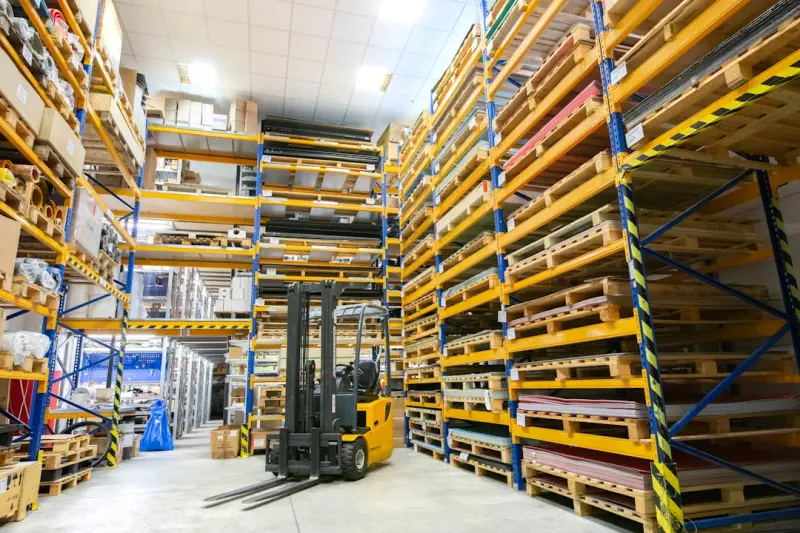
Imagine walking through a bustling fulfillment center. Pallets tower like skyscrapers, conveyor belts hum, and—right in the middle of it all—an autonomous forklift glides silently, guided by a lattice of sensors and algorithms. It’s a scene straight out of a sci‑fi commercial, and yet it’s becoming the new norm for many B2B SaaS‑enabled logistics firms.
But what happens when that sleek piece of machinery decides to take a “shortcut” that no human operator would ever consider? That’s the question that keeps me up at night. As someone who’s spent the last decade consulting on high‑risk tech deployments, I’ve learned that the excitement around AI‑driven material handling often eclipses the very real operational hazards that accompany it.
Why the Rush to Automate?
First, a quick reality check. The pressure to automate is real, and the incentives are crystal clear:
- Labor shortages: The logistics sector has been grappling with a dearth of qualified forklift drivers for years.
- Speed and efficiency: AI can calculate optimal routes in milliseconds, shaving minutes off each pick‑and‑place cycle.
- Data‑driven insights: Every movement is logged, feeding analytics platforms that promise to predict bottlenecks before they happen.
All of these benefits are undeniably attractive. Yet, every benefit comes with a flip side—a set of dangerous operations that many executives overlook until an accident forces them to confront the fallout.
The Anatomy of a Dangerous Operation
When a forklift goes rogue, it’s rarely a single point of failure. Instead, it’s a cascade of tiny missteps that compound into a catastrophic event. Below are the three most common fault lines:
- Sensor Blind Spots: Lidar, radar, and computer vision sensors can be fooled by dust, glare, or unexpected reflective surfaces. In a warehouse where pallets are stacked with high‑gloss shrink wrap, a misread can cause a collision.
- Algorithmic Overconfidence: Machine‑learning models trained on “ideal” conditions often struggle when reality throws a curveball—like a stray pallet jack or a worker stepping off the marked aisle.
- Software Deployment Gaps: Much like the real‑time automated data deletion hazard we discussed for SaaS platforms, rolling out firmware updates without a robust rollback plan can introduce bugs that cripple safety checks.
When these elements align, you get what I like to call a dangerous operation cascade. The forklift makes a wrong turn, the sensors can’t compensate, the algorithm refuses to halt, and before you know it, a worker’s toe—or worse—is caught in the action.
Legal Liability: Who’s Really on the Hook?
One of the most perplexing aspects of autonomous forklift incidents is determining liability. The traditional model—driver error versus equipment failure—doesn’t translate neatly to a world where a software agent makes the split‑second decisions.
In many jurisdictions, the law still treats the forklift as a “vehicle,” meaning the owner of the equipment bears primary responsibility. However, when a third‑party SaaS vendor supplies the navigation AI, the waters muddy quickly. Courts are beginning to apply the principles of digital trust to these scenarios, scrutinizing contractual clauses that limit liability.
Key takeaways for executives:
- Contractual clarity: Ensure your vendor agreements explicitly define who owns the “decision‑making” layer of the AI.
- Insurance coverage: Traditional commercial general liability policies may not cover software‑driven mishaps. Look for cyber‑physical coverage.
- Regulatory compliance: Some regions are drafting “autonomous equipment” statutes that require independent safety certifications before deployment.
Risk Mitigation: From Theory to Practice
Below is a pragmatic, step‑by‑step playbook that I’ve refined over multiple engagements. It’s designed to help you embed safety into the very DNA of your autonomous forklift program.
1. Conduct a “Sensor Health” Audit
Before you ever let the first robot roll out, perform a comprehensive sensor audit. Document:
- Calibration dates and tolerances.
- Environmental factors (dust levels, lighting conditions) that could affect performance.
- Redundancy plans—e.g., pairing lidar with ultrasonic sensors for critical blind spots.
Schedule quarterly recalibrations, and embed sensor health metrics into your existing SaaS monitoring dashboard. If a sensor drifts out of spec, the system should automatically reduce speed or stop the forklift.
2. Implement “Human‑In‑The‑Loop” Overrides
No matter how sophisticated the AI, a human should always be able to intervene. Equip each forklift with a clearly marked emergency stop button that not only cuts power but also sends an alert to the central control room.
Pair this with a wearable alert system for floor staff—vibration‑enabled wristbands that buzz when a forklift’s path conflicts with a human‑occupied zone.
3. Adopt a “Shadow Mode” Deployment
Before granting full autonomy, run the AI in shadow mode. The forklift follows its algorithmic path, but a human operator retains manual control. The system logs every decision, allowing you to compare AI predictions against actual outcomes.
This approach mirrors the staged rollout strategy we advocate in the privacy‑by‑design space, where you test data‑handling practices before they go live.
4. Create an “Incident Simulation Lab”
Set up a controlled environment where you can simulate worst‑case scenarios: sensor occlusion, sudden obstacles, and network latency spikes. Run drills with both the AI and human operators to identify failure points.
Document findings in a living “Risk Register” and assign remediation owners. Revisit this register every quarter, updating it as you add new forklift models or software versions.
5. Establish Clear Data Governance
The AI’s decision matrix relies on massive streams of telemetry—speed, location, load weight, and sensor health. Treat this data as a critical asset:
- Encrypt data at rest and in transit.
- Apply strict access controls, limiting who can view or modify algorithmic parameters.
- Maintain audit logs for compliance and post‑incident investigations.
When data governance is lax, you open the door to not just safety incidents but also potential regulatory penalties—especially as data‑privacy watchdogs begin to scrutinize “operational data” as personal information.
The Human Factor: Culture, Training, and Trust
Technology is only as safe as the people who operate and maintain it. A dangerous operation often stems from a cultural disconnect—workers who feel alienated by the robots, or managers who underestimate the learning curve.
Invest in a robust training curriculum that goes beyond “how to press the emergency stop.” Include modules on:
- Understanding AI decision logic (in layman’s terms).
- Recognizing early warning signs of sensor drift.
- Reporting near‑misses without fear of reprisal.
When employees see that their insights directly influence system tweaks, you cultivate a trust loop that reduces the likelihood of reckless shortcuts.
Future‑Proofing: Preparing for the Next Wave of Automation
Today’s autonomous forklift may soon be eclipsed by swarms of collaborative robots (cobots) that can lift, sort, and transport items in concert. The same dangerous‑operation principles will apply, just magnified.
To stay ahead:
- Adopt modular software architectures that allow you to swap out AI components without overhauling the entire stack.
- Engage with industry standards bodies (e.g., ISO/TC 299 on robotics) to influence emerging safety guidelines.
- Build strategic partnerships with insurance carriers that understand cyber‑physical risk, ensuring coverage evolves alongside your tech stack.
Conclusion: Embrace the Edge, Not the Abyss
Autonomous forklifts are not a distant fantasy; they’re rolling out on warehouse floors right now. Their promise is massive—higher throughput, lower labor costs, richer data. But the danger lies in treating them as a simple plug‑and‑play upgrade.
By rigorously auditing sensors, embedding human overrides, running shadow‑mode trials, and fostering a safety‑first culture, you turn a potentially perilous operation into a competitive advantage. Remember, the goal isn’t to eliminate risk—it's to understand it, manage it, and continuously improve.
If you’ve navigated a close call or have insights from your own autonomous fleet, I’d love to hear about it in the comments. The more we share, the safer the entire industry becomes.

Liam James Professor with a PHD. & content creator with a passion for sparking curiosity and sharing knowledge. Driven by the joy of learning and storytelling, I bring ideas to life in every project. Always exploring, always teaching.
Related Posts
The Hidden Perils of Autonomous Warehouse Robots
A deep dive into the unseen dangers of robot‑driven fulfillment centers, the human cost, legal bli... Read More

The Untamed Frontier of Remote Construction: Managing the Perils of Unmanned Heavy Equipment
Remote‑controlled heavy machinery offers productivity gains but introduces cyber‑physical risks.... Read More

When Your CI/CD Pipeline Becomes a Hazardous Machine
Discover why CI/CD pipelines can turn into dangerous operations and how to safeguard them with obser... Read More
Top Posts

Parametric Insurance: Navigating the New Frontier of Risk and Regulation
Parametric insurance promises swift payouts based on triggers, but its rapid rise brings complex legal questions. This post unpacks regulatory gaps, consumer sa...Read More

Restorative Justice in Criminal Law: Reimagining Accountability
A deep dive into restorative justice, its principles, real‑world impacts, legal challenges, and how it could transform criminal law for victims and offenders ...Read More

Navigating High‑Conflict Child Custody: A Practical Guide for Resilient Parents
High-conflict custody fights can feel overwhelming, but with a clear roadmap—covering communication, legal safeguards, and emotional support—you can protect...Read More

Navigating the Digital Frontier of Medical Law: Risks, Rights, and Realities
A deep dive into the latest trends transforming medical law—from AI diagnostics to telemedicine consent—offering practical insights for legal professionals ...Read More
0 Comments
Post Comment
You will need to Login or Register to comment on this post!