
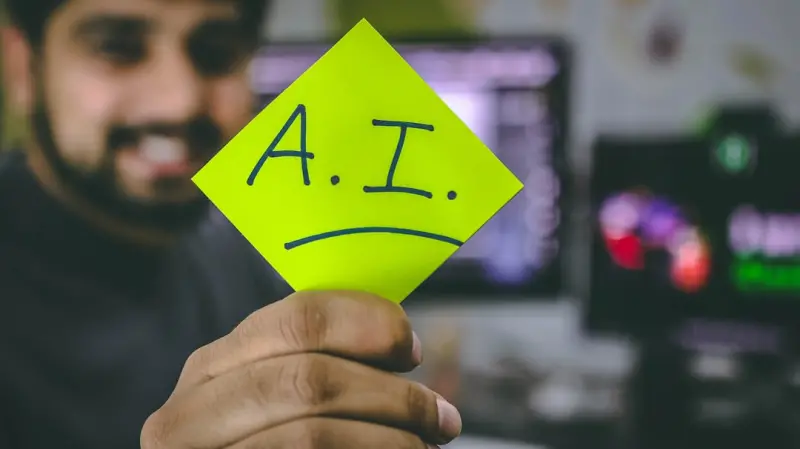
Why the Algorithm is Not Your New Recruiter (Yet)
When I first walked into a tech conference and saw a booth bragging about “AI‑Powered Talent Acquisition,” I felt a familiar mix of excitement and dread. The promise was intoxicating: faster hires, data‑driven decisions, and the illusion of total objectivity. Yet, as a lawyer who has spent years dissecting the fine print of employment statutes, I couldn’t help but wonder—what happens when a black‑box algorithm decides who gets the interview and who gets the rejection?
The answer, unsurprisingly, is that we’re standing at the edge of a legal minefield. From potential discrimination claims to liability for faulty data, the rise of algorithmic hiring tools forces us to rewrite old rules for a new reality. In this post, I’ll walk you through the most pressing legal challenges, highlight real‑world cases that are already shaping the conversation, and offer practical steps for employers who want to stay ahead of the curve.
The Allure of the Algorithm
On paper, algorithmic hiring looks like a panacea for the age‑old pains of recruitment:
- Speed: Automated resume parsing can filter thousands of applications in seconds.
- Consistency: Machines apply the same scoring rubric to every candidate, theoretically eliminating human whim.
- Data‑driven insight: Predictive analytics promise to surface “the best fit” based on performance metrics and turnover data.
But the very factors that make these tools attractive also raise red flags. The data feeding the algorithm is often historical—meaning it carries the biases of past hiring decisions. The scoring model is typically proprietary, leaving employers and candidates in the dark about how decisions are made. And the law, while evolving, still lags behind the technology.
Discrimination Law Meets Machine Learning
Title VII of the Civil Rights Act, the Age Discrimination in Employment Act, and the Americans with Disabilities Act have long prohibited discrimination based on protected characteristics. However, the statutes were drafted before anyone imagined a computer would be the gatekeeper of a job interview.
Courts have begun to apply the “disparate impact” framework to algorithmic hiring. If a tool disproportionately screens out candidates of a certain gender, race, or age, and the employer cannot demonstrate that the practice is a business necessity, liability may follow. The challenge lies in proving causation when the algorithm’s inner workings are a trade secret.
Recent litigation—such as the case against a major retail chain whose AI tool allegedly filtered out older applicants—shows that plaintiffs can succeed by subpoenaing the algorithm’s source code or demanding expert testimony. The The Silent Surveillance article highlighted how courts are increasingly willing to pierce corporate black boxes when civil rights are at stake.
Data Quality: The Achilles’ Heel of AI Hiring
Garbage in, garbage out. If an algorithm is trained on data that reflects past discriminatory hiring patterns, it will inevitably replicate those patterns. This is not merely an academic concern; it’s a practical legal risk. Employers must conduct rigorous data audits to ensure that historical data does not embed bias.
Key steps include:
- Identifying protected class indicators in the training set (e.g., zip codes that correlate with ethnicity).
- Running statistical tests for disparate impact before deploying the tool.
- Implementing ongoing monitoring to catch drift—where the algorithm’s performance diverges over time.
Failure to perform these checks can be interpreted as negligence, especially when a plaintiff demonstrates that the employer knew or should have known about the bias. Remember, Hybrid Work, Hybrid Law reminded us that employers have a duty to adapt policies to new environments; the same principle applies to AI tools.
Transparency and the “Right to Explanation”
In Europe, the GDPR introduced the concept of a “right to explanation,” allowing individuals to request meaningful information about automated decisions. While the United States lacks a federal equivalent, several states—Illinois with its Biometric Information Privacy Act (BIPA) and California with the Consumer Privacy Act (CCPA)—are moving toward greater transparency.
From a legal standpoint, providing a “meaningful” explanation does not mean revealing the entire source code. Courts have suggested that employers can disclose the criteria used (e.g., years of experience, specific skill tests) and the weight assigned to each factor. This approach balances trade secret protection with the need for accountability.
Liability for “False Positives” and “False Negatives”
Imagine an algorithm that flags a candidate as “high risk” for turnover based on a social media sentiment analysis. If that candidate is denied an interview, the employer may face claims of defamation, invasion of privacy, or wrongful discrimination. Conversely, a “false negative”—overlooking a qualified candidate—might not be illegal per se, but it could expose the company to indirect liability if it results in a disparate impact.
Employers should therefore:
- Document the rationale behind each automated decision.
- Maintain a human‑in‑the‑loop process where a qualified recruiter reviews the algorithm’s output before finalizing any adverse action.
- Establish an appeal mechanism for candidates who feel they were unfairly screened out.
The Emerging Role of “Algorithmic Audits”
Several forward‑thinking companies are commissioning independent algorithmic audits—much like financial audits—for their hiring tools. These audits assess:
- Bias mitigation techniques (e.g., re‑weighting, adversarial debiasing).
- Model interpretability (how easily a human can understand decision logic).
- Compliance with relevant statutes and regulations.
While not yet a legal requirement, an audit can serve as a strong defense in litigation, demonstrating that the employer took proactive steps to ensure fairness.
Contractual Considerations with Vendors
Most employers do not build their own AI hiring platform; they license one from a vendor. This relationship introduces another layer of risk. Key contractual clauses to negotiate include:
- Indemnification: The vendor should indemnify the employer against claims arising from algorithmic bias.
- Data Ownership: Clarify who owns the training data and any derived insights.
- Audit Rights: Secure the right to conduct independent audits of the vendor’s model.
- Termination for Non‑Compliance: Include provisions allowing termination if the tool fails to meet legal standards.
These provisions help shift some of the liability downstream and align incentives for the vendor to maintain high standards.
Future Legislative Trends
Legislators are catching up. The U.S. Senate’s “Algorithmic Accountability Act” (still pending) would require companies to conduct impact assessments for high‑risk automated decision‑making. Meanwhile, the European Commission is drafting AI regulations that categorize hiring tools as “high‑risk” systems, mandating conformity assessments before deployment.
Even if you operate solely within the United States, the global nature of talent acquisition means you could be subject to foreign regulations if you use a vendor with an overseas data center. Staying ahead means monitoring not just local statutes but also international developments.
Practical Checklist for Employers
Below is a concise, actionable checklist to help you navigate the legal landscape of algorithmic hiring:
- Data Audit: Scrub historical hiring data for protected class correlations.
- Bias Testing: Run statistical disparity analyses before launch.
- Human Oversight: Implement a review step where a qualified HR professional validates AI recommendations.
- Transparency Protocol: Draft clear explanations for candidates about how decisions are made.
- Appeal Process: Offer a formal channel for candidates to contest adverse decisions.
- Vendor Contracts: Include indemnity, audit rights, and compliance clauses.
- Monitoring & Audits: Schedule periodic third‑party algorithmic audits.
- Legal Updates: Assign a compliance officer to track emerging AI legislation.
Conclusion: Embrace the Tool, Not the Illusion
Algorithmic hiring is not a silver bullet, nor is it a lawless frontier where anything goes. It’s a powerful instrument that, when wielded responsibly, can enhance efficiency and broaden talent pools. However, without rigorous legal safeguards, it can also amplify bias, erode privacy, and expose employers to costly litigation.
My advice—drawn from years of advising companies through regulatory turbulence—is to treat any AI hiring system as a partnership, not a replacement. Pair the algorithm’s speed with human judgment, embed transparency into the process, and continuously audit for fairness. By doing so, you not only protect your organization from legal fallout but also build a reputation for equitable, forward‑thinking recruitment.

Liam James Professor with a PHD. & content creator with a passion for sparking curiosity and sharing knowledge. Driven by the joy of learning and storytelling, I bring ideas to life in every project. Always exploring, always teaching.
Related Posts

The 2024 Legal Landscape: Tech, Trends, and the Lawyer’s Playbook
A deep dive into 2024’s legal shifts, covering tech‑driven courts, automotive law, and criminal ... Read More

Navigating the Legal Labyrinth: How Technology Is Redefining Practice
A deep dive into the tech-driven transformation of law, covering AI, privacy, and emerging digital c... Read More

Who Owns a Robot’s Brushstroke? Unpacking AI‑Generated Art and Copyright
A deep dive into the complex world of AI‑generated art, examining who can claim copyright, the cha... Read More
Top Posts

When the Gig Economy Meets Divorce: Protecting Freelance Income and IP
Divorce poses unique challenges for freelancers whose earnings are tied to client contracts, digital platforms, and intellectual property. This guide outlines h...Read More

Remote‑Work Injuries: Redefining Personal‑Injury Law for the Home Office
The shift to remote work has turned living rooms into workplaces, sparking a surge in personal‑injury claims. This article breaks down liability, legal trends...Read More

Virtual Vows, Real Laws: Navigating Marriage in the Digital Age
A deep dive into the emerging legal complexities of virtual weddings, offering practical guidance on e‑signatures, jurisdictional issues, digital documentatio...Read More

Redefining Marriage Law for the Digital Age
Marriage law is evolving with technology—digital vows, smart contracts, and AI mediation are changing how couples marry, protect assets, and resolve disputes ...Read More
0 Comments
Post Comment
You will need to Login or Register to comment on this post!