
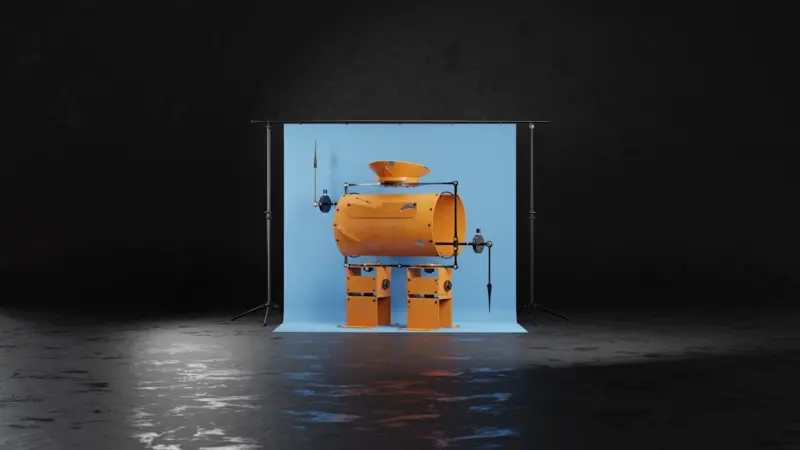
Who Owns a Robot’s Brushstroke? Unpacking AI‑Generated Art and Copyright
When I first encountered an algorithm that could paint a Van Gogh‑style sunset in under a minute, I felt a mixture of awe and unease. The image was undeniably beautiful, yet it raised a question that has haunted jurists, technologists, and artists alike: who, if anyone, holds the copyright to a work birthed by a machine? As someone who has spent the better part of two decades navigating the intersection of law and emerging technology, I’ve learned that the answer is far from straightforward. In this post, I’ll walk you through the current legal landscape, the policy debates shaping it, and practical guidance for creators, platforms, and investors who want to stay ahead of the curve.
The Historical Lens: From the Printing Press to the Pixel
Copyright law was originally designed to protect the fruits of human creativity. The 1909 U.S. Copyright Act, for instance, required a work to be the product of “the author’s own original expression.” The Supreme Court reaffirmed this human‑centric view in Burrow‑Gold Co. v. Apple Computer Corp., holding that a computer‑generated image could not be copyrighted because there was no human author.
Fast‑forward to today, and we’re dealing with generative models such as DALL‑E, Stable Diffusion, and Midjourney, which can produce high‑resolution, stylized images from a single text prompt. These systems are not merely tools; they are collaborators that contribute substantially to the final output. The question then becomes: does the traditional “author” requirement still make sense, or do we need a new framework?
What the Courts Are Saying (So Far)
The most salient case to watch is the recent Thaler v. European Patent Office decision, where a U.S. court grappled with a patent claim filed by an AI named “DABUS.” While the case centered on patents rather than copyright, the reasoning—that an AI cannot be an inventor under current statutes—has been echoed in several copyright disputes. Courts have consistently held that “authorship” implies human intent and originality.
In the United Kingdom, the Copyright, Designs and Patents Act 1988 was amended in 2014 to allow computer‑generated works to be protected, provided the person who made the necessary arrangements for the creation of the work is identified as the author. This “arranger” standard has become a de‑facto model for many jurisdictions, though it leaves open a host of practical questions: What counts as “necessary arrangements”? Does the person who drafted the prompt qualify? What about the engineers who trained the model?
Policy Debates: Incentives vs. Public Domain
At the heart of the debate are two competing policy goals:
- Incentivizing innovation. Creators and investors argue that without exclusive rights, the massive investment required to develop generative AI systems would evaporate, stifling further breakthroughs.
- Preserving the public domain. Others contend that extending copyright to AI‑generated works would crowd out human‑made art, creating a monopoly over an ever‑growing corpus of machine‑produced content.
Balancing these interests is no easy task. Some scholars propose a “limited‑term” protection for AI‑generated works, granting rights for a shorter duration—say, five years—rather than the standard life‑plus‑70‑years. Others advocate for a sui‑generis “database right,” similar to the EU’s sui generis protection for databases, which would protect the output without granting full copyright.
Practical Scenarios and Who Might Claim Ownership
Let’s break down three common scenarios you might encounter in practice, and explore the legal implications for each.
1. The Solo Artist Using a Prompt
Jane, a digital illustrator, feeds a text prompt into an AI platform and receives an image she tweaks slightly before selling as a print. Under the “arranger” rule, Jane could likely claim copyright if she can demonstrate that her prompt and subsequent edits constitute “creative choices.” However, if the AI’s contribution is deemed to dominate the creative expression, her claim could be vulnerable.
2. The Platform as Publisher
Consider Connected Car Data: The Legal Road Ahead—a platform that aggregates AI‑generated art from thousands of users and sells subscription access. The platform may argue it holds a joint copyright or an implied license, but it must secure explicit agreements from contributors to avoid infringement claims.
3. The Model Trainer
TechCo spends millions training a proprietary diffusion model. When a client commissions a piece, who owns the resulting image? In many jurisdictions, the client (who provided the prompt) could be viewed as the author, while TechCo retains rights to the underlying model. Licensing agreements should clearly delineate these layers to prevent disputes.
Licensing Strategies for AI‑Generated Works
Given the uncertainty, the safest route is to use robust licensing contracts. Here are three clauses you should consider inserting into any agreement involving AI‑generated content:
- Authorship Attribution. Define who is deemed the “author” for purposes of copyright—whether it’s the prompt creator, the platform, or a joint ownership arrangement.
- Scope of Rights. Specify whether the license is exclusive or non‑exclusive, and delineate the permitted uses (commercial, editorial, derivative works, etc.).
- Indemnification. Include language that obligates the licensor to defend against infringement claims arising from the underlying model’s training data.
Data‑Driven Training Sets: The Hidden Legal Minefield
One of the most contentious issues is the provenance of the data used to train generative models. Many AI developers scrape publicly available images from the internet, raising potential copyright infringement claims. Recent lawsuits against companies like Stability AI illustrate the high stakes: plaintiffs allege that the models reproduce protected works without permission, violating the fair use doctrine.
Even if a model is trained on licensed material, the resulting outputs may still incorporate elements of the original works—a phenomenon known as “style‑copying.” Courts have yet to decide how to treat this, but some legal scholars suggest applying the “substantial similarity” test used in traditional infringement cases.
International Perspectives: A Patchwork of Rules
While the United States leans heavily on the “human author” requirement, other jurisdictions are experimenting with more flexible approaches. The European Union’s Copyright Directive includes provisions for “computer‑generated works,” but leaves the definition of the author to member states, resulting in a kaleidoscope of rules.
In Japan, the Copyright Act was amended in 2021 to allow “persons who made the necessary arrangements” to claim authorship, echoing the UK model. Meanwhile, Canada’s Supreme Court has hinted at a possible shift away from strict human authorship, though no definitive ruling exists yet.
Future Directions: From “Authorship” to “Authorship‑Like Rights”
Given the rapid evolution of generative AI, many experts predict a move toward “authorship‑like rights” that protect the interests of human stakeholders without extending full copyright to machines. Such rights could include:
- Moral rights for the prompt creator, ensuring attribution and integrity.
- Database rights for the entity that compiled the training set.
- Contractual rights that grant exclusive licenses based on the value added by human input.
Policymakers are already exploring these concepts. The U.S. Copyright Office recently opened a public comment period on “AI‑Generated Works,” inviting suggestions for statutory reform. Keep an eye on those proceedings; they may shape the next decade of creative law.
Practical Checklist for Creators and Companies
To navigate this murky terrain, I recommend the following actionable steps:
- Document the creative process. Keep records of prompts, parameter settings, and any manual edits. This evidence can prove crucial in establishing authorship.
- Secure clear licenses. Whether you’re licensing a model, a dataset, or the final artwork, make sure the contract spells out ownership and usage rights.
- Conduct a risk assessment. Evaluate the training data for potential infringement, especially if you plan to commercialize the model’s outputs.
- Monitor legal developments. Stay updated on case law and legislative proposals; the landscape is shifting faster than ever.
- Consider alternative protection mechanisms. Trade secrets, trademarks, and design patents may offer viable protection for certain AI‑driven creations.
Conclusion: Embracing Uncertainty While Shaping the Future
The rise of AI‑generated art forces us to reexamine the very foundations of copyright law. While courts remain hesitant to grant machines authorship, the commercial realities of today demand pragmatic solutions. By combining careful contract drafting, diligent documentation, and a keen eye on policy trends, creators and companies can protect their interests without stifling innovation.
In the end, the brushstroke may be digital, but the responsibility for its legal status remains firmly human. As we continue to blur the line between creator and tool, the law must adapt—ensuring that the rights of those who spark the imagination are respected, even when the canvas is rendered by code.

Related Posts
Beyond Earth: Legal Frontiers of Commercial Spaceflight
Space tourism is soaring, but the law is still catching up. This article examines jurisdiction, liab... Read More
Beyond the Grave: Crafting a Digital Estate in the Age of Data
A practical guide to managing your online identity after death, covering inventory, legal tools, cyb... Read More
Deepfake Dilemmas: How the Law Is Keeping Pace with Synthetic Media
An in‑depth look at the legal challenges posed by AI‑generated deepfakes, covering evidence, sta... Read More
Top Posts
Charged with a Crime While on Probation? What Happens Next
Being on probation is a unique status in the criminal justice system — a conditional release that allows individuals to remain in the community under court-or...Read More
Why Cyber Liability Insurance Is a Must‑Have for SaaS Companies
Cyber threats are now a certainty for SaaS businesses. This post explains the core components of cyber liability insurance, common policy gaps, and actionable s...Read More
The Future of Employment Law: Remote Work, AI, and Employee Rights
A deep dive into the rapid changes in employment law, covering remote work challenges, AI surveillance, gig‑worker classification, and practical steps for fut...Read More
Grandparents' Legal Voice: Protecting Rights in Modern Multigenerational Families
Grandparents are now central caregivers in many families, yet the law often lags behind. This post uncovers practical steps, recent legal trends, and future ref...Read More
0 Comments
Post Comment
You will need to Login or Register to comment on this post!