
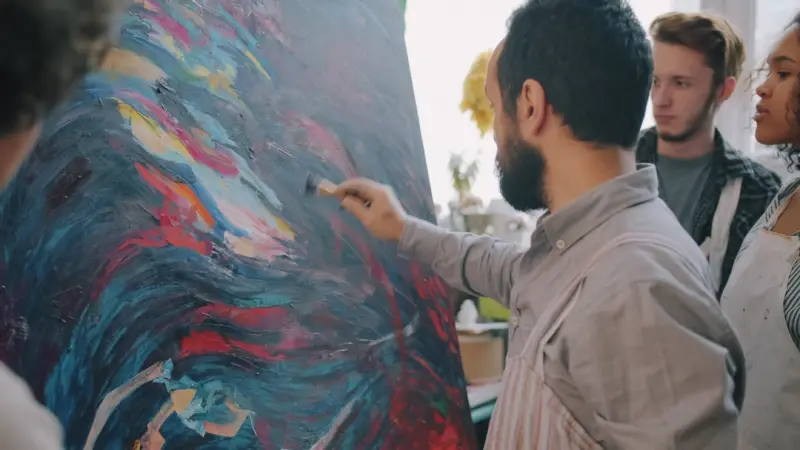
Intellectual property has always been a game of defining the line between what belongs to the creator and what belongs to the world. In the pre‑digital era, that line was drawn with a fairly sturdy pencil: a tangible work, a clear author, a simple registration process. Today, generative AI tools can spin up a piece of music, a painting, or a paragraph of code in seconds—often without a human ever touching a brush or a pen. The result? A legal knot that feels more like a pretzel than a straight line.
Why This Conversation Matters Now
Imagine you commission an AI‑powered platform to draft a marketing tagline for your new SaaS product. The platform churns out a catchy phrase that you love, and you roll it out across your campaigns. A week later, a rival discovers the same phrase in their own ads, generated by the same AI service. Who owns that phrase? Did you acquire any exclusive rights, or is it up for grabs every time the algorithm is run?
These scenarios are no longer hypothetical. They’re happening in boardrooms, design studios, and even in the hallways of startups that rely on AI for rapid content creation. As a seasoned IP practitioner, I’ve seen the tension between the allure of speed and the need for certainty. This post unpacks the emerging challenges and offers a roadmap for creators, businesses, and legal teams navigating the murky waters of AI‑generated works.
The Legal Landscape Before Generative AI
Historically, U.S. copyright law has hinged on two core principles:
- Originality: The work must contain a modicum of creativity.
- Human Authorship: A human author must have contributed to the expression.
These pillars have guided courts for decades, from the earliest photographs to complex software code. The Feist Publications v. Rural Telephone Service decision, for example, emphasized that mere facts or data are not protectable without creative selection or arrangement.
When it came to software, the on‑demand manufacturing and IP conversation reminded us that the line between invention and expression can blur, but the law still required a human inventor to claim a patent. That same human‑centric requirement now underpins copyright.
The Rise of AI‑Generated Content
Generative models like GPT‑4, DALL‑E, and Stable Diffusion have democratized creation. They can produce:
- Marketing copy that reads like a seasoned copywriter.
- Visual art that mimics the style of historic masters.
- Music tracks that rival a professional composer.
These tools are trained on massive datasets that include millions of copyrighted works. The output is a mash‑up of learned patterns, raising the question: does the AI merely remix existing works, or does it create something genuinely new?
The AI‑generated inventions discussion highlighted how patent offices are grappling with inventorship when an algorithm contributes to an invention. Copyright faces a parallel dilemma: if an algorithm is the “author,” does the work qualify for protection at all?
Copyright Eligibility: The Human Authorship Requirement
U.S. courts have been consistent: a work must be the product of human intellect to be copyrighted. In Burrow-Giles Lithographic Co. v. Sarony, the Supreme Court recognized a photograph as protectable because the photographer exercised creative judgment. Fast forward to today’s AI tools, and the question becomes: who, if anyone, exercised that judgment?
Three primary scenarios emerge:
- Human‑Directed Prompting: You craft a detailed prompt, iterate on outputs, and select the final piece. Courts may view the human as the author, emphasizing the selection and arrangement as the creative act.
- Fully Autonomous Generation: You press “run” and accept the first output without modification. Here, the lack of human creativity may leave the work unprotected.
- Hybrid Collaboration: You co‑create with the AI, tweaking the output, adding elements, or combining multiple AI‑generated pieces. This scenario offers the strongest claim to human authorship, though the line remains fuzzy.
These nuances mean that creators must document their creative process meticulously if they hope to claim copyright later.
Ownership Questions in Collaborative AI Projects
Even when a human can claim authorship, ownership can become tangled. Consider these common arrangements:
- License‑Based Platforms: Many AI services operate under terms that grant the provider a license to the output, sometimes even claiming ownership. Reading the fine print is essential.
- Work‑for‑Hire Agreements: If an employee uses an AI tool as part of their job, the employer typically owns the resulting work, but the employment contract may need to address AI‑specific clauses.
- Open‑Source Model Contributions: When an AI model is trained on open‑source code or data, the resulting output could inherit licensing obligations, especially if the model’s training data includes copyleft material.
These layers of ownership can lead to unexpected disputes, particularly when a client expects exclusive rights to a piece that was partially generated by a third‑party AI service.
The Role of Licenses and Contracts
Given the uncertainties, proactive contract drafting is your best defense. Here’s what to include:
- Clear Definition of “Work Made for Hire”: Specify whether AI‑generated outputs fall under this umbrella.
- AI Tool Usage Clause: Outline which AI platforms may be used, the scope of their licenses, and any attribution requirements.
- Ownership Allocation: Explicitly state who owns the final deliverable, the underlying prompts, and any derivative works.
- Indemnification Provisions: Protect against third‑party claims that the AI output infringes existing copyrights.
By embedding these provisions, you reduce the risk of surprise litigation down the line.
Practical Safeguards for Creators
Even with solid contracts, everyday creators can adopt habits that strengthen their IP position:
- Document the Creative Journey: Keep logs of prompts, iterations, and decisions. Screenshots with timestamps can serve as evidence of human contribution.
- Limit Unrestricted AI Use: Reserve AI for inspiration or drafts, then add substantial human edits before finalizing.
- Maintain a “Human‑Touch” Threshold: Establish a personal standard—e.g., at least 30% of the final work must be manually created or edited.
- Conduct Due Diligence on Training Data: When possible, use AI models trained on royalty‑free or licensed datasets to mitigate downstream infringement risk.
- Register Early: If you’re confident in your authorship claim, register the work with the Copyright Office promptly. Registration offers a legal presumption of ownership and enables statutory damages.
Looking Ahead: Policy and Reform
Lawmakers are already debating reforms. The U.S. Copyright Office recently opened a notice‑and‑comment period on whether AI‑generated works should receive a new category of protection, akin to “computer‑generated works” that currently reside in a legal gray area. Internationally, the EU’s proposed AI Act may impose transparency obligations on high‑risk AI systems, potentially affecting how AI‑generated content is disclosed and attributed.
While these discussions evolve, the practical takeaway for creators is to stay informed and adapt. Engage with industry groups, attend webinars, and consider a periodic IP audit to ensure your AI‑driven processes remain compliant.
Conclusion: Embrace the Future, Guard Your Rights
Generative AI is a powerful ally, but it’s also a catalyst for new legal puzzles. By understanding the human‑authorship requirement, clarifying ownership through contracts, and instituting disciplined creative workflows, you can reap the benefits of AI while safeguarding your intellectual property.
In the words of a favorite mentor, “Technology moves fast; the law moves slower. Your job is to bridge that gap before the gap becomes a chasm.” As we continue to explore the intersection of creativity and code, staying proactive will be the difference between owning a masterpiece and watching it slip into the public domain.

I am Madden Persons, a content writer and digital influencer dedicated to crafting impactful stories and building authentic online connections. With a strategic approach to content creation, I develop engaging articles, digital campaigns, and social media narratives that help brands elevate their online presence and connect meaningfully with their target audiences.
Passionate about modern digital trends and audience engagement, I specialize in translating complex ideas into compelling content that sparks conversation, drives results, and strengthens brand identity.
Related Posts
Why the Metaverse Is Redefining Trademark Law for SaaS Brands
The metaverse is turning into a bustling marketplace where SaaS brands face new trademark challenges... Read More
Who Owns the Machine? Copyright in the Age of Generative AI
A deep dive into the copyright challenges of AI‑generated art, offering practical guidance for cre... Read More
The Hidden IP Playbook Every SaaS Founder Needs
A deep dive into the often‑overlooked intellectual property pillars that SaaS companies need, offe... Read More
Top Posts

Beyond the Vows: Legal Safeguards Every Couple Should Consider
Explore how proactive legal planning—prenups, postnupts, property strategies, and estate integration—can strengthen a marriage and safeguard both partnersâ€...Read More
A Fresh Look at Child Custody in 2024: Insights from Kris M. Chen
Kris M. Chen shares a modern, empathetic roadmap for parents tackling child custody in 2024, blending legal updates with real‑world strategies and personal le...Read More
The Intersection of Automotive Law and Family Law: Understanding Liability in Vehicle Accidents
The intersection of automotive law and family law is complex. Understand liability in vehicle accidents, negligence, vehicle maintenance, and seeking profession...Read More
The Rise of Car Subscription Services: Legal Pitfalls and Consumer Protections
Car subscriptions promise flexibility, but hidden fees, liability issues, and privacy concerns can trap drivers. Discover key legal pitfalls and practical safeg...Read More
0 Comments
Post Comment
You will need to Login or Register to comment on this post!