

The Climate‑Driven Surge in Insurance Litigation
In recent years, the frequency and severity of climate‑related disasters have forced insurers to confront a new reality where traditional actuarial tables no longer predict losses accurately, prompting policyholders to challenge denied claims more aggressively. Courts are now witnessing a wave of lawsuits that allege insurers acted in bad faith by refusing to honor policies on the basis of vague “act of God” language, even when the events are clearly linked to anthropogenic climate change. This shift is reshaping the insurance law landscape, demanding that lawyers, underwriters, and regulators all grapple with scientific data that was once considered peripheral to contract disputes.
Bad Faith Claims: From Theory to Trial
Bad‑faith litigation has evolved from isolated grievances into a systematic strategy where plaintiffs marshal climate science to demonstrate that insurers unreasonably delayed or denied coverage. Plaintiffs argue that insurers, armed with sophisticated climate models, cannot claim ignorance when they routinely price policies based on projected flood and wildfire risks, yet they invoke vague exclusions to avoid payouts. Judges are increasingly scrutinizing the insurer’s internal communications and underwriting practices, turning what was once a contractual dispute into a de facto negligence claim against the insurer’s risk‑assessment process.
Statutory Reforms and Disclosure Requirements
Several states have begun to codify climate‑risk disclosure obligations for insurers, mandating that policy language explicitly address extreme weather events rather than relying on generic force‑majeure clauses. These reforms aim to provide transparency, but they also create a new battleground where the adequacy of disclosed information becomes a focal point of litigation. For a data‑driven perspective on emerging insurance challenges, see Parametric Insurance, which illustrates how precise triggers are reshaping coverage terms in parallel to climate disclosures.
Actuarial Modeling Meets Judicial Scrutiny
Actuarial models that incorporate climate projections are now being subpoenaed as evidence, forcing courts to evaluate complex statistical methodologies alongside traditional contract interpretation. Plaintiffs’ experts often present probabilistic forecasts that show a high likelihood of loss, contending that insurers should have accounted for these risks when issuing policies, while insurers argue that such models are speculative and cannot form the basis of a contractual duty. This tension forces judges to balance scientific uncertainty with the reasonable expectations of policyholders, a task that has rarely been required in conventional insurance disputes.
Class Actions vs. Individual Lawsuits: Strategic Considerations
When a hurricane devastates an entire coastal region, plaintiffs face a strategic choice: pursue a class action that aggregates countless small claims or file individual suits that allow for tailored evidence of loss. Class actions can amplify pressure on insurers to settle, yet they also demand extensive discovery and may dilute the nuances of each claimant’s situation. Conversely, individual lawsuits often provide a clearer narrative for judges, but they require significant resources from each policyholder. The decision hinges on the insurer’s response patterns, a factor illuminated by recent analyses of autonomous vehicle coverage disputes in The Hidden Legal Pitfalls of Autonomous Ride‑Sharing Fleets, where similar strategic dilemmas have emerged.
Reinterpreting Force‑Majeure and Mitigation Clauses
Traditional force‑majeure provisions, once a catch‑all for unforeseeable catastrophes, are now being dissected to determine whether climate‑induced events fall within their scope or constitute covered perils. Courts are increasingly demanding that insurers demonstrate that a claimant failed to mitigate damages, a burden that can be onerous when the disaster’s magnitude overwhelms any reasonable mitigation effort. This evolving jurisprudence encourages policy drafters to craft clearer exclusions and to embed specific mitigation obligations, thereby reducing ambiguity that fuels litigation.
Practical Steps for Policyholders Facing Climate Claims
Policyholders can strengthen their position by meticulously documenting damage, preserving communications with insurers, and securing independent expert assessments early in the claims process. Engaging a qualified climate‑risk consultant can provide the scientific foundation needed to counter insurers’ vague denials, while also establishing a record that may prove decisive if the dispute escalates to court. Additionally, invoking alternative dispute resolution clauses before filing suit can demonstrate a willingness to negotiate, a factor that courts often view favorably when assessing bad‑faith allegations.
Implications for Insurance Attorneys and Underwriters
Lawyers representing insurers must now anticipate climate‑science challenges and proactively update policy language to reflect emerging risk realities, ensuring that exclusions are both precise and defensible. Underwriters, on the other hand, are compelled to integrate climate data into pricing models in a way that withstands judicial scrutiny, balancing profitability with the ethical imperative to provide fair coverage. This dual focus on scientific rigor and contractual clarity is reshaping professional standards across the insurance industry.
Looking Ahead: The Future of Climate‑Focused Insurance Law
The intersection of climate science and insurance law is poised to become a cornerstone of litigation for years to come, as legislators, courts, and market participants converge on a shared understanding of risk allocation. Anticipating this trajectory, firms that invest in climate expertise and transparent policy design will likely mitigate exposure to costly lawsuits, while those that cling to outdated doctrines may find themselves embroiled in protracted legal battles. Ultimately, the evolution of insurance law will reflect society’s broader commitment to addressing climate change, demanding both legal ingenuity and responsible risk management.

Steven McClurry is a freelance writer. He loves to write controversial topics and on a wide rang of topics. When is not online he is hanging out at his college campus or playing online games.
Related Posts

When Insurers Cross the Line: A Deep Dive into Bad‑Faith Claims
Discover the warning signs of insurance bad faith, learn legal remedies, and protect your claims wit... Read More

Parametric Climate Insurance: Harnessing Data and Smart Contracts for Resilient Communities
Parametric climate insurance triggers automatic payouts based on measurable data, offering faster, m... Read More
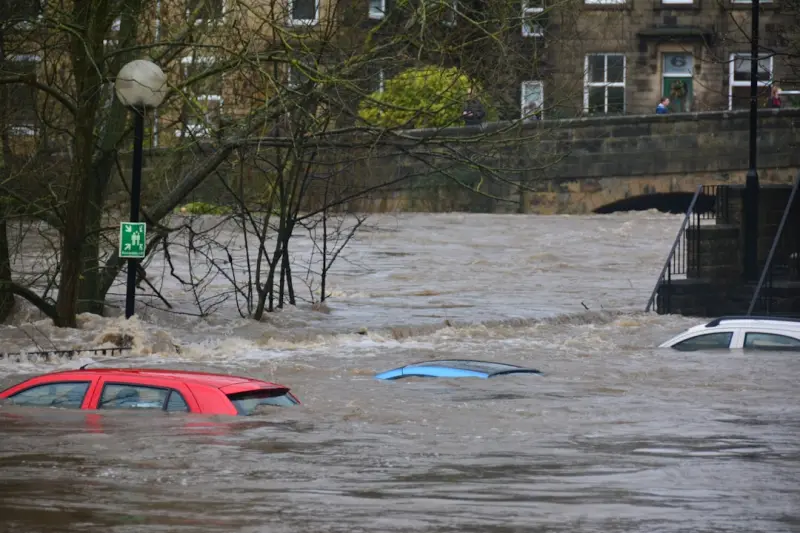
When Floods Hit: Unraveling Insurance Law in the Climate Era
As extreme weather reshapes our homes, insurance law faces new tests. I break down claim challenges,... Read More
Top Posts

Listening to the Future: Mastering Voice Search and Conversational SEO
Voice search is reshaping how users find information. Learn the strategies—conversation‑first content, schema markup, local tactics, and link building—to ...Read More

Navigating the Shifting Sands of Automotive Law
A deep dive into the evolving legal landscape of vehicles—covering autonomous responsibility, data‑driven disputes, and innovative insurance solutions for m...Read More

When Health Meets Tech: Navigating the New Frontiers of Medical Law
A deep dive into the legal challenges posed by AI diagnostics, telehealth, wearables, and gene editing, offering actionable guidance for healthcare providers an...Read More

Crime‑as‑a‑Service: How Subscription‑Style Crime Is Redefining Enforcement
Crime‑as‑a‑Service turns illicit activity into a subscription model, scaling attacks and complicating prosecution. This post examines its economics, legal...Read More
0 Comments
Post Comment
You will need to Login or Register to comment on this post!