
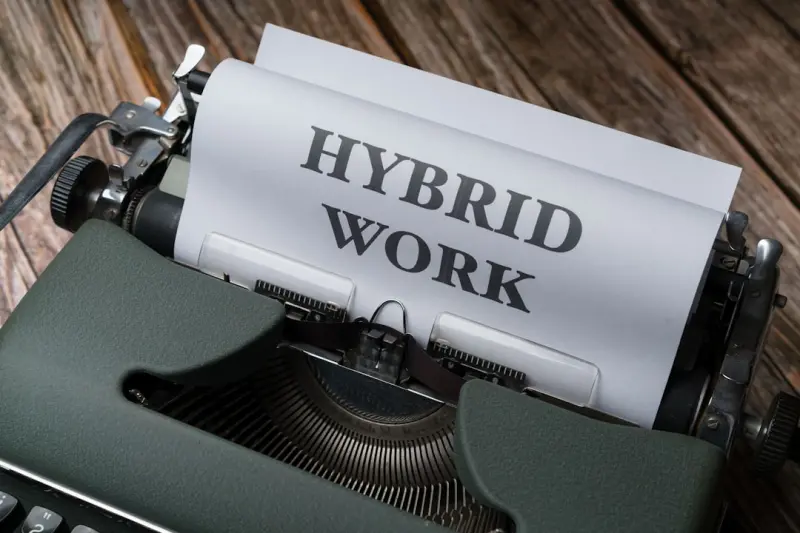
Hybrid Work Contracts: The Legal Tightrope Between Flexibility and Compliance
When the pandemic forced many companies to rethink the office, the experiment that was meant to be temporary quickly became permanent. Today, the hybrid work model—a blend of in‑office days and remote days—has cemented itself as the default expectation for a sizable portion of the workforce. As HR teams scramble to draft policies that keep talent happy while protecting the bottom line, a new set of employment‑law challenges is emerging.
Why Hybrid Isn’t Just “Remote + Office”
At first glance, hybrid arrangements appear to be a simple scheduling puzzle: employees pick three days at the office, two days at home, and everyone’s happy. In reality, the shift reshapes the legal landscape in three profound ways:
- Work‑hour calculations: Determining overtime eligibility when employees toggle between locations can be tricky, especially for non‑exempt workers.
- Health, safety, and ergonomics: Employers retain a duty of care for any workspace they require employees to use, whether it’s a cubicle or a home office.
- Data privacy and monitoring: The tools that make hybrid possible—time‑tracking software, virtual private networks, and AI‑driven productivity dashboards—raise fresh privacy concerns.
Overtime and the “Workday” Redefined
Under the Fair Labor Standards Act (FLSA), non‑exempt employees are entitled to overtime pay for any hours worked over 40 in a workweek. The challenge emerges when a hybrid schedule blurs the line between “work” and “non‑work.” For instance, an employee might log on at 8 a.m. from home, take a lunch break, then drive to the office for a 2 p.m. meeting. Is the commute time part of the workday? The Department of Labor has traditionally excluded ordinary commute, but when the employer mandates a specific office arrival time, the commute may be considered “hours worked” if the employee is required to be on site at a set hour.
Employers should therefore:
- Clearly define when the workday begins and ends in the hybrid policy.
- Specify whether travel time to the office is compensated.
- Use consistent time‑tracking tools that capture all work‑related activities, not just those performed at a desk.
Health & Safety: Extending the “Safe Workplace” Doctrine
Occupational Safety and Health Administration (OSHA) regulations obligate employers to provide a safe working environment. In a hybrid world, that duty extends beyond the physical office. Companies must now consider:
- Ergonomic assessments for home offices—often via virtual consultations.
- Equipment provision—chairs, monitors, and keyboards that meet safety standards.
- Incident reporting procedures for injuries that occur off‑site but are work‑related.
Failure to address these factors can expose a business to workers’ compensation claims and costly litigation. A proactive approach includes offering stipends for home office upgrades and conducting regular check‑ins on employee well‑being.
Surveillance, AI, and the Privacy Paradox
Hybrid teams rely heavily on digital platforms that can track keystrokes, screen time, and even facial expressions. While these tools promise productivity insights, they also tread dangerously close to invasive monitoring. The legal risk is twofold:
- Compliance with state privacy statutes such as California’s Consumer Privacy Act (CCPA) or Illinois’ Biometric Information Privacy Act (BIPA).
- Potential discrimination claims if monitoring data is used to make employment decisions without proper justification.
Companies must strike a balance by implementing transparent policies that detail what data is collected, how it will be used, and how long it will be retained. Employees should have a clear avenue to raise concerns without fear of retaliation.
AI‑Driven Equipment Safety Regulations
For firms that rely on sophisticated machinery—think construction, manufacturing, or logistics—the hybrid model can involve remote operation of equipment. The intersection of AI, remote control, and employee safety creates a novel compliance niche. A recent exploration of this subject can be found in AI-driven equipment safety regulations, which outlines how emerging standards are shaping liability for employers who deploy autonomous or semi‑autonomous tools.
Key takeaways for hybrid workplaces include:
- Ensuring that any AI‑assisted equipment complies with Federal Motor Vehicle Safety Standards (FMVSS) and relevant OSHA guidelines.
- Providing thorough training for employees who may remotely interface with such machinery, even if they are “working from home.”
- Documenting safety protocols and incident‑response procedures as part of the hybrid policy.
Data Ownership: The In‑Car Data Analogy
Just as companies are grappling with the legalities of data collected from vehicles, hybrid workforces generate a wealth of digital footprints. The principles outlined in The Legal Roadmap for In-Car Data offer a useful framework: treat employee‑generated data as a proprietary asset with clear ownership, usage rights, and consent mechanisms. Applying this lens to hybrid work means:
- Drafting clauses that clarify the employer’s right to access work‑related data while respecting personal privacy.
- Implementing data‑minimization practices—collect only what is necessary for legitimate business purposes.
- Establishing clear data‑retention schedules in line with both employment and privacy regulations.
Equitable Treatment Across Locations
Hybrid arrangements can unintentionally create two classes of employees: those who spend most days in the office and those who work primarily from home. This split can surface in:
- Compensation disparities (e.g., location‑based pay adjustments).
- Promotion and visibility biases—employees physically present may be more likely to receive high‑profile projects.
- Benefits eligibility—certain perks like on‑site gym access or catered lunches may not be applicable to remote workers.
To mitigate these risks, employers should adopt a “location‑neutral” compensation philosophy wherever feasible, and embed explicit language in the hybrid policy that guarantees equal access to career‑advancement opportunities regardless of worksite.
Crafting a Bullet‑Proof Hybrid Contract
Below is a checklist of essential clauses to include in a hybrid work agreement:
- Work Schedule Definition: Specify core office days, flexible days, and expectations for availability.
- Hours of Work & Overtime: Outline how hours are recorded, how overtime is calculated, and any travel‑time compensation.
- Equipment & Stipends: Detail what hardware, software, and financial support the employer will provide.
- Health & Safety Obligations: Include ergonomic assessments, injury reporting procedures, and insurance coverage for home‑office incidents.
- Data Privacy & Monitoring: State what monitoring tools are used, the scope of data collection, and employee consent mechanisms.
- Performance Metrics: Define objective, job‑related metrics that are not reliant on intrusive surveillance.
- Termination & Return of Assets: Explain the process for ending the hybrid arrangement and retrieving company property.
- Dispute Resolution: Provide a clear path for addressing grievances, ideally through mediation before litigation.
Training HR Teams and Managers
Even the most meticulously drafted policy will falter if managers don’t understand its nuances. Companies should invest in:
- Regular training sessions on hybrid‑policy compliance.
- Scenario‑based workshops that illustrate how to handle overtime disputes, safety incidents, and privacy concerns.
- Cross‑functional collaboration with legal counsel, IT security, and facilities management.
Looking Ahead: The Evolution of Hybrid Law
The legal environment for hybrid work is still evolving. Courts are beginning to hear cases that test the boundaries of remote‑work compensation, and legislators are considering bills that would codify remote‑work standards at the federal level. Staying ahead means:
- Monitoring emerging case law and regulatory guidance.
- Updating policies annually to reflect new statutes or judicial interpretations.
- Engaging with industry groups that advocate for fair hybrid‑work practices.
Bottom Line
Hybrid work is here to stay, but its legal implications are far from settled. By proactively addressing overtime calculations, health and safety duties, data privacy, and equitable treatment, employers can turn the hybrid model from a liability into a competitive advantage. The key is a clear, comprehensive contract that anticipates the unique challenges of a blended work environment—and a commitment to continuous learning as the legal landscape shifts.

Allison Jarvis is a dynamic digital media and marketing professional dedicated to driving brand growth through impactful storytelling. With a sharp eye for market trends and a passion for data-driven strategies, she specializes in building cohesive online identities that resonate with modern audiences. Allison blends creative content production with robust analytics to maximize engagement and deliver measurable ROI. She continuously explores emerging digital tools to keep her projects ahead of the curve.
Related Posts

The Rise of Workplace Surveillance: Legal Boundaries and Employee Rights
A deep dive into workplace surveillance, its legal boundaries, employee privacy rights, and actionab... Read More
Redefining Employee Status in the Distributed SaaS Workforce
A deep dive into how SaaS companies can correctly classify remote workers, avoid misclassification r... Read More

Balancing Act: Legal Limits on Modern Workplace Surveillance
A deep dive into the legal boundaries of employee surveillance, offering practical guidance for empl... Read More
Top Posts

AI‑Enabled Crime: Synthetic Voices, Ransomware Automation, and Predictive Policing Bias
Artificial intelligence is reshaping criminal law, from synthetic‑voice scams to automated ransomware and biased predictive policing. This post breaks down th...Read More

When Employees Speak Up: Navigating Whistleblower Law in High‑Tech Companies
A practical guide for SaaS leaders on establishing whistleblower-friendly policies, handling data‑privacy disclosures, and turning employee concerns into a co...Read More

Impaired Driving: A Corporate Liability You Can’t Afford to Ignore
Impaired driving isn’t just a personal issue—it’s a hidden corporate risk. This article uncovers the legal liabilities, insurance gaps, and cultural chall...Read More

When Digital Worlds Collide: Personal Injury Law in the Age of VR, Smart Buildings, and Autonomous Devices
A deep dive into the emerging personal injury challenges posed by virtual reality, smart infrastructure, and autonomous devices, offering practical strategies f...Read More
0 Comments
Post Comment
You will need to Login or Register to comment on this post!