
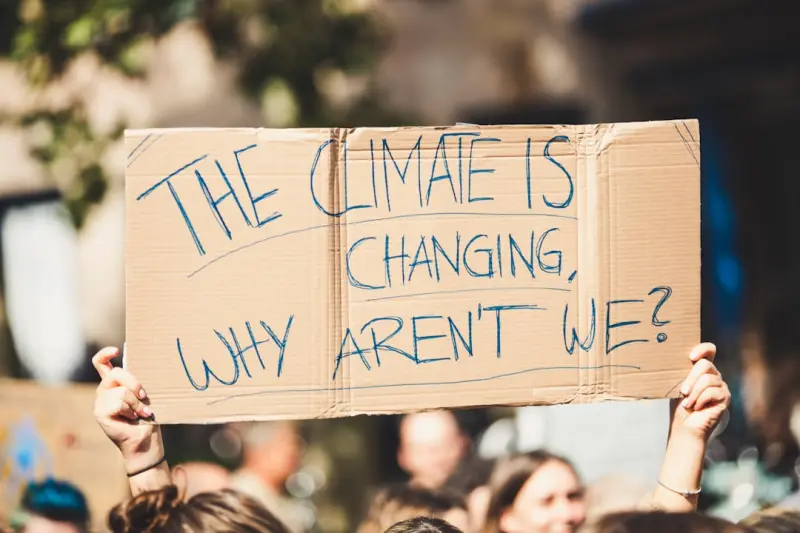
Why Traditional Insurance Can’t Keep Up with Climate‑Driven Catastrophes
When I first started advising insurers on compliance, the biggest headache was rate‑setting – making sure premium calculations reflected actuarial data without violating state statutes. Fast‑forward a few years, and the real nightmare is the planet itself. Wildfires that leap across state lines, super‑storm surges that drown coastal megacities, and unprecedented heatwaves that cripple supply chains are no longer outliers; they are the new normal.
For regulators, underwriters, and risk‑mitigation specialists, this shift forces a radical re‑examination of the legal scaffolding that once held the insurance industry together. The question isn’t just “how much coverage do we sell?” but “what legal framework can even define coverage for risks that are still evolving?”
The Rise of Parametric Policies – A Legal Labyrinth
Enter parametric insurance: contracts that pay out on the occurrence of a predefined trigger (e.g., wind speed exceeding 150 mph) rather than on actual loss verification. On paper, they’re a dream – swift payouts, reduced claims fraud, and a clear metric for insurers to price risk.
But the simplicity on the surface masks a tangle of legal challenges:
- Defining the Trigger – Who decides the data source? A government agency? A private satellite firm? The contract must explicitly name the data provider, the measurement methodology, and the margin of error. Ambiguity here can render a policy unenforceable.
- Regulatory Consistency – States have wildly different definitions of “insurance” under their statutes. Some treat parametric products as “insurance” subject to solvency requirements; others view them as “financial contracts” regulated by securities law. Navigating this patchwork demands a multi‑jurisdictional compliance strategy.
- Consumer Protection – Because payouts are not linked to actual loss, policyholders may receive money that feels “unearned.” Regulators are increasingly scrutinizing disclosure requirements to ensure that buyers understand the all‑or‑nothing nature of the coverage.
These complexities are why insurers are turning to interdisciplinary legal teams that blend traditional insurance law with emerging tech regulations. The Embedded Insurance: Policy‑by‑Design and the Regulatory Ripple Effect post highlighted how product design choices can trigger unintended regulatory consequences – the same principle now applies to parametric triggers.
State‑Level Climate Mandates: A New Compliance Frontier
In the past decade, a handful of states have enacted “climate‑risk disclosure” statutes that require insurers to publish detailed assessments of their exposure to climate‑related perils. While well‑intentioned, these mandates create a cascade of legal obligations:
- Actuarial Transparency – Insurers must disclose the assumptions behind catastrophe models, including the climate scenarios used. This pushes actuarial methods into the public domain, raising questions about proprietary data protection.
- Policy‑holder Notification – If an insurer’s exposure crosses a threshold, they must notify affected policy‑holders, potentially prompting renegotiation or cancellation of contracts. The timing and format of these notices are now subject to state consumer‑protection law.
- Capital Adequacy Adjustments – Regulators may require higher capital reserves for carriers with significant climate exposure, altering the financial health metrics that companies must report to state insurance departments.
The result is a compliance matrix that looks more like a climate‑risk heat map than a traditional rate‑filing schedule.
Re‑Examining Reinsurance Treaties Under Climate Stress
Reinsurance has always been the safety net for primary insurers, but climate volatility is testing the limits of those treaties. When a single event—think a massive wildfire—triggers multiple loss layers, reinsurance contracts often contain “aggregate limit” clauses that can be exhausted in a single season.
Legal teams are now scrutinizing:
- Force‑Majeure Language – Traditional clauses may not cover “climate‑induced” events if they are classified as “acts of God.” Drafting precise language that includes climate change as a covered peril is essential.
- Event‑Based Triggers vs. Aggregate Losses – Some treaties are shifting to event‑based triggers (e.g., “any single catastrophe exceeding $X”) to protect against aggregate exhaustion.
- Regulatory Oversight – Certain jurisdictions are beginning to require that reinsurance contracts be filed with state insurance commissioners, adding an extra layer of public scrutiny.
These adjustments are not just contractual; they are also subject to Navigating Liability in the Age of Tele‑Health, AI Diagnostics, and Data Privacy–style analysis, where the interplay between liability exposure and regulatory compliance becomes a central strategic concern.
Emerging Federal Guidance and the Role of the NAIC
While most insurance regulation remains state‑centric, the National Association of Insurance Commissioners (NAIC) has taken a more proactive stance on climate risk. Its recent “Model Climate Risk Disclosure Act” provides a template for states to adopt uniform reporting standards. However, the model act stops short of mandating coverage for climate perils, leaving the coverage gap to be filled by private market innovation and state‑level mandates.
Legal implications include:
- Standardization vs. State Autonomy – States that adopt the NAIC model must reconcile it with existing statutes that may have conflicting definitions of “catastrophe.”
- Data Governance – The model act requires insurers to submit granular loss data to a centralized repository. This raises concerns around data privacy, especially when combined with emerging AI analytics.
- Litigation Risk – Failure to comply with the model’s disclosure requirements could be grounds for regulatory enforcement actions, and could also become a basis for class‑action lawsuits by policy‑holders alleging insufficient transparency.
Technology’s Double‑Edged Sword: AI, IoT, and the New Insurance Contract
Artificial intelligence and the Internet of Things (IoT) are reshaping underwriting in ways that were unimaginable a decade ago. Sensors embedded in homes, farms, and industrial sites feed real‑time risk data to insurers, enabling dynamic pricing and “usage‑based” coverage.
From a legal perspective, this raises several novel issues:
- Contractual Scope – When an insurer’s policy is tied to continuous sensor data, does a temporary sensor failure invalidate coverage? Contracts must anticipate and allocate risk for data gaps.
- Privacy and Consent – Collecting granular data can trigger state privacy statutes (e.g., California’s CCPA). Insurers must embed clear consent language and data‑retention policies within the policy documents.
- Algorithmic Bias – AI underwriting models can inadvertently discriminate against protected classes, exposing insurers to disparate‑impact claims under the Fair Housing Act or the Equal Credit Opportunity Act.
These challenges echo the concerns raised in the Silent Hazard of Automated Content Moderation article, where unchecked AI can create legal exposure. In insurance, the stakes are even higher because the output directly affects financial protection for individuals and businesses.
Policy Innovation: From Green Bonds to Climate‑Linked Insurance
Beyond traditional coverage, innovative financing mechanisms are emerging that blend insurance with capital markets. Green bonds and catastrophe bonds (cat‑bonds) allow insurers to transfer risk to investors who are willing to accept higher yields in exchange for exposure to climate events.
Legal considerations for these hybrid instruments include:
- Securities Law Compliance – Cat‑bonds are securities, so they must meet SEC registration or exemption requirements, along with the corresponding disclosure obligations.
- Trigger Definition – The bond’s payout trigger must be clearly defined, often mirroring parametric insurance triggers, and must be consistent with both insurance contract law and securities regulations.
- ESG Reporting – Investors increasingly demand ESG metrics. Insurers must align their climate‑risk reporting with ESG standards to attract capital, which adds another compliance layer.
Practical Steps for Insurers Facing the Climate‑Law Crossroads
Given the complex web of statutory, regulatory, and contractual obligations, here are actionable steps for insurance companies looking to future‑proof their legal posture:
- Conduct a Climate‑Risk Legal Audit – Map every state where you write business, identify applicable climate‑disclosure statutes, and assess gaps in policy language.
- Standardize Parametric Trigger Language – Work with meteorological experts to choose data sources and embed precise definitions in contracts to avoid “ambiguous trigger” disputes.
- Integrate Data Governance Frameworks – Adopt a privacy‑by‑design approach for IoT data, ensuring consent, encryption, and retention policies are baked into underwriting platforms.
- Engage with Regulators Early – Participate in NAIC working groups and state insurance department roundtables to shape emerging guidance before it becomes mandatory.
- Partner with Climate‑Science Institutions – Leverage the latest catastrophe modeling research to justify rate changes and capital reserve calculations, reducing the risk of regulator pushback.
- Educate Policy‑Holders – Provide clear, plain‑language summaries of how parametric or climate‑linked policies work, mitigating potential consumer‑protection complaints.
Looking Ahead: The Legal Landscape Will Keep Evolving
Insurance law is at a crossroads where climate science, technology, and regulation intersect. The old playbook—relying on historical loss data and static policy language—no longer suffices. As the climate continues to throw curveballs, the legal community must become as dynamic as the risks it aims to manage.
In my experience, the firms that thrive will be those that treat legal compliance not as a checklist but as an ongoing, iterative process that embraces transparency, leverages technology responsibly, and collaborates with regulators to shape a resilient insurance ecosystem.

Kris M. Chen is a dedicated legal paralegal based in Texas, specializing in delivering comprehensive case management and litigation support. Known for a meticulous approach to legal research and document preparation, Kris plays a vital role in navigating complex legal workflows and ensuring seamless trial preparation.
Related Posts

Parametric Insurance: Data‑Driven Protection for Today’s Uncertain World
Explore the rise of parametric insurance, its technology, regulation, and real‑world impact—offe... Read More
Re‑imagining Insurance Law in the Age of Autonomous Systems and ESG Mandates
A deep dive into how autonomous technologies, AI underwriting, and ESG commitments are redefining in... Read More
Embedded Insurance in SaaS: Navigating the Legal Labyrinth
Embedded insurance offers SaaS platforms new revenue and engagement, but it brings complex regulator... Read More
Top Posts

When Vows Go Virtual: Navigating Marriage Law in the Metaverse
A deep dive into the legal challenges of virtual weddings, covering jurisdiction, smart contracts, digital asset ownership, privacy, and practical steps to ensu...Read More

Rethinking Worker Classification: The Legal Frontier of Platform Labor
An in‑depth look at the challenges of classifying gig workers, the rise of portable benefits, and practical steps platforms can take to stay compliant and pro...Read More

When Algorithms Meet the Gavel: Navigating Criminal Law in the Digital Age
A deep dive into the impact of AI, social media, and predictive policing on criminal law, offering practical defense tactics for the modern courtroom....Read More

Trade Secrets in the Remote Work Era: Guarding Innovation When Teams Are Distributed
A deep dive into modern trade secret protection for remote workforces, covering inventory mapping, technical controls, updated NDAs, cross‑border challenges, ...Read More
0 Comments
Post Comment
You will need to Login or Register to comment on this post!