
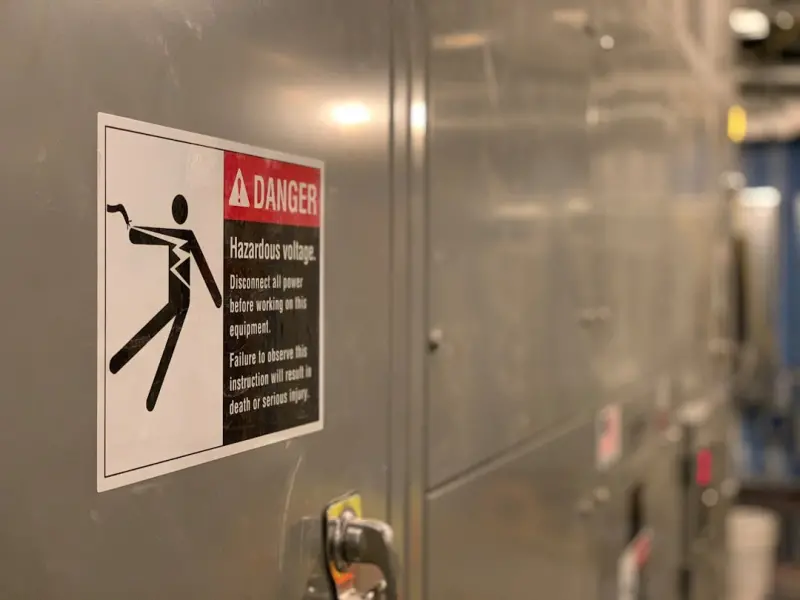
When Code Becomes a Safety‑Critical System: Managing Dangerous Operations in Modern SaaS
In my decade‑long dance with regulated tech, I’ve learned that “dangerous operation” isn’t just a buzz‑word for oil rigs or nuclear plants. It’s creeping into the very heart of SaaS platforms that power everything from autonomous drones to real‑time trading engines. When the line between software and physical consequence blurs, the stakes rise dramatically, and the legal, ethical, and operational playbooks we once relied on start to look… inadequate.
The New Frontier of Operational Hazard
Historically, SaaS companies have been judged on uptime, latency, and feature velocity. Today, a single mis‑step can trigger a cascade of physical harm: a mis‑routed delivery drone dropping a package on a sidewalk, an automated insulin‑pump algorithm mis‑calculating dosage, or a high‑frequency trading bot whose errant order sparks a market flash crash. These aren’t hypothetical “what‑ifs” anymore; they’re concrete risks that regulators, insurers, and investors are demanding we address.
From “Nice‑To‑Have” to “Must‑Have” Controls
Three categories of controls have migrated from optional best practices to non‑negotiable obligations:
- Safety‑Centric Design. Every line of code must be traceable to a safety requirement. Think of it as a functional safety standard for cloud services—akin to ISO 26262 for automotive but adapted for multi‑tenant environments.
- Real‑Time Risk Monitoring. Static logs are no longer sufficient. You need live telemetry that can flag anomalous behaviour within milliseconds and trigger automated containment.
- Legal‑Tech Alignment. The compliance landscape now expects your operational risk matrix to dovetail with liability frameworks, insurance contracts, and even criminal statutes.
These controls intersect in ways that make traditional siloed compliance teams feel like they’re trying to juggle flaming swords.
Case Study: Autonomous Drone Deliveries and the “Dangerous Operation” Lens
Consider a SaaS platform that orchestrates a fleet of autonomous delivery drones for a major retailer. The platform handles routing, payload management, and air‑space deconfliction. On paper, the service is a marvel of efficiency. In practice, the moment a software patch modifies the collision‑avoidance algorithm, the entire fleet becomes a potential hazard.
When a patch is pushed, the following sequence must be guaranteed:
- Pre‑deployment simulation. Run the new code through a digital twin of the physical environment, simulating thousands of edge cases.
- Staged rollout with telemetry gating. Deploy to a single test drone, monitor real‑time telemetry streams for any deviation, then expand only if safety thresholds stay within limits.
- Automated rollback triggers. If any drone exceeds a predefined risk score—say, an unexpected altitude change—an instant rollback is executed, and the fleet reverts to the last known safe state.
- Legal audit trail. Every decision point, from simulation results to rollback timestamps, is logged in a tamper‑evident ledger. This not only satisfies regulators but also provides defensible evidence should a claim arise.
The danger isn’t just technical; it’s legal. If a drone were to strike a pedestrian, the platform could be implicated under product liability, negligence, and even criminal statutes related to reckless endangerment. That’s why the criminal law frontier now includes software‑driven physical harm.
Operational Risk as a Legal Construct
Traditional SaaS contracts often feature “best effort” language, but that’s a liability nightmare when a malfunction can cause bodily injury. New contracts are evolving to include:
- Risk‑Based Service Level Agreements (SLAs). Instead of just uptime percentages, SLAs now specify maximum allowable risk exposure per operation, measured in quantitative risk units.
- Indemnification Clauses Tied to Safety Metrics. Providers agree to cover damages up to a threshold that correlates with documented safety performance.
- Insurance Integration. Dynamic policies that adjust premiums based on real‑time safety scores—think parametric insurance, but for operational risk.
These clauses are not merely defensive; they also incentivize providers to invest in robust safety engineering, because the cost of a claim can quickly outweigh the marginal expense of a more thorough testing regime.
Embedding Safety Into the Development Lifecycle
To operationalize these expectations, I champion a “Safety‑First” SDLC (Software Development Life Cycle). The model adds two mandatory stages:
1. Hazard Identification Sprint
Before any user story is written, the team conducts a hazard analysis using techniques borrowed from aviation—fault tree analysis, FMEA (Failure Modes and Effects Analysis), and HAZOP (Hazard and Operability Study). The output is a “dangerous operation register” that lists every scenario where a code change could have a physical impact.
2. Continuous Safety Verification
Every CI/CD pipeline now includes automated safety verification steps:
- Static analysis for unsafe APIs.
- Dynamic testing against a sandboxed hardware emulator.
- Real‑time risk score computation fed into the deployment gate.
In practice, this means a pull request that raises the risk score above the pre‑set threshold never reaches production. The feedback loop is immediate, and the team can address the issue before it becomes a release blocker.
Culture: From “Move Fast” to “Move Safe”
One of the biggest obstacles is cultural. The “move fast and break things” mantra still echoes in many tech orgs, but when you’re dealing with drones, medical devices, or autonomous financial transactions, the cost of breaking is measured in human harm, not just user churn.
Creating a safety‑first culture involves:
- Leadership endorsement. Executives must articulate safety as a core value, not an after‑thought.
- Cross‑functional safety champions. Engineers, legal counsel, risk officers, and product managers collaborate on the dangerous operation register.
- Transparent incident reporting. Near‑misses are logged and shared across the organization, turning what could be a shameful secret into a learning opportunity.
Regulatory Momentum and the Road Ahead
Globally, regulators are tightening the screws. The European Union’s upcoming “Safety‑Critical SaaS Directive” (still in draft) proposes mandatory safety impact assessments for any SaaS that controls physical equipment. In the United States, the NHTSA is extending its autonomous vehicle guidance to include “software‑only” platforms that issue motion commands to third‑party hardware.
For SaaS providers, this means proactive compliance is no longer a nice‑to‑have—it’s a market differentiator. Companies that can demonstrate a proven track record of managing dangerous operations will attract premium customers, lower insurance premiums, and, crucially, avoid the reputational fallout of a high‑profile incident.
Practical Checklist for SaaS Leaders
If you’re reading this and thinking, “That sounds like a lot of work,” I hear you. Below is a distilled checklist you can start using today:
- Map Physical Touchpoints. Identify every instance where your software influences a physical action.
- Quantify Risk. Assign a risk score to each touchpoint using a standardized methodology.
- Integrate Risk Gates. Embed risk thresholds into your CI/CD pipelines.
- Document Safety Cases. Maintain a living document that ties code changes to safety outcomes.
- Secure Real‑Time Telemetry. Deploy sensors and logging mechanisms that feed live data into a risk analytics engine.
- Align Contracts. Update SLAs, indemnities, and insurance clauses to reflect safety metrics.
- Foster a Safety Culture. Celebrate safety wins as loudly as product launches.
- Stay Ahead of Regulation. Assign a compliance watch to monitor emerging safety legislation.
Conclusion: Turning Danger into Competitive Edge
Dangerous operations are no longer the domain of heavy industry. They’re a reality for any SaaS platform that bridges the digital and the physical. By treating operational risk as a legal and technical imperative—embedding safety into design, development, deployment, and culture—you not only protect users but also carve out a defensible market position.
In the words of an old maritime proverb I love to quote, “A ship is safest at the harbor, but that’s not what it’s built for.” Your SaaS may be built for the open sea of innovation; the question is whether you’ll navigate it with a sturdy hull of safety.

Related Posts

The Silent Threat Lurking in Cloud‑Native Critical Workflows
A deep dive into the unnoticed dangers of cloud‑native systems, offering a framework to detect con... Read More

When the Scalpel Meets the Server: The Hidden Dangers of Remote Surgery
Remote surgery promises universal access to expert care, but latency, software bugs, cyber threats, ... Read More
The Hidden Perils of Autonomous Warehouse Robots
A deep dive into the unseen dangers of robot‑driven fulfillment centers, the human cost, legal bli... Read More
Top Posts

Why AI-Generated Inventions Are Redefining Patent Law
Generative AI is reshaping patent law, forcing a rethink of inventorship, disclosure, and protection. This post breaks down the legal dilemmas, offers a strateg...Read More

Navigating the Employment Law Minefield of Hybrid Work
Hybrid work introduces complex employment‑law challenges—from wage‑and‑hour compliance across state lines to privacy‑focused monitoring. This guide br...Read More

Semantic Clustering: The Secret Weapon for Sustainable SEO Success
Explore the power of semantic clustering to build intent‑driven content hubs, earn rich results, and future‑proof your SEO against algorithm shifts....Read More

When AI Becomes the Witness: Legal Challenges of Synthetic Evidence
AI can now fabricate images, audio, and text that look authentic, raising critical legal questions about authenticity, admissibility, and sanctions. This articl...Read More
0 Comments
Post Comment
You will need to Login or Register to comment on this post!