
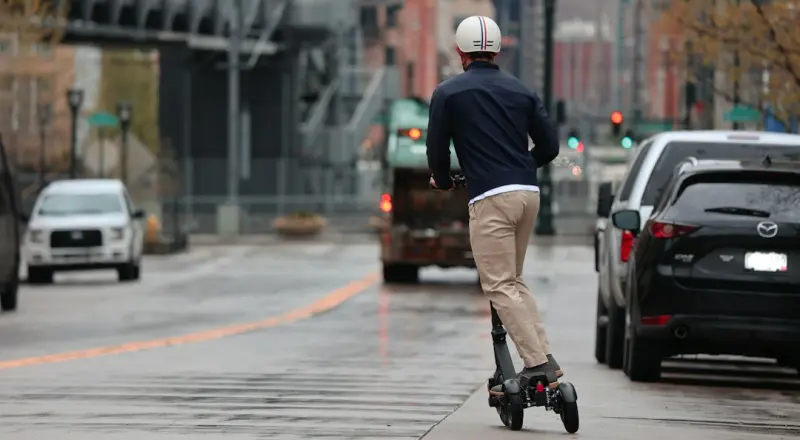
Why the E-Scooter Boom Is Turning Impaired Driving Into a New Legal Battlefield
When I first saw a courier zip past on an electric scooter, I thought, “That’s the future of urban mobility.” Fast forward a few months, and I’m fielding calls from city attorneys, insurance underwriters, and startup founders who are all asking the same thing: what happens when that sleek little vehicle is operated under the influence? The answer is far from simple, and the stakes are rising faster than the scooters themselves.
The Hidden Surge of Impaired Micro-Mobility
Micro-mobility devices-e-scooters, e-bikes, even hoverboards-have exploded in popularity because they are cheap, convenient, and often “green.” But the convenience factor also means they’re being used in contexts where traditional cars once dominated: after a night out, during a weekend party, or even as the last-mile link from a rideshare drop-off. According to data from several municipal pilot programs, incidents involving alcohol-related scooter crashes have increased by double-digits each year. What used to be a novelty is now a statistically significant source of injury, property damage, and-crucially-legal exposure.
Who’s on the Hook? The Liability Web
Unlike a personal vehicle, an e-scooter is rarely owned by the rider. Most riders rent through a mobile app, and the device itself is owned by a fleet operator. This creates a three-layer liability chain:
- The rider - who may be charged with driving while impaired, a misdemeanor in most jurisdictions.
- The fleet operator - who could be deemed negligent for failing to implement reasonable safety measures.
- The municipality - which may be sued for permitting scooter operations on public right-of-way without adequate regulation.
Each layer brings its own set of legal defenses and exposure, and they often overlap. For example, a rider’s blood-alcohol level might be above the legal limit, but if the operator’s app didn’t provide a real-time sobriety check, the operator could argue that the rider was misled about safety expectations.
From Cars to Scooters: Why Traditional DUI Laws Fall Short
Most DUI statutes were drafted with cars in mind. They reference “operating a motor vehicle,” and the penalties are calibrated for high-speed collisions. Scooters, on the other hand, travel at 15-25 mph and are often used on sidewalks or bike lanes. Courts are still wrestling with questions such as:
- Does an e-scooter count as a “vehicle” under existing statutes?
- Should the blood-alcohol threshold be the same for a scooter rider as for a driver?
- Can a city enforce a “zero-tolerance” policy for scooter operators, similar to school zones for cars?
In several recent rulings, judges have taken divergent approaches-some treating scooters as “motor vehicles,” others classifying them as “personal conveyances.” This lack of uniformity creates a compliance nightmare for any business that wants to operate across multiple jurisdictions.
Data-Driven Evidence: The Role of Wearables and Sensors
One of the most promising ways to bridge the legal gap is to collect objective, real-time data about rider impairment. The wearable revolution is already reshaping personal injury law by providing granular evidence of a victim’s condition at the moment of impact. Imagine a rider wearing a smartwatch that monitors heart rate variability, gait, and even blood-alcohol concentration through transdermal sensors. When the scooter’s telemetry detects a sudden loss of control, the system could automatically flag the ride for review and even suspend the session.
From a legal perspective, this data can serve two purposes:
- Defensive evidence for fleet operators, showing they took reasonable steps to prevent impaired riding.
- Prosecutorial evidence for law enforcement, establishing that the rider was impaired at the time of the crash.
However, the collection and storage of biometric data raise privacy concerns. Operators must balance safety with compliance to data-protection statutes such as GDPR or CCPA, and they need clear consent frameworks to avoid litigation over unlawful surveillance.
Sobriety-Tech Integration: Lessons from Connected Cars
There’s a growing ecosystem of “sobriety tech” that integrates directly with a vehicle’s control system-ignition interlock devices for cars, for example. In the micro-mobility world, similar concepts are emerging: apps that require a breath-alyzer test before unlocking a scooter, or AI-powered facial-recognition checks that assess a rider’s eye-movement patterns. While sobriety tech and the law has been discussed mainly in the context of traditional automobiles, the underlying principles are directly transferable to scooters.
Key takeaways for operators include:
- Implement a “soft lock” that limits top speed if the rider fails an impairment check.
- Provide real-time feedback-vibration alerts, audible warnings-when the system detects risky behavior.
- Log every impairment test for auditability, creating a defensible record if a crash leads to litigation.
Adopting these measures can not only reduce crash rates but also serve as a strong legal shield, demonstrating a proactive approach to public safety.
The Insurance Angle: Underwriting New Risk Classes
Insurance carriers are scrambling to price the risk of impaired micro-mobility. Traditional auto policies don’t fit neatly, and many insurers are creating “micro-mobility endorsement” riders that add coverage for scooter crashes. The challenge lies in quantifying impairment risk. Insurers are starting to use predictive analytics that combine:
- Historical crash data tied to time-of-day and location.
- Aggregated rider behavior from telematics (hard-braking events, speed spikes).
- Local alcohol sales data and event calendars.
By feeding these variables into machine-learning models, insurers can adjust premiums for fleet operators based on the rigor of their sobriety-tech implementations. Operators that integrate breath-alyzer checks, for instance, may earn a discount of 10-15% on their liability premiums.
Municipal Policies: Crafting Smart Regulations
Cities are the front line of this emerging issue. Some have responded with blanket bans on scooter rentals after certain hours, while others have introduced “safety zones” where scooters are prohibited near bars and nightclubs. A more nuanced approach involves:
- Requiring fleet operators to submit a “safety plan” that includes impairment detection technology.
- Mandating data sharing agreements that allow law enforcement to access crash telemetry in real time.
- Establishing graduated penalties for repeat offenders, similar to point-system driving records.
When municipalities coordinate with operators and insurers, the result is a risk-mitigation ecosystem that benefits all stakeholders.
Legal Best Practices for Operators
If you’re a SaaS platform powering a scooter fleet, here are three concrete steps you can take today:
- Integrate Real-Time Impairment Screening - Use a low-cost breathalyzer peripheral that syncs via Bluetooth to the rider’s phone. Store the test results in a tamper-evident log.
- Leverage Telemetry for Post-Crash Analysis - Capture speed, acceleration, and rider input data at the moment of impact. This data can be pivotal in defending against negligence claims.
- Establish a Clear Data-Retention Policy - Define how long you keep biometric and telemetry data, ensure it complies with privacy law, and provide riders with a transparent opt-out mechanism where legally permissible.
By treating safety as a product feature rather than a regulatory checkbox, you position your company as a leader in responsible mobility.
Looking Ahead: The Convergence of Autonomous Micro-Mobility and Impairment Law
While fully autonomous e-scooters are still on the horizon, early prototypes are already being tested in controlled environments. When autonomy arrives, the legal calculus will shift again: the operator’s liability may transition from “failure to prevent an impaired rider from operating the device” to “failure to ensure the autonomous system correctly detects and mitigates impairment.” This mirrors the challenges discussed in the autonomous vehicle liability space, but on a smaller, more densely populated scale.
In the meantime, the safest path forward is to build a robust, data-rich safety framework today. The technology exists; the legal precedent is forming. Companies that act now will not only reduce injuries and lawsuits but will also earn the trust of cities, insurers, and riders alike.
Conclusion: Turning a Trend into a Trust-Building Opportunity
Impaired driving isn’t a problem confined to gas-guzzling cars. As micro-mobility becomes an integral part of urban transportation, the same public-policy questions-how to keep the streets safe, how to allocate liability, how to respect privacy-reappear in a new form. By embracing wearables, sobriety-tech, and data-driven insurance models, operators can turn a potential liability nightmare into a competitive advantage.
The bottom line is simple: if you’re building or scaling a micro-mobility service, treat impairment prevention as a core product feature, not an afterthought. The legal landscape may still be evolving, but the technology to stay ahead of it is already in your hands.

Liam James Professor with a PHD. & content creator with a passion for sparking curiosity and sharing knowledge. Driven by the joy of learning and storytelling, I bring ideas to life in every project. Always exploring, always teaching.
Related Posts

Rethinking Impaired Driving: From Human Behavior to Insurance Innovation
A fresh look at impaired driving reveals that beyond breathalyzers, we need behavioral nudges, drug-... Read More

Why Companies Must Own the Conversation on Impaired Driving After Office Hours
A fresh look at why employers should take responsibility for impaired driving after work events, off... Read More
Beyond Breathalyzers: How Wearable Tech is Shaping Impaired Driving Accountability
A deep dive into wearable technology’s role in impaired driving prevention, covering privacy, evid... Read More
Top Posts

Patent Pools: The Unsung Heroes of Modern Innovation
Patent pools bundle complementary patents into a single licensing package, cutting transaction costs and fostering collaboration. This post examines their legal...Read More

Beyond the Tracker: How Privacy Law is Evolving with Wearable Health Tech
A deep dive into the evolving privacy landscape for wearables, highlighting new rights, global regulations, and practical steps for businesses and users....Read More

Why Your Wedding Registry Needs a Legal Audit in the Digital Age
A modern wedding registry is more than blenders and towels; it can include crypto, NFTs, and digital subscriptions. Learn how to legally audit your registry to ...Read More

Subscription Services & Marriage Law: Who Owns the Shared Stream?
The blog delves into how modern subscription services, crypto wallets, and digital assets are reshaping marriage law, offering practical steps for couples to pr...Read More
0 Comments
Post Comment
You will need to Login or Register to comment on this post!