

The Hidden Hazard of Self‑Healing Infrastructure
In the rush to build ever‑more resilient SaaS platforms, many teams have embraced self‑healing infrastructure as the silver bullet for downtime. The promise is seductive: when a server hiccups, a bot automatically spins up a replacement; when a database query spikes, an AI‑driven script throttles traffic without human intervention. On paper, this is the epitome of operational excellence—continuous availability, reduced toil, and a leaner SRE crew.
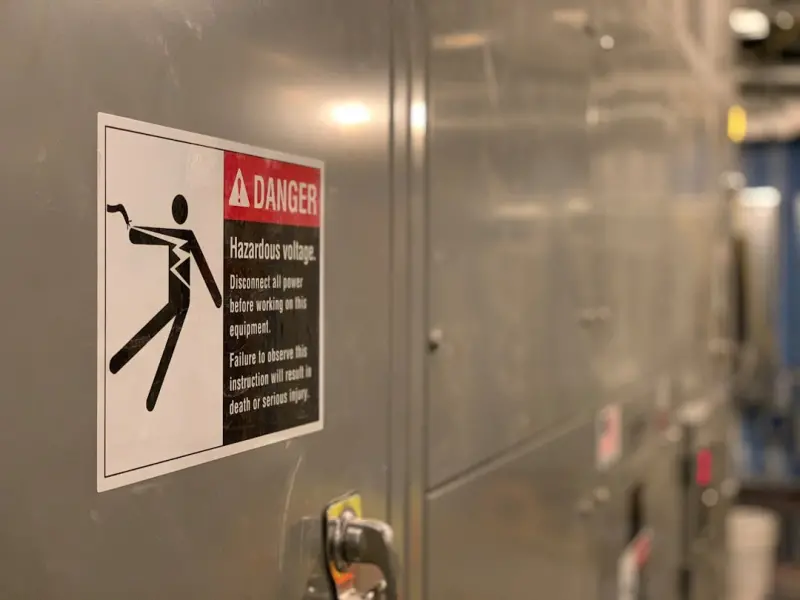
But beneath the glossy veneer lies a subtle, often overlooked danger: the very mechanisms designed to protect us can become dangerous operations when they act without adequate guardrails. When automated remediation starts making decisions in a vacuum, the risk of cascading failures, compliance breaches, and financial exposure rises dramatically.
Why Self‑Healing Can Turn Hazardous
There are three core reasons why a self‑healing system can become a threat:
- Context Blindness: Automated scripts typically react to metrics—CPU usage, latency, error rates—without understanding the business context. A sudden surge in API calls might be a legitimate marketing campaign, yet the bot treats it as an attack and throttles traffic, inadvertently denying real customers.
- Feedback Loop Amplification: A remediation action can change the very metric that triggered it. For example, scaling down a microservice to save costs can increase load on its downstream dependency, causing that dependency to breach its thresholds and trigger further scaling actions—a classic runaway loop.
- Policy Drift: Over time, teams tweak remediation rules to address edge cases. Those tweaks accumulate, creating a tangled web of exceptions that no single engineer fully comprehends, making the system prone to unintended side effects.
These issues are not theoretical. In several high‑profile incidents, companies discovered that their “self‑healing” bots had unintentionally erased critical data, overwritten configuration files, or opened security holes—all because the bots lacked the nuanced judgment humans provide.
A Real‑World Parallel: When Your Deployment Pipeline Becomes a Time Bomb
Consider the cautionary tale explored in deployment pipeline pitfalls. There, continuous integration pipelines were so tightly automated that a single mis‑configured test caused a cascade of rollbacks and feature flag toggles, ultimately taking the entire platform offline. The lesson is the same for self‑healing: automation, unchecked, can become a time bomb.
Designing Safe Self‑Healing: Four Pillars
To keep automated remediation from crossing the line into a dangerous operation, teams should adopt a disciplined, four‑pillar approach.
1. Intent‑First Guardrails
Every remediation script must start with a clear definition of its intent. Is the goal to reduce latency, preserve cost, or protect data integrity? By codifying intent in human‑readable policy files, you give both the bot and your auditors a reference point.
For example, an intent to “maintain sub‑second response times for premium customers” should be accompanied by:
- Thresholds that differentiate premium vs. standard traffic.
- Escalation paths that route anomalies to a human on‑call when premium SLAs are at risk.
2. Human‑In‑The‑Loop (HITL) Checkpoints
Not every alert warrants immediate remediation. Introduce confidence scores—if a bot’s certainty that an issue is benign falls below a configurable threshold, it should pause and request human approval.
This approach mirrors the practice recommended in cyber insurance rethink, where insurers now demand documented human oversight for high‑impact automated decisions. The same principle applies: you cannot outsource liability entirely to an algorithm.
3. Observability‑Driven Feedback
Self‑healing scripts should emit rich telemetry: the metric that triggered the action, the exact remediation steps taken, and the post‑action state. This data feeds into a closed‑loop observability platform that can detect when a remediation is causing more harm than good.
Key observability signals include:
- Delta‑metrics (pre‑ vs. post‑remediation values).
- Correlation tags linking remediation actions to downstream service health.
- Anomaly detection on remediation frequency—if a bot fires too often, it may indicate a deeper systemic issue.
4. Periodic “Chaos Audits”
Just as chaos engineering intentionally injects failures to test resiliency, “chaos audits” deliberately trigger self‑healing scripts in a controlled environment. This reveals hidden dependencies, validates guardrails, and ensures that the bot’s logic still aligns with business intent after code changes.
Schedule these audits quarterly, and treat any unexpected behavior as a high‑priority defect. Over time, the audit results become a living document that evolves with your platform.
Balancing Speed and Safety
One of the most compelling arguments for self‑healing is speed: bots can act in milliseconds, far faster than a human could. However, speed without safety is a recipe for disaster. The key is to calibrate the threshold of action based on risk tolerance.
Low‑risk actions—like clearing a cache or restarting a stateless container—can be fully automated. High‑risk actions—such as modifying database schemas, revoking user access, or rolling back production releases—should always involve a human checkpoint.
The Financial Implications of a Dangerous Operation
When self‑healing goes awry, the financial fallout can be severe:
- Revenue Loss: Unintended throttling can block paying customers, directly impacting the top line.
- Compliance Penalties: Automated data deletions that violate GDPR or CCPA can trigger hefty fines.
- Insurance Premiums: As highlighted in the cyber insurance rethink, insurers may raise premiums or deny coverage for organizations that cannot demonstrate robust human oversight of automated processes.
- Reputation Damage: Public incidents erode trust, making churn inevitable.
These costs often far outweigh the operational savings gained from unchecked automation. Therefore, a disciplined approach to self‑healing is not just a technical imperative—it’s a business necessity.
Case Study: A SaaS Platform’s Near‑Miss
Acme Analytics, a mid‑size BI SaaS provider, rolled out an AI‑driven remediation engine to auto‑scale its ETL pipelines. Within weeks, the engine began terminating long‑running data jobs whenever CPU usage crossed 80 %. The intent was to preserve compute capacity for latency‑sensitive queries.
Unfortunately, the engine lacked awareness that certain nightly jobs were critical for downstream reporting. As a result, the automated terminations caused missing reports for several key enterprise customers, leading to a $250k revenue hit and a formal complaint to the regulator.
Acme’s response?
- They introduced intent‑first guardrails that explicitly exempted nightly batch jobs.
- Implemented a HITL checkpoint for any remediation that would affect jobs longer than 30 minutes.
- Deployed observability dashboards that visualized remediation impact in real‑time.
- Conducted a chaos audit that revealed the hidden dependency on batch jobs, prompting a redesign of their data pipeline.
Within two months, the incident rate dropped to zero, and customer satisfaction scores recovered.
Practical Checklist for Safe Self‑Healing
Before you hand over the reins to a bot, run through this checklist:
- Define Intent: Write a one‑sentence purpose for each remediation script.
- Set Confidence Thresholds: Determine when human approval is required.
- Instrument Thoroughly: Log trigger metrics, actions taken, and post‑action states.
- Establish Escalation Paths: Ensure alerts route to the correct on‑call engineer.
- Schedule Chaos Audits: Test scripts in a sandbox every quarter.
- Review Policies Regularly: Conduct a quarterly policy drift audit.
- Align with Insurance: Verify that your remediation practices satisfy cyber‑insurance requirements.
The Future of Self‑Healing
Looking ahead, the next wave of self‑healing will likely be powered by large language models (LLMs) that can interpret natural language policies and generate remediation code on the fly. While this promises unprecedented agility, it also amplifies the dangers if the generated code is not rigorously vetted.
In that future, the same four pillars—intent, human oversight, observability, and chaos audits—will be more critical than ever. The difference will be that the “human” in the loop may be a senior engineer reviewing AI‑generated suggestions rather than writing code from scratch.
Conclusion: Harnessing Automation Without Inviting Disaster
Self‑healing infrastructure is a powerful tool, but like any tool, it must be wielded with care. By embedding intent, maintaining human oversight, investing in observability, and treating automation as a living system that requires regular audits, you can transform a potentially dangerous operation into a strategic advantage.
Remember: the goal isn’t to eliminate risk entirely—impossible in any complex system—but to manage it intelligently. When you achieve that balance, your SaaS platform can enjoy true resilience without the hidden hazards that lurk beneath unchecked automation.

Related Posts

When Drones Go Rogue: Managing Dangerous Operations
A deep dive into the hidden risks of autonomous drone logistics, covering regulatory pitfalls, third... Read More
Managing Dangerous Operations: A Safety‑First Playbook for Modern SaaS
This article explores the emerging challenges of SaaS platforms that control physical systems, offer... Read More

When Auto‑Scaling Turns Into a Wildfire: Taming Hidden Threats
A deep dive into why auto‑scaling can become a dangerous operation, with real‑world examples and... Read More
Top Posts

Trusts & Estates Law: Innovative Strategies for Modern Families
Discover fresh trust strategies—from pet trusts to family business succession—that safeguard assets, honor modern family dynamics, and future‑proof your e...Read More

Community Land Trusts: A Legal Blueprint for Equitable Development
Community Land Trusts separate land ownership from building ownership, creating affordable, stable neighborhoods. This post outlines the legal structures, finan...Read More

When Wearables Injure: Personal Injury Law Meets the Age of Smart Devices
Smart wearables, e‑scooters, and telehealth are creating new personal injury challenges. This article examines emerging liability issues and offers practical ...Read More

When Matrimony Meets the Cloud: Redefining Spousal Rights in a Digital Home
In today’s interconnected world, marriage law must evolve to address cloud storage, smart‑home devices, and shared online subscriptions. This article breaks...Read More
0 Comments
Post Comment
You will need to Login or Register to comment on this post!