

Criminal law has always been a cat‑and‑mouse game, but the playing field has morphed dramatically with the rise of sophisticated software. No longer are prosecutors and defense attorneys merely wrestling with physical evidence and witness testimony; they now have to decode code, interrogate algorithms, and decide whether a line of Python could be deemed a weapon. In this piece, I’ll explore how the justice system is grappling with AI‑driven crime, the challenges of attributing culpability, and the emerging procedural safeguards that could keep the balance of fairness intact.
From “Bad Actor” to “Bad Algorithm”: Defining the Offender
Traditional criminal statutes are built around the notion of a human actor who consciously chooses to break the law. When a ransomware gang writes a script that encrypts an entire hospital’s data, the law has a clear target: the individuals who authored and deployed the code. However, as generative AI tools become more autonomous, the line blurs.
Consider a scenario where a language model, trained on public data, suggests a detailed plan for a burglary. A user follows the advice, commits the crime, and is later caught. Who bears responsibility?
- The user: The most straightforward answer is that the user made the conscious decision to act, making them fully liable.
- The developer: If the AI was marketed without adequate safeguards, could the creator be negligent?
- The algorithm itself: While the law currently lacks a framework for attributing criminal intent to non‑personhood entities, some scholars argue for a “digital personhood” concept.
Courts are just beginning to wrestle with these questions. The United States v. Doe case, where an AI‑generated deepfake video was used to blackmail a public official, illustrated how prosecutors can treat the deepfake evidence as a tool rather than a perpetrator. Yet the decision also raised alarms about the potential for over‑broad liability that could stifle innovation.
The Evidentiary Minefield: Authenticity in the Age of Code
Digital evidence has always required meticulous handling, but AI‑generated artifacts add new layers of complexity. A forensic analyst might extract logs from a compromised server, but how can a jury be sure those logs haven’t been fabricated by an adversarial AI?
Enter the concept of “cryptographic attestation.” By embedding a cryptographic hash at the moment data is captured, investigators can later prove that the evidence remained untouched. Some jurisdictions are already mandating such practices for electronic records, but adoption is patchy.
Moreover, the chain of custody now has to account for the “model provenance” – the exact version of the AI, its training dataset, and any fine‑tuning parameters. Failure to document these details can lead to motions to suppress, as defense attorneys argue that the evidence is “tainted by algorithmic opacity.”
Attribution Challenges: When the Code is Open Source
Open‑source software is the backbone of modern technology, but it also muddies the waters of criminal attribution. If a malicious actor exploits a vulnerability in a widely used library, should the library’s maintainers be held accountable for the downstream crimes?
Legal scholars generally draw a distinction between negligence and recklessness. A maintainer who fails to patch a known critical flaw after reasonable notice might face civil liability, yet criminal charges are rare unless there is evidence of willful disregard. The AI diagnostics and the question of liability discussion highlighted similar nuances in the medical field, underscoring how cross‑sector lessons can inform criminal jurisprudence.
Prosecutorial Strategies: From “Tool” to “Weapon”
Prosecutors have started framing AI as a weapon rather than a mere tool. In the People v. Cipher trial, the district attorney presented the ransomware code as a “digital firearm,” emphasizing its destructive capacity and the intent behind its deployment. This narrative helps juries grasp abstract concepts by anchoring them to familiar physical analogues.
To strengthen such arguments, prosecutors often enlist expert witnesses who can demystify the code’s functionality. However, the Daubert standard—requiring that scientific testimony be both relevant and reliable—means that experts must be prepared to demonstrate the methodology behind their analyses, including validation of any AI‑based predictions.
Defensive Tactics: The Rise of “Algorithmic Alibi”
Defense teams are getting creative, too. One emerging tactic is the “algorithmic alibi,” where the defendant claims that the AI’s recommendation, not their own volition, drove the criminal act. While courts have historically dismissed “automation defense” in product liability cases, criminal law is still testing the limits.
Successful deployment of this defense hinges on proving two elements:
- The AI output was probabilistic, not deterministic, and the defendant exercised independent judgment.
- The defendant reasonably relied on the AI, believing it to be trustworthy.
In practice, this is a high bar. Juries tend to view reliance on AI with suspicion, especially when the stakes involve public safety.
Policy Implications: Should We Criminalize Certain AI Behaviors?
Legislators worldwide are debating whether to codify criminal liability for developers who release “dangerous” AI. A proposed amendment in the Senate would make it a felony to distribute an AI model that is “designed, marketed, or otherwise intended for the facilitation of violent crime.” Critics argue that such language is overly broad and could chill legitimate research.
From a policy perspective, a balanced approach could involve:
- Mandatory impact assessments for high‑risk AI before public release.
- Transparency registries where developers disclose model capabilities and known limitations.
- Safe harbors for open‑source contributors who act in good faith and follow community best practices.
International Perspectives: A Patchwork of Approaches
Different legal systems are taking varied routes. The European Union’s AI Act classifies certain AI applications as “high‑risk” and imposes stringent compliance obligations, but it stops short of criminalizing the creation of such tools.
Conversely, some Asian jurisdictions have introduced “digital crime statutes” that explicitly target AI‑enabled offenses, ranging from deepfake pornography to AI‑driven financial fraud. These statutes often include enhanced penalties for repeat offenders, reflecting a growing consensus that the technology amplifies the harm of traditional crimes.
Preparing for the Future: What Practitioners Need to Know
Whether you’re a prosecutor, defense attorney, or in‑house counsel, staying ahead of the AI curve is no longer optional. Here are three actionable steps:
- Invest in technical literacy. Understanding the basics of machine learning, data pipelines, and model interpretability will enable you to ask the right questions in court.
- Develop a forensic protocol. Adopt standardized procedures for collecting, preserving, and authenticating AI‑generated evidence.
- Engage with policymakers. Participate in consultations on AI legislation to ensure that legal frameworks strike a fair balance between innovation and accountability.
Criminal law is at a crossroads. The tools we use to fight crime are becoming as sophisticated as the crimes themselves. By embracing a proactive, informed approach, legal professionals can safeguard due process while ensuring that the digital age does not become a free‑for‑all for malicious actors.

Liam James Professor with a PHD. & content creator with a passion for sparking curiosity and sharing knowledge. Driven by the joy of learning and storytelling, I bring ideas to life in every project. Always exploring, always teaching.
Related Posts
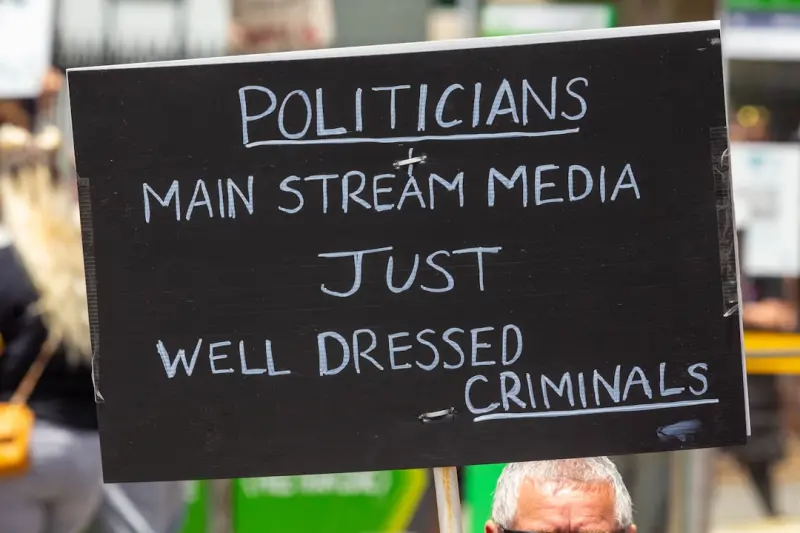
When Green Promises Turn Into Criminal Deceit: The Rise of ESG Fraud
ESG fraud is emerging as a serious criminal liability. This article dissects the legal risks, realâ€... Read More

Navigating Criminal Law in the Digital Frontier
A deep dive into the evolving world of criminal law, highlighting digital evidence, privacy challeng... Read More
Criminal Law in 2024: Navigating Tech, Reform, and the Human Story
Allison Jarvis breaks down 2024’s criminal law trends—from AI sentencing to restorative justiceâ... Read More
Top Posts

Divorce in the Digital Age: How SaaS Platforms Transform Asset Splits and Emotional Recovery
Divorce is evolving from a paper‑heavy courtroom battle to a streamlined digital experience. Learn how SaaS platforms safeguard privacy, handle digital assets...Read More

Cross‑Border Tax Strategies for SaaS Companies in a Subscription‑Driven World
A deep dive into the tax complexities SaaS companies face when scaling internationally, offering practical checklists, insight into nexus rules, and ways to lev...Read More

Who Pays When a Self‑Driving Car Crashes? Unpacking Automotive Liability
Self‑driving cars bring new legal puzzles. Dive into liability, data privacy, and recall rights, and discover practical steps to safeguard your interests when...Read More
Beyond Court Wins: A Compassion‑Centred Custody Blueprint
A new roadmap for child custody focuses on emotional health, forensic finance, and restorative mediation, offering parents practical tools to prioritize their c...Read More
0 Comments
Post Comment
You will need to Login or Register to comment on this post!