
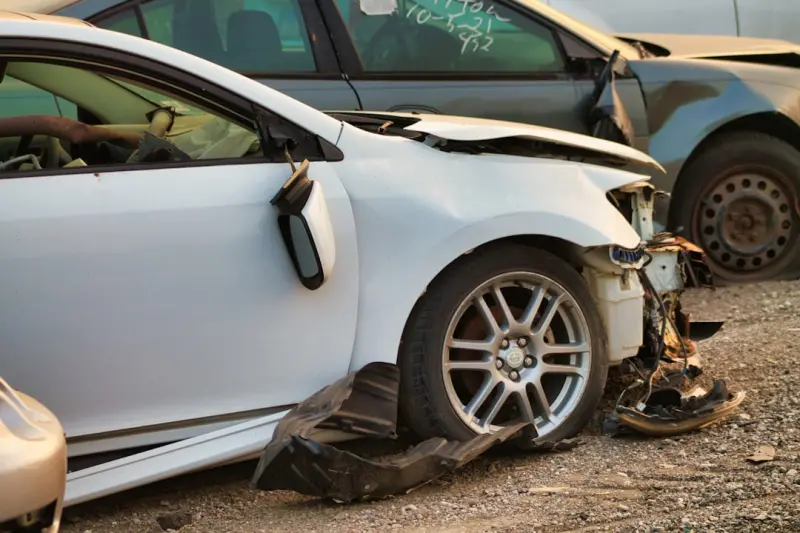
Understanding Liability in the Age of Autonomy
When a vehicle without a human behind the wheel collides, the courtroom becomes a new kind of intersection where cutting‑edge technology, contract law, and long‑standing tort principles converge, forcing judges to ask questions that were once confined to science‑fiction novels. In my practice, I’ve watched insurers scramble to reinterpret traditional negligence standards, while plaintiffs argue that the mere presence of autonomous software creates a presumption of fault that shifts the burden of proof onto manufacturers and software providers alike, a shift that threatens to upend the balance of risk that has guided auto law for a century. The crux of the debate rests on whether the fault lies with the owner’s failure to maintain the vehicle, the manufacturer’s hardware defects, or the algorithmic decisions made by a third‑party codebase, a question that forces courts to balance innovation incentives against consumer protection, and that is why I often reference algorithmic liability insights when mapping out strategy for my clients.
Who Owns the Decision?
At first glance, the answer seems obvious: the driver, even if only a passenger, should be held accountable for any reckless conduct, yet autonomous systems are designed to intervene precisely when a human driver would be incapacitated, blurring the line between human and machine agency. Courts in several jurisdictions have begun to adopt a “shared fault” model, assigning percentages of responsibility to the vehicle’s owner, the original equipment manufacturer (OEM), and the software vendor, a framework that mirrors product liability but adds a layer of complexity because the software can be updated remotely, altering the vehicle’s behavior long after the sale. This shared model, however, is still in its infancy, and I advise clients to secure explicit contractual language in purchase agreements that delineates maintenance obligations, software update protocols, and indemnification clauses, because without clear contractual scaffolding, the default legal doctrines may leave drivers vulnerable to unexpected judgments.
Manufacturer vs. Software Provider
One of the most contentious battlegrounds is the division of liability between the OEM, which builds the physical chassis, and the software provider, which supplies the decision‑making algorithms, a split that mirrors the classic “component vs. system” dispute in traditional product liability but with a digital twist. In recent cases, plaintiffs have successfully argued that a software glitch that misread a traffic sign was the proximate cause of a crash, while defendants have countered that the hardware sensors were improperly calibrated, a classic “but‑for” argument that can send juries spiraling into technical detail. My experience tells me that the smartest defense strategy is to present a unified front through joint testing reports, shared liability insurance policies, and cross‑licensing agreements that pre‑emptively allocate risk, thereby reducing the chance that a courtroom will have to untangle the intricate web of code, circuitry, and contractual obligations.
The Data Trail: Telematics, Privacy, and the Law
Every autonomous vehicle generates a massive stream of data—from GPS coordinates and speed logs to lidar point clouds and driver‑monitoring camera feeds—creating a digital breadcrumb trail that can be invaluable in accident reconstruction, yet also raises profound privacy concerns that the law has yet to fully address. The Federal Trade Commission has issued guidance suggesting that telematics data should be treated as personally identifiable information, meaning that companies must obtain clear consent, provide opt‑out mechanisms, and implement robust security safeguards, but the guidance remains vague, leaving many manufacturers to adopt a patchwork of policies that differ from state to state. I counsel clients to demand transparency clauses that specify what data is collected, how it is stored, and who may access it, because once that data is sold to third‑party advertisers or insurers—an increasingly common practice—the driver’s ability to control their own digital footprint evaporates, a concern that becomes especially acute when the same data feeds into usage‑based insurance models that calculate premiums in real time.
What Data Is Collected?
Beyond the obvious metrics like mileage and speed, modern cars capture nuanced information such as driver eye movement, heart rate (via seat sensors), and even cabin conversation audio, data that can be used to fine‑tune autonomous algorithms but also to infer personal habits, health conditions, and location histories, creating a privacy minefield that is rarely discussed at the dealership. Many states have enacted “right to delete” statutes that empower vehicle owners to request erasure of stored telematics, yet the enforcement mechanisms are weak, and manufacturers often argue that data retention is essential for safety updates, a claim that courts have not yet fully vetted. As a result, I recommend that consumers negotiate for data‑minimization clauses that limit collection to what is strictly necessary for vehicle operation, and that they retain copies of any privacy policies at the time of purchase, because those documents can become crucial evidence if a dispute over data misuse ever reaches the courtroom.
Legal Obligations and Consumer Rights
From a legal standpoint, the intersection of automotive law and data privacy creates a dual‑track compliance regime: manufacturers must satisfy both motor vehicle safety standards and emerging data protection statutes such as the California Consumer Privacy Act, a combination that can be costly but also offers a strategic advantage for companies that can demonstrate superior privacy stewardship. For consumers, the law provides a set of rights—notice, consent, access, correction, and deletion—that can be exercised through formal requests to the OEM, and failure to honor those requests can trigger statutory damages that far exceed the value of any individual data point. In my experience, the most effective way to enforce these rights is through collective action; when a group of owners files a class‑action complaint alleging systematic data abuse, the resulting settlement often includes not only monetary compensation but also mandatory changes to data handling practices, a win‑win that reinforces the principle that privacy is a fundamental component of automotive safety.
Recalls, Defects, and the Consumer’s Legal Arsenal
When an autonomous vehicle is recalled, the stakes are higher than with a conventional car because software defects can be silently propagated across millions of units through over‑the‑air updates, turning a localized issue into a fleet‑wide hazard that may not be evident until a crash occurs. The National Highway Traffic Safety Administration (NHTSA) has begun to issue “software‑focused” recall notices that require manufacturers to push patches within a specified timeframe, yet enforcement remains inconsistent, and many owners remain unaware of the urgency, especially when the recall notification is buried in a digital inbox. I advise drivers to treat every recall as a potential legal claim, because the law provides clear remedies—including repair, replacement, or even refund—when a defect poses an unreasonable risk, and because the existence of a recall can be the linchpin in proving negligence or strict liability in a subsequent lawsuit.
When a Recall Becomes a Lawsuit
In recent high‑profile cases, plaintiffs have leveraged recall notices to demonstrate that manufacturers possessed knowledge of a defect yet failed to act promptly, a factual pattern that satisfies the “failure to warn” element of product liability and often leads to sizable jury awards for pain, suffering, and lost wages. The key to turning a recall into a successful claim is documentation: keeping copies of the recall notice, service records showing that the repair was performed (or not), and any communications with the dealer, because the burden of proof frequently rests on the plaintiff to show that the defect directly caused the injury. I have also seen successful claims arise from “partial” recalls, where a manufacturer fixes a known issue in one component but neglects a related software glitch, a scenario that courts have treated as a breach of the implied warranty of merchantability, reinforcing the idea that a recall must be comprehensive to satisfy legal standards.
Strategic Steps for the Affected Driver
For drivers who discover that their autonomous vehicle has been subject to a recall, the first strategic move is to contact the dealer immediately and obtain a written confirmation that the repair or software update was completed, a document that will serve as a shield against future liability claims. Next, I recommend filing a formal complaint with the NHTSA’s Office of Defects Investigation, because the agency’s database can be used to demonstrate a pattern of non‑compliance, an important factor in establishing punitive damages if the case proceeds to trial. Finally, consider joining or initiating a class‑action lawsuit, as collective litigation not only spreads the cost of legal representation but also amplifies bargaining power, often resulting in settlement terms that include vehicle buy‑backs, extended warranties, and mandatory upgrades—outcomes that protect both the individual driver’s pocketbook and the broader public’s trust in autonomous technology.

Kris Kennel is a Paralegal outside of Austin, Texas where he spends most of his time helping users with legal matters that concern them. When he is not working he enjoys time with his wife and kids.
Related Posts

Over-the-Air Updates: Redefining Automotive Liability
Over-the-Air updates are transforming cars from static machines into evolving software platforms, pr... Read More

Driving Into the Future: How V2V and V2X Tech Are Redefining Automotive Liability
An in‑depth look at the emerging legal challenges of V2V/V2X technology, covering liability matric... Read More
Connected Car Data: The Legal Road Ahead
Cars now generate massive data streams, raising fresh privacy and liability questions. This article ... Read More
Top Posts

Digital Asset Trusts: Safeguarding Crypto, NFTs, and DeFi for the Next Generation
Discover a practical roadmap for integrating cryptocurrencies, NFTs, and DeFi positions into trusts, ensuring secure succession and tax compliance for digital w...Read More

The Intersection of Insurance Law and Family Law: A Complex Web of Liability
The intersection of insurance law and family law is complex and multifaceted. Learn how attorneys can navigate this web of liability to provide effective counse...Read More

When Algorithms Judge: AI’s Impact on Criminal Law
The article examines how AI and digital evidence are reshaping criminal law, from predictive policing and facial recognition to blockchain evidence, offering pr...Read More

Why Structured Data Is Your New SEO Superpower
Structured data has become essential for modern SEO, especially as AI-generated search results dominate. This post explains why schema markup matters, how to im...Read More
0 Comments
Post Comment
You will need to Login or Register to comment on this post!