
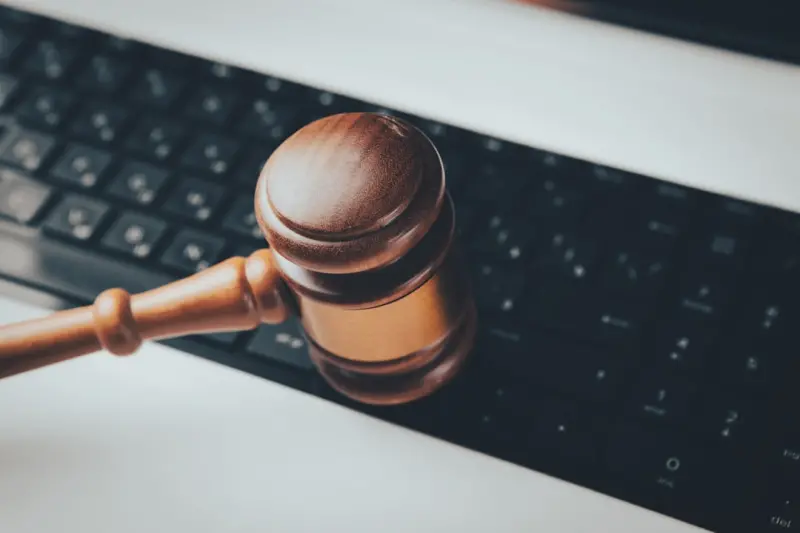
Understanding Predictive Policing
Law enforcement agencies across the nation have begun to rely on sophisticated algorithms that sift through historic crime data, social media chatter, and even weather patterns to forecast where illegal activity is most likely to occur. Predictive policing promises to allocate limited resources more efficiently, but its rapid adoption has outpaced the legal frameworks that traditionally safeguard individual liberties, creating a tension between public safety ambitions and constitutional protections. Critics argue that when a computer model, rather than a human officer, determines who lives under heightened surveillance, the very notion of due process becomes hazy, and communities that have long been marginalized risk becoming permanent targets of pre‑emptive law enforcement.
The technology behind these forecasts leans heavily on AI-driven legal tools that can analyze terabytes of data in seconds, identifying patterns invisible to the human eye. While this capability can illuminate hidden crime hotspots, it also inherits the biases embedded in the data sets it consumes, meaning that neighborhoods historically over‑policed may appear as perpetual risk zones, perpetuating a cycle of scrutiny. Moreover, the proprietary nature of many predictive platforms means that defense attorneys often cannot scrutinize the exact mechanics of the algorithms, leaving a black box that influences arrest decisions without transparency or accountability.
Legal Frontiers and Defense Tactics
At the heart of the legal debate lies the Fourth Amendment, which guards against unreasonable searches and seizures, a protection that becomes murkier when police act on algorithmic alerts rather than observable evidence. Courts are beginning to grapple with whether an arrest predicated solely on a predictive score constitutes a reasonable suspicion, and early rulings suggest a growing discomfort with allowing statistical probabilities to replace concrete, articulable facts. This unsettled terrain forces criminal defense lawyers to develop novel arguments that challenge the reliability and fairness of the data driving police actions.
Beyond constitutional concerns, the specter of algorithmic bias raises equal‑protection challenges under the Fourteenth Amendment, especially when minority communities are disproportionately flagged as high‑risk. Defense teams are increasingly commissioning independent data audits, enlisting statistical experts to dissect the weighting of variables such as prior arrests, socioeconomic status, and zip codes, hoping to expose systemic disparities that could invalidate a prosecution's reliance on predictive evidence. These forensic audits, while costly, have become a crucial component of a modern defense strategy, turning the tables on a technology that once seemed impenetrable.
Recent case law offers a mixed picture of how judges are responding to these arguments. In one jurisdiction, a court dismissed a homicide charge after the prosecution's key witness—a predictive model—could not be subjected to cross‑examination, deeming the evidence “unreliable and opaque.” In another, a judge upheld a drug‑possession conviction, citing the model’s “validated track record” despite the defense’s request for source code disclosure. Such divergent outcomes underscore the need for a coherent legal standard that balances innovation with the fundamental rights of the accused.
For defense attorneys, adapting to this new reality means expanding their skill set beyond traditional courtroom tactics. Many are now collaborating with civil‑rights organizations to file amicus briefs that argue for broader legislative oversight of predictive tools, while simultaneously training investigators to recognize when a suspect’s encounter with police was merely the byproduct of an algorithmic prediction rather than observable criminal conduct. By weaving together constitutional theory, statistical scrutiny, and policy advocacy, lawyers are forging a multi‑pronged defense that aims to dismantle the unchecked power of predictive policing.
Yet, it is not solely about challenging the technology; it is also about offering alternatives that respect both safety and liberty. Some practitioners advocate for restorative approaches that address underlying community tensions without resorting to pre‑emptive arrests. By pairing community‑based interventions with transparent data practices, these advocates argue that the criminal justice system can achieve its protective goals while restoring trust in neighborhoods long scarred by over‑policing.
Charting a Responsible Path Forward
Policymakers face a pivotal moment: either codify stringent standards that demand algorithmic transparency, bias testing, and regular audits, or allow a patchwork of agency‑specific practices to dictate the future of law enforcement. Legislative proposals currently circulating in several state capitals call for mandatory disclosure of the data inputs and weighting formulas used in predictive models, as well as independent oversight committees empowered to suspend or modify programs that fail bias‑impact assessments. Such measures could provide the checks and balances necessary to align technology with constitutional safeguards.
Looking ahead, the integration of predictive policing with emerging tools like facial‑recognition cameras and real‑time location tracking amplifies both its potential and its peril. If unchecked, the convergence of these technologies could produce a surveillance ecosystem where individuals are monitored continuously, and any deviation from statistical norms triggers law‑enforcement action. Conversely, a thoughtfully regulated framework that incorporates community input, rigorous validation standards, and clear avenues for legal challenge can transform predictive analytics from a blunt instrument of control into a refined tool for targeted, proportionate policing.
Ultimately, the battle over predictive policing is a microcosm of a broader societal negotiation: how to harness the power of data without surrendering the core liberties that define a free society. As the law catches up with technology, attorneys, judges, legislators, and citizens must engage in an ongoing dialogue that emphasizes transparency, accountability, and the presumption of innocence. By confronting the challenges head‑on, the criminal justice system can evolve in a way that honors both safety and justice, ensuring that algorithms serve the public good rather than become a new form of unchecked authority.

Steven McClurry is a freelance writer. He loves to write controversial topics and on a wide rang of topics. When is not online he is hanging out at his college campus or playing online games.
Related Posts

Beyond the Badge: How Digital Forensics Is Redefining Criminal Law
The article examines the transformative impact of digital forensics, artificial intelligence, and da... Read More

Deepfake Deception: The New Frontier of Criminal Evidence
A deep dive into the emerging threats of AI‑generated fake media, its impact on criminal investiga... Read More

When Bytes Become Evidence: Navigating Criminal Law in the Digital Age
A deep dive into the rise of digital evidence, from smartphone data to AI‑driven analysis, and how... Read More
Top Posts

How AI-Generated Content Is Changing SEO and What You Can Do About It
Explore the impact of AI‑written content on search rankings, learn to blend machine efficiency with human expertise, and adopt future‑proof SEO tactics that...Read More

Embedded Insurance in the IoT Era: Navigating Legal Pitfalls and Opportunities
Embedded insurance in the Internet of Things offers seamless coverage but raises intricate legal questions. This article breaks down contractual, regulatory, an...Read More

Rethinking Impaired Driving Policies for the Gig Economy
The gig economy demands a fresh approach to impaired driving, blending real‑time telemetry, comprehensive substance policies, and proactive education to prote...Read More

Biometric Surveillance in the Workplace: Navigating the Emerging Legal Landscape
Biometric tools—from fingerprint doors to facial‑recognition time‑cards—are reshaping the modern workplace. This article breaks down the unique privacy ...Read More
0 Comments
Post Comment
You will need to Login or Register to comment on this post!