
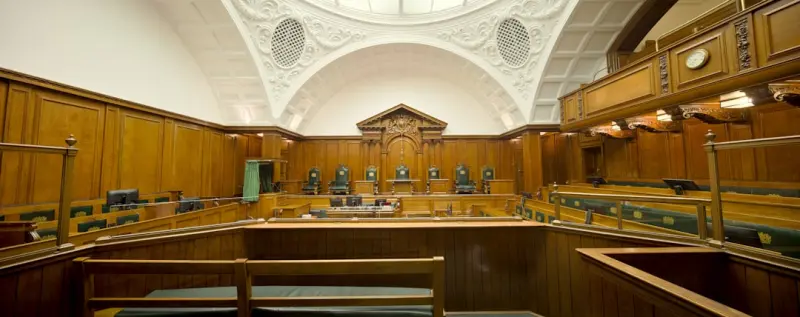
When I first saw a video of a politician apparently endorsing a rival party—a clip that went viral before I could even verify its source—I felt the same mix of disbelief and curiosity that drives most of my research. It wasn’t just a political prank; it was a fully‑fledged, AI‑generated deepfake, and it landed squarely on my desk as a potential defamation nightmare. In the courtroom, the line between fact and fabrication is supposed to be razor‑sharp. Yet, as synthetic media becomes more sophisticated, that line is blurring faster than a low‑light filter on a TikTok reel.
What Exactly Is a Deepfake?
Deepfakes are hyper‑realistic audio or visual media created using generative adversarial networks (GANs) and other machine‑learning techniques. They can splice a celebrity’s face onto a stranger’s body, synthesize a voice that sounds indistinguishably human, or even fabricate entire scenes that never happened. The technology is democratized: a hobbyist with a modest GPU can now produce a five‑second clip that passes casual scrutiny.
From a legal perspective, the problem isn’t just the technology—it’s the intent and impact. A deepfake used for satire or parody may be protected under the First Amendment, but the same technology wielded to tarnish a reputation, manipulate markets, or intimidate a witness can trigger a cascade of legal claims.
Traditional Defamation Law Meets Synthetic Media
Defamation, at its core, requires three elements:
- A false statement of fact about the plaintiff.
- Publication to a third party.
- Damages caused by that statement, or, in the case of public figures, actual malice (knowledge of falsity or reckless disregard for the truth).
Deepfakes satisfy the first two elements with unsettling ease. A video showing a CEO allegedly “admitting” to insider trading is a false statement of fact, and when posted on a social platform it is instantly “published.” The real challenge lies in proving actual malice and quantifying damages, especially when the creator hides behind anonymous accounts or offshore servers.
One of the most compelling ways to frame this issue is to look at the AI and copyright challenges we’ve already explored. While copyright law wrestles with ownership of AI‑generated works, defamation law now wrestles with ownership of the “truth” behind those works. Both arenas ask: who is responsible when a machine produces a harmful output?
Beyond Defamation: Privacy, Right of Publicity, and False Light
Deepfakes also intersect with several other tort doctrines:
- Invasion of privacy—particularly the “public disclosure of private facts” tort—can arise when a deepfake reveals a fabricated but intimate detail about an individual.
- Right of publicity protects against unauthorized commercial exploitation of a person’s likeness. A deepfake advertisement featuring a celebrity’s face without consent may violate this right, even if the content is not defamatory.
- False light claims focus on the portrayal of an individual in a misleading context that would be offensive to a reasonable person.
Each of these claims demands a different evidentiary standard, yet they share a common thread: the plaintiff must prove that the synthetic media was not only false but also caused a concrete harm.
Jurisdictional Minefields
Because deepfakes can be created in one country, uploaded to a platform hosted in another, and viewed worldwide, determining the proper venue is a labyrinthine task. Some jurisdictions, like California, have enacted statutes specifically targeting “non‑consensual deepfakes” in the context of sexual content. Others, such as the UK, rely on existing defamation and privacy statutes, which may be stretched thin.
When a deepfake crosses borders, the conflict‑of‑laws analysis often hinges on where the plaintiff’s reputation is primarily established. For a multinational corporation, a deepfake that appears on a global platform can cause reputational damage in dozens of markets simultaneously, leading to a cascade of parallel lawsuits.
Evidence and the Burden of Proof
Proving that a video is a deepfake is no longer a matter of “obviously fake.” Experts in digital forensics must analyze pixel-level inconsistencies, audio‑visual synchronization, and metadata. However, courts are still catching up. In Doe v. SocialMediaCo., the plaintiff’s expert testimony was deemed “insufficient” because the judge had never ruled on the admissibility of AI‑generated evidence. The result? The case was dismissed on procedural grounds, not on the merits of the defamation claim.
Litigators now need a two‑pronged approach: (1) retain reputable forensic analysts who can produce a clear chain‑of‑custody report, and (2) educate the bench on the technical underpinnings of GANs. This is where the lessons from Predictive Policing become relevant—courts are learning to grapple with algorithmic evidence, and the same judicial mindset can be applied to deepfakes.
Recent Judicial Trends
While the legal landscape is still embryonic, a few notable cases are beginning to shape doctrine:
- United States v. Doe (federal district court)—the court granted a preliminary injunction preventing the distribution of a deepfake video that alleged a federal judge took bribes. The injunction hinged on the plaintiff’s demonstration of “irreparable harm” to judicial integrity.
- Smith v. Influencer (state court)—the plaintiff, a fitness trainer, successfully sued an influencer who posted a deepfake showing the trainer using performance‑enhancing drugs. The jury awarded damages for both defamation and violation of the right of publicity.
- Johnson v. TechCo (appellate decision)—the appellate court ruled that a platform could be held liable for “negligent facilitation” of a deepfake that caused workplace harassment, signaling a potential shift toward platform responsibility.
Practical Steps for Corporations and Individuals
Given the evolving threat, proactive risk management is essential:
- Develop a deepfake response protocol. Assign a cross‑functional team (legal, PR, IT) to assess and respond within 24‑48 hours of detection.
- Implement digital watermarking and authentication tools. Technologies like Content Authenticity Initiative (CAI) tags can help prove the provenance of legitimate media.
- Monitor social platforms with AI‑driven detection services. Many vendors now offer real‑time alerts for synthetic media matching a brand’s visual assets.
- Educate employees and executives. Regular training on the risks of sharing unverified content can curb internal amplification of deepfakes.
- Review contracts for deepfake clauses. Include explicit prohibitions and indemnification language in influencer, talent, and partnership agreements.
Policy Recommendations
Lawmakers are beginning to catch up, but there’s room for more precise legislation:
- Define “synthetic media” in statutes. A clear definition will reduce ambiguity and aid enforcement.
- Establish a safe harbor for platforms that act swiftly. Similar to the DMCA, a “deepfake safe harbor” could incentivize rapid removal without exposing platforms to blanket liability.
- Mandate transparency disclosures. Require creators of synthetic media that are “news‑worthy” to label their content as generated, akin to the EU’s Digital Services Act.
- Fund public‑interest forensic labs. Independent labs can provide low‑cost verification services for individuals who cannot afford private experts.
Looking Ahead: The Litigation Horizon
As the technology matures, we can expect a surge in litigation that will force courts to refine the standards for:
- Actual malice in the digital age. Courts may need to consider the creator’s knowledge of AI capabilities as a factor.
- Damages calculations. Traditional reputational damage models may be insufficient for viral deepfakes that generate billions of impressions in hours.
- Platform liability. The line between passive hosting and active facilitation will be tested repeatedly.
For now, the safest bet is to stay ahead of the curve—understand the technology, fortify your legal defenses, and be ready to act when a synthetic image threatens your brand or your personal reputation.
Final Thoughts
Deepfakes are not a fleeting novelty; they are a new frontier where technology, law, and society intersect in unpredictable ways. Just as we once grappled with the rise of the internet and its impact on defamation, we now face a world where a computer can fabricate reality faster than a journalist can fact‑check. The legal system will inevitably adapt, but the adaptation will be uneven and contested. In the meantime, the best defense is an informed, proactive offense—knowing the threats, preparing the response, and, when necessary, calling the court to draw the line between fact and fiction.

Allison Jarvis is a dynamic digital media and marketing professional dedicated to driving brand growth through impactful storytelling. With a sharp eye for market trends and a passion for data-driven strategies, she specializes in building cohesive online identities that resonate with modern audiences. Allison blends creative content production with robust analytics to maximize engagement and deliver measurable ROI. She continuously explores emerging digital tools to keep her projects ahead of the curve.
Related Posts

Algorithms in Family Court: Navigating the New Legal Landscape
AI is entering the family courtroom, turning custody fights into data-driven debates. Learn how lawy... Read More

The Shifting Tides of Family Law: Navigating Trends, Challenges, and Insights
The field of family law is constantly evolving, influenced by changing societal norms, advances in t... Read More

When Reality Becomes Fiction: Legal Battles Over AI Deepfakes
Deepfakes are reshaping the legal landscape, threatening reputation, privacy, and evidentiary standa... Read More
Top Posts

Purpose-Driven Trusts: Marrying Legacy with Impact
Purpose‑driven trusts let you embed personal values into estate planning, ensuring wealth supports social or environmental goals while preserving family asset...Read More

When Ransomware Strikes: Rethinking Cyber Insurance for SaaS Providers
A deep dive into why traditional policies fall short for SaaS, how dynamic pricing and response services are reshaping cyber coverage, and practical steps to se...Read More
When Fingerprints Lie: The Criminal Law Battle Over Biometric Spoofing
Biometric spoofing is emerging as a powerful tool for fraudsters, forcing criminal law to evolve. This article examines legal gaps, jurisdictional challenges, a...Read More

Navigating the Legal Frontier of Real Estate Tokenization
A deep dive into the emerging world of real‑estate tokenization, covering securities classification, blockchain title recording, smart‑contract risks, and p...Read More
0 Comments
Post Comment
You will need to Login or Register to comment on this post!