

Intellectual property (IP) has always been the quiet powerhouse behind tech innovation, but the rise of generative AI has turned the dial from “quiet” to “blaring.” As SaaS founders scramble to embed AI‑generated content into their platforms—think auto‑summaries, code completions, marketing copy—the legal landscape is morphing faster than a neural network learns. In this post, I’ll walk you through the three most under‑appreciated IP minefields you’re likely to encounter, share a pragmatic framework for staying ahead, and sprinkle in a few real‑world examples that illustrate why ignoring these risks can cost you more than a few developer hours.
1. Copyright Conundrums: Who Owns the Machine‑Made Masterpiece?
When an AI writes a blog post, designs a logo, or generates a line of code, the default legal instinct is to ask: Who owns the copyright? The short answer is “no one”—under current U.S. law, works must be the product of human authorship to qualify for protection. But the practical reality is messier.
- Work‑for‑Hire Clauses: If you’re using a third‑party AI service (e.g., OpenAI, Anthropic), the terms of service often claim a broad license to the output. Without a solid work‑for‑hire clause in your contracts, you may find yourself licensing rather than owning the content you thought you created.
- Derivative Works: Even if the AI’s output is “original,” it may still be considered a derivative of the data it was trained on. If that training data includes copyrighted material, you could inadvertently be infringing.
- Open‑Source Licenses: Many AI models are trained on open‑source code under licenses like GPL or MIT. Mixing model‑generated code with proprietary code can trigger viral licensing obligations if you’re not careful.
What’s the practical play? Draft explicit clauses in your vendor agreements that assign ownership of AI‑generated outputs to you, and require the provider to warrant that the training data does not infringe third‑party rights. When you train your own models, keep a clean data provenance log—think of it as an “IP passport” for each dataset.
2. Patent Puzzles: From Data‑Driven Inventions to “Patent Troll” Traps
Patents are the classic shield for tech innovators, but AI‑driven SaaS platforms create new challenges on two fronts: patent eligibility and defensive strategies.
- Algorithmic Patent Eligibility: Post‑Alice, the Supreme Court has tightened the “abstract idea” bar. Many AI‑related inventions—especially those that simply apply a known algorithm to data—risk being deemed non‑patentable.
- Data as a Claim Element: If your product’s novelty hinges on a unique data set (e.g., a curated “spam‑filtering” corpus), you must be able to demonstrate that the data itself is non‑obvious and has utility. This is a high bar and often requires a “data‑generation” method claim, which can be tricky.
- Patent Trolls in the AI Space: The explosion of AI patents has attracted non‑practicing entities that amass broad, vague patents and then sue. Even if you’re not directly infringing, a well‑crafted “patent assertion” can be used as leverage in negotiations.
My go‑to defensive strategy is two‑pronged:
- Proactive Patent Mapping: Conduct regular freedom‑to‑operate (FTO) searches focused on AI‑related claims, not just generic software patents. Use tools that can parse claim language for “machine‑learning” terms.
- Defensive Patent Pools: Join or form industry‑specific pools that cross‑license AI patents. This not only reduces litigation risk but also signals to trolls that you’re part of a collective defense.
3. Trade Secrets in a Remote‑First, Cloud‑First World
While patents get the spotlight, trade secrets are often the unsung heroes of SaaS IP strategy—especially for algorithms and model‑training pipelines you don’t want to disclose. The remote work boom, however, has stretched the traditional boundaries of “confidentiality.”
- Employee Mobility: With talent hopping between startups and big tech, you need robust “non‑disclosure” and “non‑compete” (where enforceable) provisions. Even if a non‑compete isn’t viable, a “garden‑clause” that limits the use of proprietary knowledge for a set period can be effective.
- Cloud Access Controls: Every API key, shared notebook, or cloud storage bucket is a potential leak point. Implement “need‑to‑know” access, and pair it with monitoring tools that flag anomalous data downloads.
- Third‑Party Contractors: Many SaaS firms rely on freelance data annotators. Ensure each contractor signs a tailored confidentiality agreement that clarifies the “trade secret” status of the data they handle.
In practice, I recommend a layered approach: legal agreements, technical safeguards, and a cultural “IP hygiene” program that educates every team member about the value of the data they touch daily. Think of it as a “privacy by design” mindset, but for trade secrets.
Connecting the Dots: A Holistic IP Playbook for AI‑Powered SaaS
Now that we’ve unpacked the three core minefields, let’s stitch them together into a repeatable process you can embed into your product development lifecycle.
- Ideation Stage
- Document the source and nature of every data set you intend to use.
- Run a preliminary “IP risk” checklist—does the idea rely on a novel algorithm, a unique data set, or a proprietary training pipeline?
- Design & Development Stage
- Engage your IP counsel early to draft vendor agreements that capture ownership of AI‑generated outputs. For instance, see how Privacy by Design emphasizes embedding legal safeguards from day one.
- Implement technical controls: encryption at rest, role‑based access, and audit logs for model training runs.
- Consider filing provisional patents for any “non‑obvious” model‑training techniques or data‑processing pipelines.
- Launch & Scaling Stage
- Conduct a formal FTO analysis that includes the latest AI‑related patents. Leverage the insights from the When Algorithms Hire piece to appreciate how algorithmic decisions intersect with broader regulatory compliance.
- Roll out a quarterly “IP hygiene” audit—review NDAs, monitor cloud access, and update your trade secret policies.
- Engage with industry groups for defensive patent pooling and stay abreast of emerging case law.
- Post‑Launch Review
- Track any third‑party claims or cease‑and‑desist letters. A rapid response team can often settle or counter‑claim before litigation escalates.
- Iterate on your data provenance documentation as new datasets are added or models are fine‑tuned.
By treating IP not as a one‑off filing but as a living component of your product roadmap, you turn potential liabilities into strategic assets. Your AI‑driven features become market differentiators, protected not just by code, but by a robust legal scaffolding.
Future‑Facing Thoughts: The Coming IP Evolution in Generative Tech
Looking ahead, three macro‑trends will reshape how we think about IP in AI SaaS:
- Statutory Copyright for AI‑Generated Works—Several jurisdictions are already debating legislation that would grant limited copyright to AI outputs. If enacted, your ownership strategies will need to pivot from “contractual assignment” to “statutory entitlement.”
- Standard‑Setting for Data Licensing—Just as Creative Commons standardized content licensing, we’ll likely see “Data Commons” frameworks that delineate permissible uses of training data, reducing the derivative‑work gray area.
- AI‑Specific Patent Examination Guidelines—Patent offices worldwide are drafting new guidelines to address “inventive step” in AI contexts. Early adopters who align their claims with these evolving standards will gain a competitive edge.
Staying ahead means investing now—in legal counsel who understand both tech and IP, in tools that automate provenance tracking, and in a culture that treats IP as a shared responsibility across product, engineering, and legal teams.
In the end, the most valuable IP asset for an AI‑centric SaaS isn’t just a patent portfolio or a trade secret vault; it’s the process you build to protect, iterate, and leverage your innovations. Build that process today, and you’ll find your company not just surviving the IP turbulence, but thriving in it.

Allison Jarvis is a dynamic digital media and marketing professional dedicated to driving brand growth through impactful storytelling. With a sharp eye for market trends and a passion for data-driven strategies, she specializes in building cohesive online identities that resonate with modern audiences. Allison blends creative content production with robust analytics to maximize engagement and deliver measurable ROI. She continuously explores emerging digital tools to keep her projects ahead of the curve.
Related Posts

AI-Generated Creations: Navigating Copyright in the Age of Machine Creativity
AI‑generated art is reshaping copyright law. Learn practical strategies to claim ownership, protec... Read More

Who Owns the Machine? Copyright in the Age of Generative AI
Generative AI is redefining creativity, raising fresh copyright questions about originality, authors... Read More
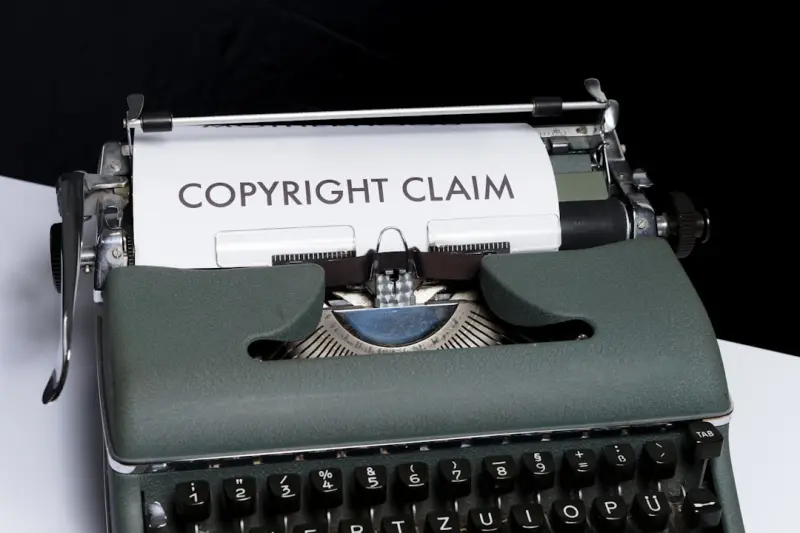
The AI Copyright Dilemma: Who Owns Machine‑Made Creations?
An in‑depth look at how generative AI disrupts traditional copyright law, practical steps for busi... Read More
Top Posts

Finding Freedom: Reclaiming Your Narrative After Divorce
A personal guide to turning divorce into a catalyst for self‑discovery, financial empowerment, and a future shaped by your own story....Read More

Sky‑High Risks: How Insurance Law Is Adapting to Autonomous Delivery Drones
A deep dive into the emerging legal and insurance challenges of autonomous delivery drones, offering practical strategies for companies and insights into future...Read More

When Algorithms Hire: Navigating AI‑Driven Recruitment Under Employment Law
A deep dive into the legal challenges of AI‑driven recruitment, offering practical compliance steps, bias‑mitigation strategies, and guidance for HR leaders...Read More

Digital Evidence Decoded: A Criminal Defense Playbook
The article delves into the growing impact of digital evidence—smartphones, cloud storage, wearables, and AI—for criminal defense, offering actionable tacti...Read More
0 Comments
Post Comment
You will need to Login or Register to comment on this post!