
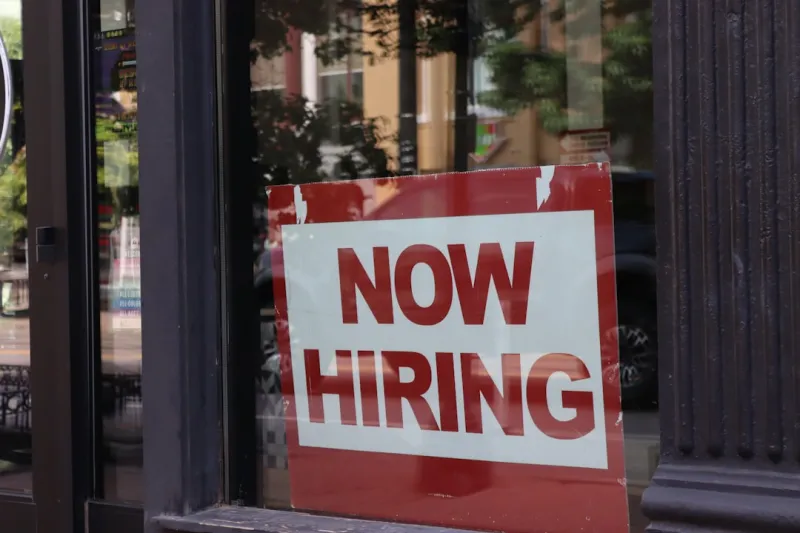
Why Employment Law Is Suddenly Front‑And‑Center
When I first started navigating the labyrinth of workplace regulations, I imagined a world where statutes were static, courts predictable, and the employer‑employee relationship a simple exchange of labor for wages. Today, that picture is shattered by the relentless march of technology, the rise of gig platforms, and a cultural shift that demands flexibility without sacrificing rights; the result is an ecosystem where every policy decision reverberates across the digital and physical realms. Employers are scrambling to integrate AI‑driven performance analytics, while workers push back with privacy concerns that echo the debates I’ve seen in The Digital Detective: AI’s Impact on Modern Criminal Defense, proving that data surveillance is no longer just a courtroom issue but a daily workplace reality. In this climate, staying ahead means mastering a new legal lexicon that blends traditional statutes with emerging concepts like algorithmic bias, remote‑work jurisdiction, and the gig worker’s quasi‑independent status.
The Gig Economy’s Legal Grey Zone
Gig platforms have turned the classic employer‑employee dichotomy on its head, creating a sprawling gray area where workers are labeled “independent contractors” yet subjected to the same performance metrics and penalties as salaried staff. This paradox forces courts to grapple with questions that were once relegated to contract law: Are gig workers entitled to minimum wage, overtime, or even basic benefits, or does the platform’s promise of flexibility absolve it of traditional obligations? Recent rulings have begun to carve out a middle ground, granting limited protections while preserving the flexibility that gig work promises; however, the inconsistency across states leaves many workers navigating a patchwork of rights that shift with each new lawsuit. For employers, the challenge is twofold: they must redesign their compliance frameworks to accommodate divergent legal standards while also managing public perception, because any misstep can ignite a PR firestorm that rivals the most contentious class‑action suits.
AI‑Powered Monitoring and the New Privacy Frontier
Artificial intelligence has become the silent overseer in many modern offices, parsing emails, tracking keystrokes, and even analyzing tone during virtual meetings to gauge employee engagement. While proponents tout these tools as boosters of productivity and early‑warning systems for burnout, critics argue they erode the very notion of workplace privacy that labor laws were designed to protect. The legal debate is heating up, with legislators proposing bills that would limit the scope of data collection and require explicit consent before any algorithmic monitoring can commence. As someone who has watched similar technology battles unfold in criminal law, I see a clear parallel: just as defendants now demand transparency around AI evidence, employees are demanding the same level of clarity regarding how their digital footprints are harvested and used. Companies that fail to implement clear policies risk not only regulatory penalties but also a wave of employee lawsuits that could cripple even the most robust compliance programs.
Remote Work: Jurisdictional Jigsaw Puzzles
When the pandemic forced millions into home offices, it also scattered the traditional notion of a “workplace” across state lines, countries, and time zones, turning employment contracts into moving targets. Suddenly, a software engineer living in a tax haven could be technically subject to the labor laws of the state where the company's headquarters reside, while a customer service rep working from a neighboring state might fall under a completely different set of wage and overtime rules. This jurisdictional jigsaw has compelled HR departments to adopt sophisticated compliance matrices, but the rapid pace of change often outstrips even the most diligent efforts. Moreover, remote work has sparked a fresh debate over workers’ compensation: if an employee injures themselves while setting up a home office, which state's workers’ comp statutes apply? The answers are far from uniform, and until a federal standard emerges, employers will continue to wrestle with a legal landscape that feels more like a patchwork quilt than a cohesive framework.
Algorithmic Decision‑Making and Discrimination Risks
Algorithms are now the gatekeepers for everything from resume screening to promotion pathways, and while they promise objectivity, the reality is that they can unintentionally perpetuate bias embedded in their training data. In the employment context, this translates to a heightened risk of disparate impact claims, where plaintiffs allege that a seemingly neutral system disproportionately disadvantages protected groups. Courts are beginning to demand transparency in the design and deployment of these tools, requiring employers to demonstrate that their algorithms meet the “business necessity” test and do not have less discriminatory alternatives. Companies that proactively conduct bias audits and document their mitigation strategies not only shield themselves from costly litigation but also build a reputation for fairness that resonates with a workforce increasingly attuned to social justice. As the legal standards evolve, the mantra “if you can’t explain it, you can’t use it” will become a cornerstone of responsible AI adoption in HR.
Collective Bargaining in the Digital Age
The resurgence of union activity across various sectors has intersected with digital communication platforms, reshaping how workers organize and how employers respond. Social media groups, encrypted messaging apps, and dedicated union portals enable rapid mobilization, but they also expose collective actions to surveillance and potential retaliation under existing labor statutes. Employers must walk a tightrope: they can monitor public channels for legitimate business concerns, yet crossing into private union discussions can trigger violations of the National Labor Relations Act. Recent case law underscores that even the act of gathering signatures via an online petition can be deemed protected concerted activity, forcing companies to rethink their monitoring policies and employee communication guidelines. The strategic takeaway for legal counsel is clear: develop nuanced, technology‑aware strategies that respect workers’ rights while safeguarding legitimate business interests, lest they find themselves on the wrong side of a landmark labor ruling.
Benefits and the Rise of “Portable” Perks
Traditional employee benefits—health insurance, retirement plans, paid leave—are being reimagined as “portable” assets that employees can carry from job to job, a shift driven by the fluid nature of modern career paths. This evolution challenges employers to design benefit structures that comply with ERISA and ACA regulations while also offering the flexibility demanded by a mobile workforce. Some forward‑thinking firms are experimenting with stipend‑based models, allowing employees to purchase their own coverage, but these approaches must be meticulously calibrated to avoid classification errors that could reclassify workers as independent contractors. Additionally, the legal implications of offering benefits that are tied to tenure rather than employment status are being scrutinized, particularly in states with robust “benefit continuation” statutes. Companies that successfully navigate this terrain can position themselves as attractive talent magnets, whereas missteps can result in costly penalties and a loss of goodwill among the very workers they aim to retain.
Compliance Technology: The Double‑Edged Sword
Compliance software promises to streamline the daunting task of tracking ever‑changing employment regulations, yet reliance on these tools introduces its own set of legal vulnerabilities. When a compliance platform misclassifies a worker or fails to update a new state minimum wage law, the liability often falls squarely on the employer, not the software vendor. This reality has spurred a wave of “software‑as‑law” litigation, where plaintiffs argue that firms cannot abdicate responsibility simply because they outsourced compliance to an algorithmic solution. The prudent path forward involves a layered approach: use technology for efficiency, but supplement it with regular human audits, legal counsel reviews, and clear documentation of decision‑making processes. By treating compliance tools as aids rather than absolutes, businesses can mitigate the risk of systemic errors that could otherwise cascade into multi‑state class actions.
Looking Ahead: Proactive Strategies for a Changing Landscape
In the midst of this rapid transformation, the most successful employers will be those that anticipate legal shifts rather than react to them after the fact. This means establishing cross‑functional teams that include HR, legal, IT, and even public relations to evaluate emerging risks such as AI bias, remote‑work jurisdiction, and gig‑worker classification on an ongoing basis. Regular training sessions that demystify complex regulations for frontline managers, coupled with transparent communication channels for employees to voice concerns, can create a culture of compliance that feels less like a checkbox exercise and more like a shared commitment to fairness. Ultimately, the future of employment law will be defined by how well organizations balance innovation with responsibility, ensuring that the tools designed to enhance productivity do not become the very source of new legal battles. By staying vigilant, adaptable, and ethically grounded, businesses can turn today’s legal challenges into tomorrow’s competitive advantages.

Steven McClurry is a freelance writer. He loves to write controversial topics and on a wide rang of topics. When is not online he is hanging out at his college campus or playing online games.
Related Posts

When Surveillance Meets Employment Law: What SaaS Leaders Need to Know
A comprehensive guide for SaaS leaders on navigating the legal complexities of workplace surveillanc... Read More

When AI Surveillance Meets Employment Law: Protecting Workers in the Smart Office
A deep dive into the legal challenges of AI‑enabled workplace surveillance, offering a six‑step ... Read More
Employment Law Trends 2024: Margaret Strawbridge’s Insider Perspective
Margaret Strawbridge breaks down the 2024 employment‑law landscape, covering AI surveillance, remo... Read More
Top Posts

The AI Copyright Dilemma: Who Owns Machine‑Made Creations?
An in‑depth look at how generative AI disrupts traditional copyright law, practical steps for businesses, and the emerging legislative landscape shaping who o...Read More

Digital Parenting Plans: Winning Child Custody in the Tech Age
Learn why modern custody battles demand a digital strategy— from smart parenting plans to AI‑driven mediation— and how to keep your child’s online world...Read More

Impaired Driving: Hidden Costs and Data‑Driven Solutions
Impaired driving ripples far beyond the crash scene, inflating insurance, straining healthcare, and haunting families. Learn how data, law, and community can re...Read More

SEO as a Core Product Feature for B2B SaaS
Learn how to treat SEO like a core SaaS feature—integrating search intent into product roadmaps, running data‑driven experiments, and leveraging technical S...Read More
0 Comments
Post Comment
You will need to Login or Register to comment on this post!