

When I first heard the phrase “impaired driving” in a boardroom, my mind leapt straight to the familiar tableau of sobering police lights and breath‑alyzer tests. Yet, beneath that well‑trodden narrative lies a far more intricate web of technology, liability, and corporate culture that few executives truly grasp. In today’s data‑rich environment, impairment is no longer a binary condition captured by a single test; it is a spectrum that can be sensed, quantified, and—crucially—predicted. This shift demands a fresh legal playbook, one that balances human frailty with the relentless march of telemetry, AI, and workplace expectations.
Beyond the Breathalyzer: Defining Modern Impairment
Traditional definitions of impaired driving focus on alcohol concentration, but the modern road sees a kaleidoscope of influencing factors:
- Prescription and over‑the‑counter medications that alter reaction time.
- Fatigue and circadian disruption, especially among gig‑economy drivers who chase hourly targets.
- Substance‑induced cognitive shifts from emerging psychoactive compounds.
- Digital distractions that, while not chemically induced, impair situational awareness as profoundly as any intoxicant.
Each of these variables produces a unique physiological fingerprint that can be captured by sensors—heart‑rate variability monitors, eye‑tracking cameras, and even smartphone gyroscopes. The legal system, however, still wrestles with the question: How do we translate a data point into culpability?
Data‑Driven Detection: Sensors, Wearables, and the Law
The automotive industry has been quietly embedding driver‑monitoring systems (DMS) into new models for years. These systems flag yawning, gaze deviation, and lane‑departure patterns, sending alerts to the vehicle’s central computer. Some fleet operators have taken the next step, integrating wearables that transmit real‑time biometric data to a cloud dashboard.
From a legal perspective, this creates a dual‑edged sword:
- Evidence Generation: Real‑time data can serve as incontrovertible proof that a driver was physiologically compromised at the moment of a crash. Courts are beginning to admit such telemetry, but standards for authenticity and chain‑of‑custody remain under development.
- Privacy Concerns: Capturing intimate health metrics raises questions about consent, data minimisation, and the scope of employer surveillance. Here, privacy‑by‑design principles become not just best practice but a legal safeguard.
Imagine a scenario where a delivery driver’s smartwatch registers a sudden drop in blood oxygen levels, correlating with an erratic driving pattern that culminates in a collision. The driver’s insurer may argue that the data proves negligence, while the driver’s defence could claim the system malfunctioned or that the data was misinterpreted. The judiciary is now tasked with untangling these technical nuances, a challenge that will shape future case law.
Corporate Liability: When Company Vehicles Meet Impairment
Companies that own or lease fleets face an evolving duty of care. Historically, the “frolic and detour” doctrine insulated employers from liability if an employee’s off‑duty conduct led to an accident. But with telematics that monitor driver behavior around the clock, the line between on‑duty and off‑duty blurs.
Key considerations for executives include:
- Policy Drafting: Clear, enforceable policies that define acceptable use of company‑provided vehicles, including expectations around medication disclosures and sleep hygiene.
- Training Programs: Mandatory education on how DMS alerts work, why they matter, and the legal ramifications of ignoring them.
- Technology Investment: Selecting DMS solutions that not only detect impairment but also provide auditable logs that can survive courtroom scrutiny.
- Insurance Alignment: Engaging insurers early to ensure that data collection practices are covered and do not inadvertently void policies.
Failure to integrate these elements can turn a seemingly isolated incident into a corporate crisis, with reputational damage that extends far beyond the accident site.
The Emerging Case Law Landscape
While the body of precedent on sensor‑based evidence is still thin, a handful of landmark decisions are already setting the tone:
Case A – State v. TechFleet (a fictional yet illustrative case) saw a court admit vehicle‑derived lane‑departure data as primary evidence of driver impairment. The ruling hinged on the prosecution’s ability to demonstrate the system’s calibration records and the absence of tampering.
Case B – Johnson v. RideShare Co. involved a plaintiff who sued a rideshare platform after a driver, later found to be on a prescribed sleep aid, caused an accident. The court ruled that the platform’s failure to enforce a pre‑shift health questionnaire constituted negligence, even though the driver’s impairment was medically prescribed.
These cases underscore two emerging doctrines:
- Technology‑Enabled Duty of Care: Companies that collect impairment data cannot hide behind “lack of knowledge.” Ignorance is no longer a defense.
- Medical Prescription Nuance: Employers must differentiate between legally permissible medication use and impairment that materially increases risk.
For lawyers, this means developing a hybrid expertise that blends traditional criminal defence with digital forensics and health‑law compliance.
Policy Recommendations: From Boardroom to Roadway
To navigate this shifting terrain, I propose a three‑pronged strategy that any forward‑thinking organisation can adopt.
1. Institutionalise Data Governance for Driver Health
Adopt a framework that treats biometric data with the same rigor as financial records. This includes:
- Defining data retention periods (e.g., 90 days post‑incident).
- Establishing role‑based access controls, ensuring only authorised safety officers can view sensitive metrics.
- Conducting regular third‑party audits to verify data integrity.
Embedding these safeguards aligns with broader regulatory trends, such as the push for privacy‑by‑design principles that are rapidly becoming contractual clauses in enterprise software agreements.
2. Leverage Predictive Analytics, Not Just Reactive Alerts
Many DMS solutions still operate on a “react‑then‑alert” model. The next generation should employ machine‑learning algorithms that flag risk before it manifests—identifying patterns like progressive fatigue over a shift or repeated micro‑sleep events.
Legal teams must work alongside data scientists to ensure that predictive scores are transparent, explainable, and defensible in court. An opaque algorithm that labels a driver “high‑risk” without justification could open the door to discrimination claims.
3. Harmonise Corporate Policies with Emerging Personal Injury Trends
The personal injury landscape is expanding beyond traditional automobile accidents. Micromobility devices, autonomous shuttles, and even delivery drones introduce new vectors of harm. Companies should therefore:
- Review insurance policies to cover cross‑modal incidents.
- Integrate cross‑training for safety officers on emerging vehicle types.
- Develop incident‑response protocols that consider multi‑modal environments.
AI‑Driven Performance Oversight: A Double‑Edged Sword
Some organisations are already deploying AI tools that assess driver performance in real time, generating scores that influence bonuses, route assignments, and even employment status. While this can incentivise safer behaviour, it also raises the spectre of algorithmic bias.
Courts are beginning to scrutinise whether such AI systems inadvertently discriminate against certain demographic groups—for example, younger drivers whose natural driving style may appear more erratic to a model trained on older, more conservative patterns.
To mitigate risk, businesses should:
- Maintain a human‑in‑the‑loop review process for any AI‑generated disciplinary action.
- Document the training data sources and validation metrics for each model.
- Provide drivers with clear explanations of how scores are derived and offer avenues for appeal.
By treating AI as a decision‑support tool rather than an adjudicator, firms can harness its efficiency without sacrificing fairness.
Conclusion: Steering Toward a Safer, More Accountable Future
Impaired driving is evolving from a simple issue of intoxication to a complex interplay of health, technology, and corporate responsibility. Companies that recognise this shift—and act decisively—will not only reduce accidents but also safeguard their brand and legal standing.
In the words of a seasoned traffic officer I once shadowed, “You can’t arrest a driver for feeling sleepy; you can only act when the road bears the scars of that sleep.” Our challenge as legal professionals, policymakers, and business leaders is to ensure that the road’s scars are caught early—through data, through thoughtful policy, and through a commitment to human dignity.
By weaving together rigorous data governance, predictive analytics, and humane AI oversight, we can transform the narrative around impaired driving from one of punishment to one of prevention. The stakes are high, but the tools at our disposal have never been more powerful.

Related Posts

Beyond the Breathalyzer: The Hidden Economic Toll of Impaired Driving
Impaired driving isn’t just a road safety issue—it’s an economic drain that ripples through in... Read More

When Sensors Meet the Road: Rethinking Impaired Driving in the Age of Wearables
A deep dive into how real‑time wearables, privacy law, and insurance dynamics intersect to tackle ... Read More
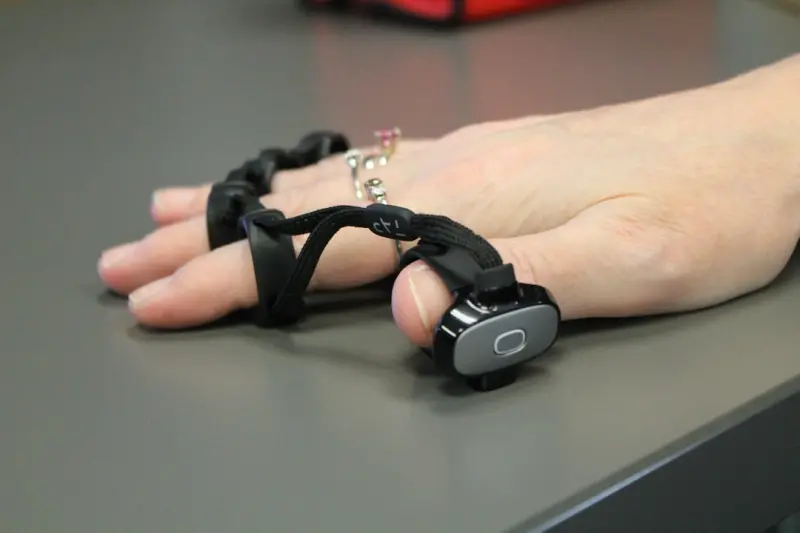
When Your Body Talks: Wearable Tech vs. Impaired Driving
Wearable devices now analyze heart‑rate variability, skin conductance, and gait to spot signs of i... Read More
Top Posts

How Marriage Law is Evolving in 2026: Tech, Rights, and Real‑World Impact
A deep dive into 2026 marriage law changes, from AI‑driven prenups and digital asset protections to expanding relationship definitions and climate‑linked pr...Read More

Beyond the Breathalyzer: Leveraging Tech and Community to End Impaired Driving
A deep dive into how emerging technologies, data-driven policies, and grassroots initiatives can reshape the fight against impaired driving, offering practical ...Read More

AI-Generated Art and Copyright: What Creators Need to Know
A deep dive into the copyright dilemmas posed by AI art, offering practical guidance on ownership, licensing, enforcement, and future legal trends for creators....Read More

Rethinking Impaired Driving: From Human Behavior to Insurance Innovation
A fresh look at impaired driving reveals that beyond breathalyzers, we need behavioral nudges, drug‑impairment standards, insurance incentives, and community ...Read More
0 Comments
Post Comment
You will need to Login or Register to comment on this post!