
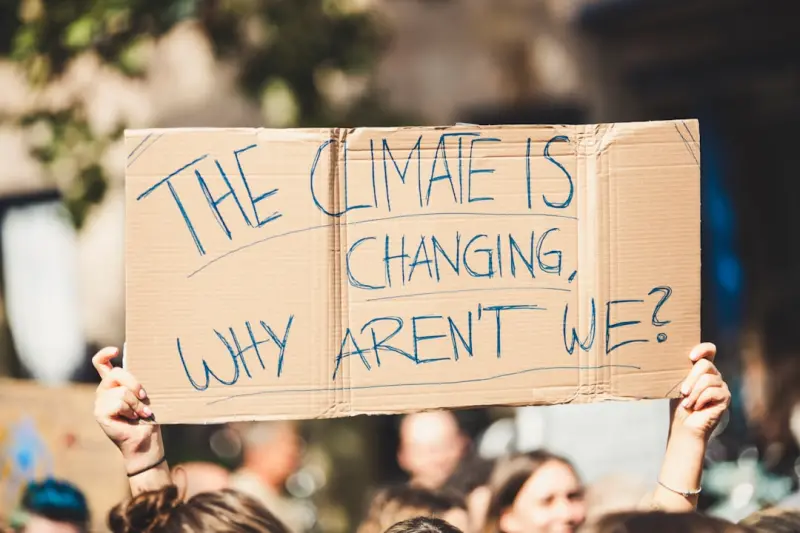
When Courts Become Climate Guardians: The Surge of Environmental Litigation
Over the past decade, the courtroom has quietly evolved into one of the most potent arenas for climate action. As a practicing attorney who has spent countless hours translating complex scientific data into compelling legal arguments, I’ve watched a tidal wave of lawsuits reshape the way corporations, governments, and even individuals think about responsibility for the planet.
What once seemed like a distant, idealistic pursuit—holding polluters to account for the very air we breathe—has become a pragmatic strategy for change. From landmark tokenized asset frameworks that expose hidden financial risks to innovative procedural tactics that force disclosure of climate‑related data, the legal toolkit is expanding faster than the climate models we rely on.
Why Climate Litigation Is Suddenly “Trending”
The surge in climate‑related lawsuits can be traced to three interlocking forces:
- Scientific Certainty. The Intergovernmental Panel on Climate Change (IPCC) has delivered a cascade of unequivocal findings. Courts are no longer dealing with speculative harm; they are confronting concrete, measurable impacts.
- Public Pressure. Grassroots movements, amplified by social media, have turned climate denial into a political liability. Litigants now harness public sentiment as a lever, compelling defendants to settle before reputational damage escalates.
- Regulatory Gaps. In many jurisdictions, statutes lag behind the rapid pace of environmental degradation. Plaintiffs have turned to common law doctrines—nuisance, negligence, and even fiduciary duty—to fill the void.
These forces converge to create a fertile ground for what I call “climate jurisprudence” – a rapidly developing body of case law that treats the planet itself as a legal stakeholder.
Key Legal Theories Driving the Movement
While each lawsuit is unique, most rely on a handful of foundational legal theories. Understanding these can help practitioners anticipate where the next wave may break.
1. Public Nuisance
The public nuisance doctrine, traditionally used to address things like noise or obstructed waterways, has been repurposed to claim that large‑scale carbon emissions constitute an unreasonable interference with public rights. In the Juliana v. United States case, a group of teenagers argued that the federal government’s inaction on climate change violated their constitutional rights to life, liberty, and property. Although the case was ultimately dismissed on standing grounds, it opened a dialogue about the scope of governmental responsibility.
2. Fiduciary Duty
Shareholder‑focused litigation is gaining traction, especially under the emerging ESG (Environmental, Social, Governance) standards. Investors argue that board members have a fiduciary duty to consider climate risk as part of their duty of care and loyalty. The 2022 Doe v. ExxonMobil decision in New York marked a watershed moment: the court ruled that failing to disclose climate‑related financial risks could constitute a breach of fiduciary duty.
3. Negligence and Strict Liability
When an entity’s activities directly cause environmental harm—think oil spills or toxic waste dumping—plaintiffs can invoke negligence or strict liability. These claims hinge on proving a duty of care, a breach, and causation. The famous Deepwater Horizon litigation demonstrated how massive punitive damages can act as a deterrent, even when the causal chain is complex.
4. Human Rights Claims
Increasingly, climate lawsuits frame environmental degradation as a violation of fundamental human rights—such as the right to health, water, and a clean environment. This approach, popularized by the Urgenda Foundation v. State of the Netherlands case, leverages international treaties to pressure governments into stronger climate action.
Strategic Considerations for Plaintiffs
Successfully navigating climate litigation demands a blend of scientific literacy, procedural acumen, and storytelling. Below are tactics that have proven effective:
- Data‑Driven Discovery. Plaintiffs must obtain emissions data, climate risk assessments, and internal communications. In many cases, Zero‑Click Search precedents have shown how to compel tech firms to reveal algorithmic data; similar discovery tactics are being adapted for climate data.
- Expert Witnesses. Engaging climate scientists, econometricians, and public health experts can translate abstract metrics into concrete harm.
- Multi‑Jurisdictional Coordination. Climate change knows no borders. Coordinating parallel lawsuits across states or countries can amplify pressure and create a unified legal front.
- Settlement Leverage. Even when a case is weak on the merits, the prospect of costly litigation and negative publicity can drive defendants toward settlement, often resulting in funding for renewable projects or stricter emissions controls.
Defensive Playbooks for Corporations
Corporations are not passive victims; many have developed sophisticated defensive strategies:
- Proactive Disclosure. By voluntarily reporting emissions and climate risk, companies can mitigate claims of nondisclosure under fiduciary duty theories.
- ESG Integration. Embedding ESG metrics into corporate governance not only satisfies investors but also creates a documented trail that can be used to demonstrate due diligence.
- Strategic Litigation. Some firms preemptively file counter‑claims or seek injunctions to limit the scope of plaintiff discovery.
- Insurance Policies. New “climate risk” insurance products are emerging, offering coverage for certain liability exposures, though the industry is still grappling with pricing and exclusions.
The Role of International Law
Beyond domestic courts, international law is shaping the climate litigation landscape. The Paris Agreement, while primarily a diplomatic accord, has given rise to “soft law” mechanisms that influence national courts. For instance, the European Court of Justice’s interpretation of the EU’s “polluter pays” principle has been cited in national nuisance claims across member states.
Moreover, the United Nations’ Loss and Damage framework is beginning to provide a basis for claims against nations that fail to meet their climate commitments, potentially opening a new frontier of state‑level litigation.
Emerging Trends to Watch
As we look ahead, several developments are poised to redefine climate litigation:
- Climate‑Specific Statutes. Legislatures worldwide are drafting statutes that codify climate duties—for example, the U.S. Climate Risk Disclosure Act (proposed) and Canada’s Climate Accountability Act. Such laws will give plaintiffs a clear statutory basis for claims.
- Digital Evidence Platforms. Blockchain‑based repositories for emissions data are emerging, offering immutable records that can be used as evidence in court.
- Intersection with Technology Law. The rise of AI‑generated climate models raises questions about admissibility and expert bias, echoing challenges seen in AI copyright dilemmas but applied to scientific forecasting.
- Community‑Led Litigation. Grassroots coalitions are increasingly funding and orchestrating lawsuits, democratizing access to legal recourse.
Practical Advice for Legal Professionals
Whether you’re a seasoned litigator, in‑house counsel, or a junior associate, here are actionable steps to stay ahead:
- Deepen Your Climate Literacy. Enroll in courses on climate science and policy. Understanding the science is no longer optional.
- Build Cross‑Disciplinary Teams. Pair lawyers with data scientists, engineers, and public policy experts to craft robust arguments.
- Monitor Legislative Developments. Track emerging climate statutes and regulations at federal, state, and local levels.
- Leverage Technology. Use AI‑driven document review tools to sift through massive data dumps of corporate disclosures.
- Engage Early with Stakeholders. Open dialogue with clients, regulators, and community groups to anticipate litigation risks before they materialize.
Conclusion: Courts as Climate Catalysts
The law has always been a mirror of societal values. In the era of climate urgency, it is also becoming a lever for transformation. The courtroom’s growing role as a climate guardian signals a paradigm shift: we are no longer waiting for legislators to act; we are compelling change through the power of precedent, accountability, and public scrutiny.
For attorneys, this means embracing a new breed of practice—one that blends scientific rigor with legal strategy, and that demands both compassion for affected communities and a relentless pursuit of justice. The challenges are immense, but the opportunity to shape a sustainable future through law has never been more tangible.

Kris M. Chen is a dedicated legal paralegal based in Texas, specializing in delivering comprehensive case management and litigation support. Known for a meticulous approach to legal research and document preparation, Kris plays a vital role in navigating complex legal workflows and ensuring seamless trial preparation.
Related Posts
When Courts Collide with Algorithms: The New Frontier of Family Law
Discover how algorithms, digital evidence, and virtual hearings are transforming family law, and lea... Read More

The 2024 Legal Landscape: Tech, Trends, and the Lawyer’s Playbook
A deep dive into 2024’s legal shifts, covering tech‑driven courts, automotive law, and criminal ... Read More

When Drones Take Over the Doorstep: Legal Realities of Aerial Delivery
A deep dive into the legal challenges of drone delivery, covering regulations, liability, privacy, a... Read More
Top Posts

2024 Marriage Law Trends: What Every Couple Needs to Know
A deep dive into 2024’s marriage law shifts, from crypto to international visas, offering practical steps to safeguard your union and stay ahead of legal surp...Read More

Finding Emotional Agility After Divorce: A Practical Guide for Professionals
Divorce reshapes life, but you can reclaim control by mastering emotional agility. This guide offers practical steps—from feelings inventories to tech toolsâ€...Read More

Family Law in 2024: Steven McClurry’s Fresh Take on Divorce, Custody, and Modern Contracts
Steven McClurry breaks down 2024’s biggest family law shifts—divorce, custody, tech, and contracts—offering actionable advice for modern families....Read More

Divorce in the Digital Age: Who Owns the Cloud?
A deep dive into the hidden digital battlegrounds of divorce—cloud storage, cryptocurrency, and privacy—offering actionable advice for navigating the modern...Read More
0 Comments
Post Comment
You will need to Login or Register to comment on this post!