
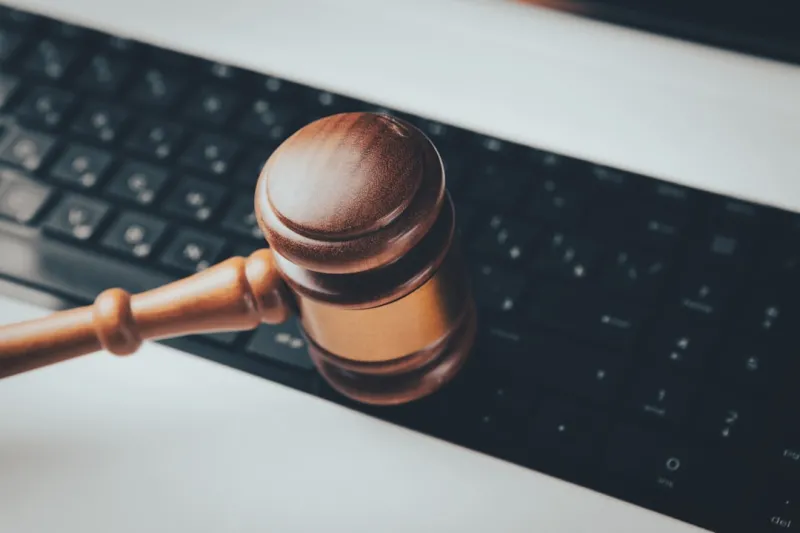
The Digital Pulse of Modern Criminal Law
Criminal law has never been a static discipline; it’s a living organism that reacts to every societal shift, and the digital revolution is perhaps the most seismic change we’ve seen. In the courtroom today, a single text message can outweigh a dozen witness statements, and the mere existence of metadata can tilt a jury’s perception before a single word is spoken. Understanding the weight of a digital footprint means recognizing that every click, swipe, and location ping can become a piece of evidence, demanding a new kind of forensic literacy from every attorney. For those of us who have spent decades navigating the gritty details of statutes and precedents, the challenge now is to translate that expertise into a language that judges and juries, who may be tech‑savvy or not, can grasp without being overwhelmed. The stakes are higher, the margins thinner, and the need for strategic clarity more urgent than ever before.
Surveillance Society and the Right to Privacy
From street‑level CCTV to satellite imaging, the modern surveillance landscape provides prosecutors with a treasure trove of visual data, yet it also raises profound constitutional questions. When a city installs facial‑recognition cameras at every corner, the line between public safety and intrusive monitoring blurs, forcing defense teams to mount privacy arguments that were once relegated to academic journals. The Fourth Amendment, traditionally interpreted through the lens of physical searches, now wrestles with intangible intrusions that happen in the ether of the internet. As we grapple with these complexities, it becomes essential to balance the state’s legitimate interest in crime prevention with the individual’s right to move through the world unrecorded, a balance that often hinges on the meticulous crafting of motions to suppress or limit the scope of electronic evidence.
Social Media as a Double‑Edged Sword
Social platforms have transformed from casual conversation spaces into potent evidentiary arenas, where a careless Instagram story or a fleeting tweet can become the linchpin of a criminal case. Defense attorneys must now monitor a client’s online presence with the same vigilance they apply to alibi verification, because a single post can be replayed in a courtroom like a recorded confession. At the same time, prosecutors are learning to harness the virality of digital content, presenting it in a narrative that feels both authentic and compelling to jurors. The challenge lies in dissecting the context: was a meme meant as satire, or does it reveal a motive? In many instances, the line between public persona and private intent is razor‑thin, demanding that lawyers develop a nuanced understanding of digital culture to argue effectively for or against the relevance of such evidence.
Artificial Intelligence and Predictive Policing
AI algorithms now assist law enforcement agencies in predicting crime hotspots, allocating resources, and even flagging potential suspects based on patterns that humans might miss. While these tools promise efficiency, they also embed biases that can disproportionately affect marginalized communities, leading to a cascade of legal challenges. Defense strategies must evolve to include expert testimony that can demystify algorithmic decision‑making, exposing flaws in data sets or the opacity of machine learning models. Moreover, the admissibility of AI‑generated evidence is still a gray area, prompting courts to wrestle with standards of reliability and the Daubert test in new contexts. As a criminal lawyer, staying ahead of these technological tides means not only mastering traditional statutes but also cultivating a working knowledge of data science principles to safeguard clients against unjust algorithmic profiling.
The Rise of Cybercrime and Specialized Expertise
Cyber offenses—from ransomware attacks to sophisticated identity theft—have surged, stretching the resources of even the most seasoned prosecutors. These crimes often cross jurisdictional boundaries, requiring coordination among federal, state, and international agencies, and they demand a level of technical expertise that many criminal defense firms are still building. For attorneys, the key is to partner with digital forensic specialists who can trace blockchain transactions, decrypt encrypted files, and reconstruct the timeline of a breach. Simultaneously, the defense must be prepared to challenge the chain of custody for electronic evidence, question the validity of hash values, and scrutinize the methods used to obtain server logs. The complexity of cybercrime cases underscores the need for continuous education and a proactive approach to integrating technology into legal practice.
Intersections with Other Legal Frontiers
Criminal law does not exist in a vacuum; it constantly intersects with emerging areas such as automotive regulation and medical liability, creating hybrid disputes that test the limits of traditional doctrine. For instance, consider a case where an autonomous vehicle’s software malfunction leads to a fatal collision—criminal charges may hinge on negligence, yet the underlying facts are steeped in automotive law shifts that dictate manufacturer responsibilities and driver expectations. Similarly, when a healthcare provider’s alleged misstep results in a patient’s death, the ensuing criminal investigation can draw on precedents from medical law battles, blurring the lines between malpractice and criminal culpability. These cross‑disciplinary scenarios require attorneys to be fluent in multiple legal vocabularies, to collaborate with specialists across fields, and to craft arguments that respect the nuanced interplay of statutes, regulations, and common law principles.
Courtroom Technology and the Pursuit of Fairness
Modern courtrooms are equipped with real‑time transcription, live‑streaming capabilities, and digital exhibit displays, all intended to enhance transparency and efficiency. However, the introduction of such technology also raises concerns about preserving the defendant’s right to a fair trial, particularly when jurors are exposed to high‑definition video evidence that can be emotionally overwhelming. Judges must balance the probative value of vivid digital displays against the potential for prejudice, often issuing limiting instructions that require jurors to focus solely on factual relevance. Defense counsel must be adept at filing motions to curb overly graphic presentations and at preparing jurors to critically assess multimedia evidence without succumbing to its sensational allure. In this evolving landscape, the art of courtroom advocacy now includes a technical dimension—ensuring that the tools meant to illuminate the truth do not inadvertently obscure it.
The Human Element: Storytelling and Empathy
Despite the flood of data and digital artifacts, the heart of criminal defense remains a compelling narrative that humanizes the accused. Effective attorneys weave facts, forensic details, and personal history into a story that resonates with jurors on an emotional level, counterbalancing the often cold calculus of statistical evidence. Empathy becomes a strategic asset; when a defendant is portrayed not merely as a set of charges but as a person shaped by circumstance, the jury is more likely to consider mitigating factors. This storytelling approach must be calibrated carefully to avoid appearing manipulative, especially when juxtaposed against powerful visual evidence. Ultimately, the goal is to restore the principle that every individual is presumed innocent until proven guilty, a timeless tenet that must shine through even the brightest screens.
Policy Reform and the Future of Criminal Justice
Legislators are beginning to recognize the need for reforms that address the digital realities of crime, from updating wiretap statutes to establishing clear guidelines for the use of predictive policing tools. Advocacy groups push for transparency in algorithmic decision‑making, while civil liberties organizations demand robust safeguards against mass surveillance. As criminal lawyers, we have a responsibility not only to defend individual clients but also to shape the broader policy environment that determines how justice is administered. Engaging in public comment periods, contributing to scholarly debates, and collaborating with technologists can drive the creation of balanced regulations that protect both public safety and constitutional rights. The evolution of criminal law will be defined by our ability to influence these reforms while navigating the immediate challenges of each case.
Preparing for the Next Wave of Legal Innovation
Looking ahead, the convergence of quantum computing, biometric identification, and augmented reality promises to further revolutionize criminal investigations and trials. Lawyers must adopt a mindset of lifelong learning, integrating interdisciplinary knowledge into their practice to stay effective. Investing in continuous professional development—whether through tech‑focused CLE courses, partnerships with forensic labs, or mentorships with seasoned cyber‑law experts—will become as essential as mastering the blackletter law of yesterday. By embracing these changes proactively, criminal defense attorneys can safeguard the rights of the accused, ensure the integrity of the justice system, and remain resilient in an era where the only constant is rapid technological transformation.

Kris Kennel is a Paralegal outside of Austin, Texas where he spends most of his time helping users with legal matters that concern them. When he is not working he enjoys time with his wife and kids.
Related Posts
Criminal Law in 2024: Navigating Tech, Reform, and the Human Story
Allison Jarvis breaks down 2024’s criminal law trends—from AI sentencing to restorative justiceâ... Read More
Restorative Justice in the Digital Age: Rebalancing Accountability and Healing
Restorative justice offers a transformative approach to criminal law, emphasizing repair, victim voi... Read More
Restorative Justice in Criminal Law: Reimagining Accountability
A deep dive into restorative justice, its principles, real‑world impacts, legal challenges, and ho... Read More
Top Posts

The Legal Roadmap for Vehicle Subscription Services
Vehicle subscriptions are booming, but they bring a maze of legal challenges. This article breaks down contracts, consumer protection, data privacy, liability, ...Read More

Virtual Courtrooms: Balancing Technology, Fairness, and Justice
The rapid rise of virtual courtrooms has transformed the justice system, offering efficiency and accessibility while raising critical due‑process, security, a...Read More

High‑Stakes Automation: Managing the Hidden Risks of Self‑Optimizing Systems
Self‑optimizing algorithms promise efficiency but hide safety trade‑offs. This post outlines legal liabilities, parametric insurance, and human‑in‑theâ€...Read More

Beyond the Breathalyzer: Business Strategies to Tackle Impaired Driving Risks
Impaired driving impacts more than just traffic safety—it’s a hidden liability for companies. This article outlines policies, tech tools, insurance tactics,...Read More
0 Comments
Post Comment
You will need to Login or Register to comment on this post!