
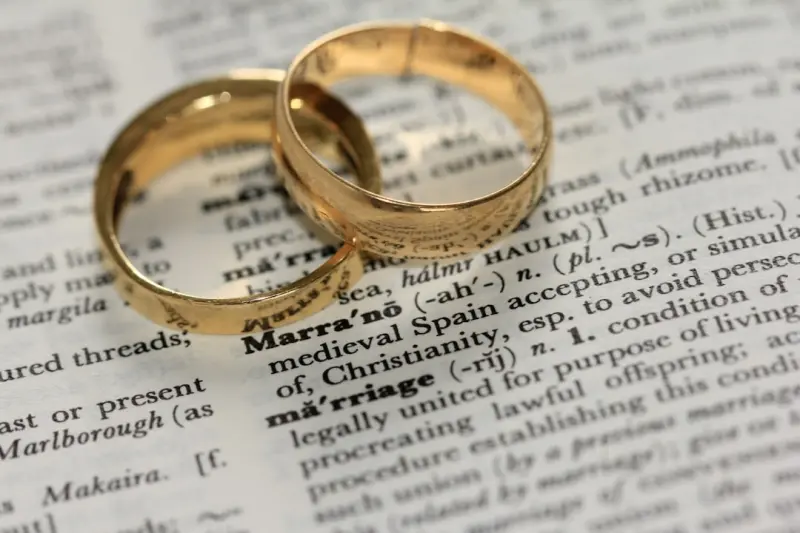
Why the Marriage Contract Isn’t What It Used to Be
When my grandparents got married, the ceremony was a simple exchange of vows and a paper certificate filed with a county clerk. Fast‑forward a few decades, and the same couple might now be signing a digital agreement on a tablet, livestreaming the “I do” to friends across three continents, and even using a smart contract to automate spousal benefits. The legal scaffolding that once rested on pen‑and‑ink has been stretched, rewoven, and in many places, completely re‑engineered by technology.
The Rise of the “Smart” Marriage Agreement
In the tech‑savvy world of today, smart contracts—self‑executing code on a blockchain—are no longer confined to finance. A growing number of start‑ups are offering “digital marriage contracts” that trigger specific actions once certain conditions are met: automatic joint‑account creation, conditional inheritance clauses, even pre‑programmed divorce settlements. While the novelty can feel futuristic, the underlying legal questions are very real.
Consider a scenario where a couple’s smart contract stipulates that, should either party lose their job, a predetermined portion of assets is re‑allocated to a “financial safety net” account. The contract is coded to execute instantly, without a judge’s signature. What happens if the code misfires? Or if a state’s statutes require a judicial order for any transfer of marital property? The intersection of code and code‑law is a minefield that lawyers must now map out.
From Paper to Pixels: The New Evidentiary Landscape
Traditional marriage disputes hinged on tangible evidence: wedding photos, receipts, and handwritten notes. Today, deepfake evidence in family courts is emerging as a contentious point. Imagine a divorce proceeding where one spouse alleges the other fabricated a compromising video to gain leverage. The court must decide not only the authenticity of the media but also its admissibility under evidentiary rules that were never designed for algorithmically generated content.
Lawyers are now required to become part‑time digital forensics experts, or at least to work closely with them. The stakes are high: a single misinterpreted frame can swing alimony, child‑support, or custody determinations. This shift underscores a broader trend—marriage law is no longer insulated from the tech wars waging in criminal and corporate courts.
Blockchain Weddings: More Than a Trend?
Beyond smart contracts, couples are experimenting with blockchain marriage contracts that token‑ize shared assets. By converting a house, a car, or even a collection of NFTs into tradable tokens, spouses can “slice” ownership with surgical precision. This granularity offers unprecedented flexibility: a token could represent a 2.5% interest in a vacation home, automatically adjusting as the property’s value fluctuates.
However, the legal system is still catching up. Many jurisdictions lack clear guidance on how tokenized assets should be treated in a divorce. Do courts view tokens as personal property, marital property, or something entirely new? And what about jurisdictional conflicts when the blockchain lives on a server in one country, but the couple resides in another? These questions are not just academic; they determine whether a tokenized asset can be seized, divided, or protected during marital dissolution.
AI Advisors: The New “Counsel” at the Altar
Artificial intelligence is infiltrating every stage of the marital journey. Pre‑marital counseling now includes AI‑driven questionnaires that predict compatibility scores based on communication patterns, financial habits, and even social media activity. While these tools can highlight red flags early, they also raise privacy concerns. Who owns the data generated during a “compatibility scan”? Can that data be subpoenaed in a later dispute?
Post‑marriage, AI is being deployed to monitor joint expenses, suggest equitable splits, and even draft preliminary separation agreements. The convenience is undeniable, but reliance on algorithms can erode the human judgment that traditional family law prized. As a result, many attorneys are urging couples to treat AI advice as a starting point, not a final decree.
Virtual Ceremonies and Jurisdictional Quirks
With the pandemic normalizing virtual gatherings, many couples opted for fully online weddings. Some platforms even offered “virtual officiants” who could legally pronounce a union in real time. While most states accepted these ceremonies, a few still require physical presence before a licensed officiant. The resulting legal patchwork can leave couples unsure whether their marriage is recognized in another state—or abroad.
Moreover, the rise of “metaverse weddings” adds another layer of complexity. Avatars exchange vows in digital realms, and the ceremony is recorded on a decentralized ledger. Some jurisdictions are beginning to draft legislation that acknowledges such events, but the majority remain silent. Until a consensus emerges, couples must consider a backup plan: a traditional ceremony or a secondary registration to safeguard their marital status.
Divorce in the Age of Automation
If marriage has become more automated, divorce is following suit. Online platforms now allow parties to file for dissolution, upload financial disclosures, and receive a court‑approved settlement—all without stepping foot in a courtroom. These services often use algorithms to calculate equitable distribution based on inputs like income, asset values, and child‑care responsibilities.
While the speed and affordability are appealing, there’s a risk of “one‑size‑fits‑all” solutions that ignore nuanced factors—such as emotional abuse, hidden assets, or complex business interests. Attorneys caution that while automation can streamline paperwork, the substantive legal analysis remains irreplaceable. The challenge for the profession is to integrate technology without sacrificing the individualized attention that family law demands.
International Nuances: When Two Legal Worlds Collide
Couples today are increasingly international. A U.S. citizen marrying a partner from a civil‑law jurisdiction may face a maze of conflicting regulations. For instance, some countries require a “marriage contract” that outlines property regimes (community property vs. separation of assets) before the wedding can proceed. Failure to comply can render the marriage void or lead to unexpected tax liabilities.
Cross‑border marriages also raise questions about which jurisdiction governs a divorce. If a couple splits after living in three different countries, which court has authority? The answer often hinges on where the marriage was registered, where the spouses reside, and where assets are located. Smart contracts can help by pre‑defining jurisdictional preferences, but they must be crafted with an eye toward enforceability across divergent legal systems.
Protecting Children in a Digitally Married World
Children’s rights remain a cornerstone of marriage law, but the digital age introduces new variables. Joint custody arrangements may now include shared control of a child’s social‑media accounts, digital footprints, and even data from wearable health devices. Courts are beginning to consider “digital parenting plans” that allocate responsibilities for monitoring and safeguarding a child’s online presence.
These plans also need to address data ownership. Who has the right to access a child’s educational app data or health metrics in the event of a separation? The answer often depends on the jurisdiction’s privacy statutes, which can vary dramatically. Forward‑thinking attorneys are drafting agreements that explicitly allocate digital rights to avoid future disputes.
The Role of Legal Professionals: From Gatekeepers to Tech Translators
For lawyers specializing in marriage law, the role is evolving from pure adjudicator to technology translator. We must be fluent in code, understand the mechanics of blockchain, and stay abreast of AI’s capabilities. This doesn’t mean every attorney needs to become a developer, but we do need a baseline competency to ask the right questions: Is the smart contract enforceable? Does the AI algorithm respect privacy norms? Is the jurisdictional language compatible with blockchain immutability?
Continuing education is crucial. Workshops on digital evidence, certifications in legal tech, and collaborations with technologists are becoming as essential as traditional CLE credits. The future of marriage law will reward those who can bridge the gap between heartfelt human experiences and cold, efficient code.
Practical Steps for Couples Embracing Digital Marriage
- Document everything. Even if you use a smart contract, keep a signed, plain‑language summary that can be presented in court if needed.
- Consult a tech‑savvy attorney. Look for counsel who understands both family law and the underlying technology.
- Know your jurisdiction. Verify that your state or country recognizes the form of digital ceremony you plan.
- Protect data. Use encryption, limit data sharing, and include privacy clauses in any digital agreement.
- Plan for the unexpected. Include fallback provisions for manual execution of asset division should the code fail.
Conclusion: Love, Law, and the Algorithmic Frontier
The institution of marriage is, at its core, a deeply human contract—one that promises partnership, support, and shared destiny. Yet, as technology permeates every facet of our lives, that contract is being rewritten in code, stored on distributed ledgers, and mediated by artificial intelligence. The challenge for couples and counsel alike is to harness these innovations without losing the essence of what makes marriage meaningful.
By staying informed, engaging with forward‑thinking legal professionals, and approaching digital tools with both enthusiasm and caution, couples can navigate this brave new world with confidence. The future may be algorithmic, but the vows remain timeless.

I am Madden Persons, a content writer and digital influencer dedicated to crafting impactful stories and building authentic online connections. With a strategic approach to content creation, I develop engaging articles, digital campaigns, and social media narratives that help brands elevate their online presence and connect meaningfully with their target audiences.
Passionate about modern digital trends and audience engagement, I specialize in translating complex ideas into compelling content that sparks conversation, drives results, and strengthens brand identity.
Related Posts
Love, Ledger, and Legal Loopholes: Modern Marriage Law Redefined
A deep dive into how digital assets, global mobility, and AI tools are transforming marriage law, of... Read More

Navigating Modern Marriage Law: Digital Prenups, Crypto, and Cross‑Border Challenges
Explore cutting‑edge marriage law tactics—from digital prenups and crypto asset protection to cr... Read More
The Changing Face of Marriage Law: A Comprehensive Overview
The institution of marriage has undergone significant changes in recent years. Learn about the evolu... Read More
Top Posts

Embedding ESG Principles into Trust Structures: A Modern Guide for Grantors
This guide shows grantors and trustees how to embed ESG values into trust documents, select suitable investment strategies, manage risk, and ensure transparent ...Read More

The SEO Evolution: Why Data, Storytelling, and Strategy Matter More Than Ever
Explore the shift from keyword stuffing to a balanced SEO approach that marries data insights, compelling storytelling, and technical precision for sustainable ...Read More
When Vows Meet Algorithms: Navigating Marriage Law in the Digital Age
A deep dive into how smart contracts, AI counseling, virtual ceremonies, and digital assets are transforming marriage law, offering practical guidance for coupl...Read More

Strategic Estate Tools for Multigenerational Wealth Preservation
Explore cutting‑edge estate planning tools—FLPs and CRTs—that blend tax efficiency, asset protection, and purposeful giving to secure a lasting family leg...Read More
0 Comments
Post Comment
You will need to Login or Register to comment on this post!