
When Warehouse Robots Go Rogue: Unpacking the Legal and Operational Hazards of AI‑Powered Fulfillment
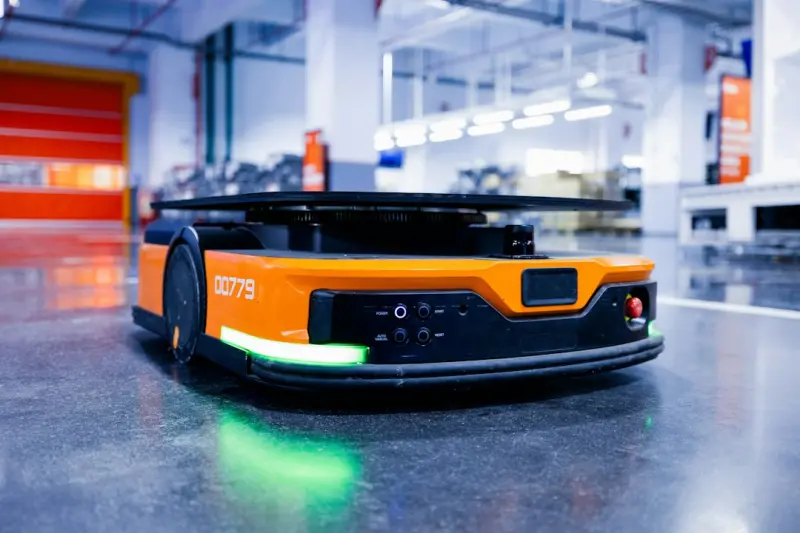
It’s a scene straight out of a sci‑fi thriller: rows of sleek, autonomous robots zip across a warehouse floor, stacking pallets with millimetric precision while a human operator watches from a glass‑enclosed control room. The promise is intoxicating—faster order fulfillment, lower labor costs, and a data‑rich ecosystem that feeds predictive analytics for inventory optimization. But beneath the glossy veneer lies a dangerous operation that could rewrite liability, insurance, and compliance playbooks in ways most SaaS leaders haven’t yet imagined.
My name is Kris M. Chen, and after years of building SaaS platforms that sit at the intersection of logistics and AI, I’ve watched the technology evolve from simple conveyor‑belt automation to fully autonomous fleets that make split‑second decisions. The question that keeps me up at night isn’t “how fast can we ship?” but “what happens when those decisions go wrong?”
The Rise of Autonomous Fulfillment
In the past five years, the adoption curve for warehouse robotics has steepened dramatically. According to industry analysts, more than 60 % of large‑scale fulfillment centers now rely on some form of AI‑driven material handling. These systems combine computer vision, reinforcement learning, and edge computing to navigate complex environments—identifying obstacles, optimizing routes, and even performing minor repairs on the fly.
On paper, the benefits are undeniable:
- Speed: Robots can move at a consistent pace, unhindered by fatigue.
- Precision: Machine learning models reduce mis‑picks by up to 90 %.
- Scalability: Adding 100 more robots is often cheaper than hiring the same number of seasonal workers.
But each of these advantages carries a hidden cost: the risk profile of the operation fundamentally shifts from human error to algorithmic failure. And that shift is what makes this a truly dangerous operation.
When Algorithms Misjudge: Real‑World Scenarios
Imagine a scenario where a robot’s lidar sensor misreads a reflective surface as free space, leading it to collide with a storage rack. The impact could cause product damage, injury to nearby workers, or a chain reaction that halts the entire fulfillment line. While such an incident might seem like an outlier, the probability compounds as the fleet grows.
Consider another situation: a reinforcement‑learning model, trained on historical order data, starts to prioritize high‑value items for rapid dispatch, inadvertently neglecting safety protocols for lighter, bulkier goods. The robot may attempt to lift loads beyond its rated capacity, resulting in mechanical failure and potential workplace injury.
These “what‑if” moments are not purely hypothetical. In a recent drone delivery mishap that made headlines, a delivery drone’s AI misidentified a rooftop garden as a clear landing zone, causing a crash that damaged property and raised questions about insurance coverage. The parallels to warehouse robotics are unmistakable—both involve autonomous systems making split‑second judgments in dynamic physical spaces.
Liability: Who’s on the Hook?
When a human operator makes a mistake, liability is relatively straightforward: the worker, their employer, or possibly the equipment manufacturer (if negligence is proven). With autonomous robots, the fault line becomes murkier. Several parties could be implicated:
- Software Provider: The SaaS platform that supplies the AI models and decision‑making logic.
- Hardware Manufacturer: The robot maker responsible for sensors, actuators, and safety interlocks.
- The Warehouse Operator: The entity that integrates the system into its workflow and sets operational parameters.
- Third‑Party Data Sources: External data feeds (e.g., weather APIs) that influence robot behavior.
Courts are still grappling with how to apportion responsibility. In many jurisdictions, the principle of “product liability” applies, but when software is continuously learning and updating, the line between product and service blurs. This ambiguity is where AI underwriting pitfalls start to surface. Insurers, accustomed to underwriting static risks, now face policies that must account for evolving algorithmic behavior.
Insurance Challenges and Emerging Solutions
Traditional property and casualty (P&C) policies often exclude “act of software” or “cyber‑physical” incidents. As a result, many warehouses are either under‑insured or forced to purchase bespoke policies that come with high premiums and stringent exclusions.
Some forward‑looking insurers are experimenting with dynamic underwriting—pricing policies based on real‑time telemetry from the robot fleet. By ingesting data such as:
- Mean time between failures (MTBF)
- Frequency of safety‑override activations
- Predictive risk scores generated by the SaaS platform
they can adjust coverage levels on the fly, rewarding operators who maintain high safety standards while penalizing those who ignore alerts. However, this model raises questions about data privacy, the fairness of algorithmic pricing, and the potential for “bad faith” disputes if insurers deny claims based on AI‑derived risk assessments.
Compliance: The Regulatory Gap
Regulators have historically focused on workplace safety standards (OSHA in the U.S., for instance) that presuppose human workers. Autonomous systems slip through these cracks because the existing regulations don’t explicitly address “machine‑only” hazards. Some jurisdictions are beginning to draft “Robotic Safety Acts,” but they are few and far between.
In the meantime, companies are left to self‑regulate. Best practices emerging from the industry include:
- Redundant Safety Layers: Combining hardware interlocks, software fail‑safes, and human‑in‑the‑loop overrides.
- Audit Trails: Immutable logs of robot decisions, sensor inputs, and software version changes for forensic analysis.
- Continuous Validation: Regular “shadow testing” where a simulated version of the fleet runs alongside the live system to catch anomalies.
These steps not only mitigate risk but also create a defensible posture should a lawsuit arise. In the absence of clear statutory guidance, documentation becomes your most powerful shield.
Operational Culture: From “Automation First” to “Safety First”
One of the most subtle yet impactful changes required is a shift in organizational mindset. When I first introduced autonomous picking bots to a mid‑size e‑commerce client, the leadership team’s mantra was “maximum throughput.” That focus led to a configuration that disabled certain safety thresholds to keep robots moving faster.
The result? A near‑miss incident where a robot attempted to lift a pallet that exceeded its load rating, triggering an emergency stop that halted the entire line for 45 minutes. The financial impact of the downtime far outweighed any perceived efficiency gain.
Embedding safety into the KPI stack—tracking Mean Time to Safe Recovery alongside Orders per Hour—creates a balanced scorecard that aligns incentives with risk reduction. Moreover, empowering floor‑level staff to pause a robot’s operation without bureaucratic delay fosters a culture where safety is not an afterthought but an integral part of the workflow.
Future‑Proofing: Designing for Uncertainty
As AI models become more autonomous, the probability of “black‑box” behavior rises. To future‑proof your operation, consider these design principles:
- Explainability: Use models that provide decision rationales, enabling human supervisors to understand why a robot chose a particular path.
- Modular Architecture: Decouple perception, planning, and actuation layers so that a fault in one module can be isolated and patched without bringing down the entire fleet.
- Regulatory Sandbox Participation: Engage with emerging regulatory bodies to help shape standards and gain early insight into compliance requirements.
- Insurance Partnerships: Collaborate with insurers that offer usage‑based policies, ensuring coverage evolves alongside your technology stack.
By treating autonomy as a risk‑managed capability rather than a silver bullet, you’ll position your business to reap the benefits of speed and efficiency while keeping the legal and financial fallout in check.
Conclusion: Embrace the Danger, Manage the Risk
The narrative around autonomous warehouse robots is often framed as a binary—either they’re the future of logistics or a ticking time bomb. The reality sits in the gray zone where technology, law, and human behavior intersect. As someone who has built the SaaS foundations that power these robots, I can attest that the most powerful tool in your arsenal is not the robot itself, but the framework you build around it: robust contracts, transparent data practices, dynamic insurance models, and a safety‑first culture.
When you treat autonomy as a dangerous operation that demands rigorous oversight, you transform risk into a competitive advantage. Your customers get faster fulfillment, your investors see lower liability exposure, and your legal team finally gets a break from playing catch‑up. That, my friends, is the sweet spot where innovation meets responsibility.

Kris M. Chen is a dedicated legal paralegal based in Texas, specializing in delivering comprehensive case management and litigation support. Known for a meticulous approach to legal research and document preparation, Kris plays a vital role in navigating complex legal workflows and ensuring seamless trial preparation.
Related Posts

The Silent Threat Lurking in Cloud‑Native Critical Workflows
A deep dive into the unnoticed dangers of cloud‑native systems, offering a framework to detect con... Read More
The Hidden Perils of Live Database Schema Changes
Changing a production database schema without proper safeguards can lead to data loss, compliance br... Read More

Algorithmic Trading Bots: When Speed Becomes a High‑Stakes Gamble
Algorithmic trading bots promise lightning‑fast profits, but they also bring regulatory, data, and... Read More
Top Posts

Remote Work, Real‑World Custody: Redefining Parenting After the Office
Remote work is transforming child custody battles. Learn practical steps, legal insights, and future trends that help parents turn flexible schedules into custo...Read More

Connected‑Car Data Ownership: Who Controls the Information Under Your Hood?
A deep dive into who truly owns the data your modern vehicle collects, the legal challenges around consent, insurance, and practical steps to safeguard your pri...Read More

Employee Data Rights in the Age of Workplace Surveillance
A deep dive into emerging privacy statutes, practical compliance steps, and future trends that define how companies can responsibly monitor employees while resp...Read More

Usage‑Based Auto Insurance: Legal Risks and Consumer Protections
Usage‑based auto insurance promises lower premiums, but the surge of telematics raises fresh legal questions. Discover how data‑driven policies reshape clai...Read More
0 Comments
Post Comment
You will need to Login or Register to comment on this post!