
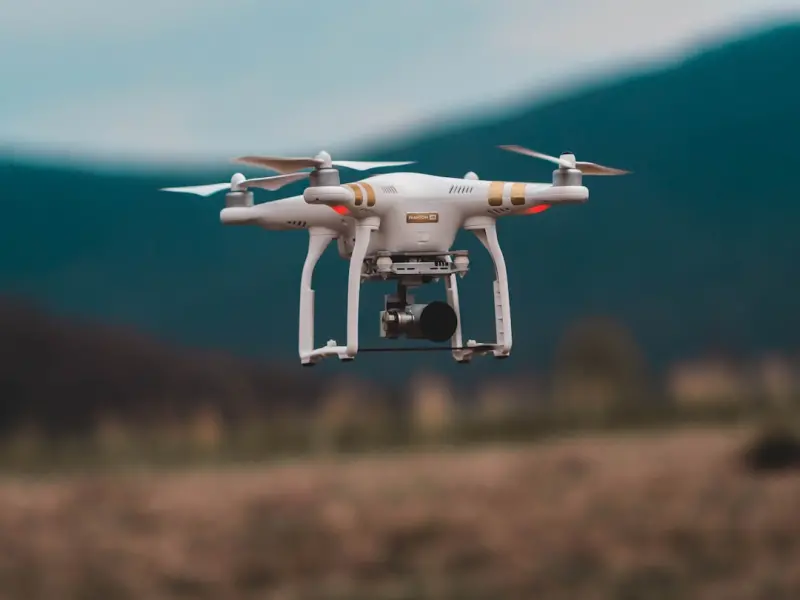
Imagine a world where the sky above a suburban backyard becomes a crime scene without a single footstep crossing the threshold. A drone buzzes overhead, captures high‑resolution video of a private pool party, then streams it live to a pay‑per‑view site. Minutes later, the same quadcopter drops a payload of contraband onto a locked balcony, bypassing traditional security measures. This isn’t a sci‑fi storyboard; it’s a rapidly unfolding reality that forces criminal law to stretch its wings.
Why Drones Are the New Frontier for Criminal Activity
Unmanned aerial systems (UAS) have moved from hobbyist novelty to indispensable tools for delivery, agriculture, and emergency response. Their proliferation has been driven by falling costs, plug‑and‑play designs, and the myth that “the sky is public.” Yet, those same attributes make drones attractive for illicit purposes. The low barrier to entry means a teenager can purchase a ready‑to‑fly model for under $100, attach a small camera, and begin a covert surveillance operation. For organized crime, the payoff is far larger: drones can transport lightweight contraband across borders, conduct espionage on corporate facilities, or even serve as “flying bomb” platforms for targeted attacks.
What differentiates drone‑enabled crime from traditional offenses is the vertical dimension. Law‑enforcement agencies must now consider airspace rights, FAA regulations, and the intersection of federal and state jurisdiction. The legal framework is still catching up, and prosecutors are learning on the fly—pun intended—how to apply existing statutes to a three‑dimensional playing field.
The Legal Landscape: Existing Statutes Meet a New Modus Operandi
At first glance, many drone crimes can be prosecuted under well‑established laws: burglary, trespassing, stalking, and even homicide. However, the means by which the crime is committed introduces novel evidentiary and procedural hurdles.
- Federal Aviation Regulations (FARs): The FAA’s Part 107 rules govern commercial drone operations, but they also create a baseline for what constitutes unlawful flight. Violations—such as flying over a restricted area or beyond visual line of sight—can trigger civil penalties, but criminal liability often hinges on whether the operator’s intent was malicious.
- State Privacy Statutes: Several states have enacted “anti‑surveillance” laws that make it illegal to record audio or video of a person without consent when they have a reasonable expectation of privacy. Translating these statutes to an aerial context can be tricky, especially when the drone is operating at altitudes where privacy expectations are less clear.
- Criminal Mischief and Property Damage: Dropping objects from a drone can be charged as reckless endangerment or vandalism. The challenge lies in proving the link between the remote operator and the physical act.
- Conspiracy and Organized Crime Statutes: When a drone is used as a delivery mechanism for narcotics or weapons, prosecutors can invoke conspiracy laws, even if the operator never physically handles the contraband.
These statutes provide a scaffolding, but they weren’t drafted with a “drone‑in‑the‑sky” scenario in mind. That gap creates both opportunities and pitfalls for defense attorneys, who can argue that traditional definitions of “entry” or “trespass” do not apply to a hovering aircraft.
Evidence Collection: From Flight Logs to Digital Forensics
One of the most promising—and simultaneously contentious—areas of drone crime is the collection of digital evidence. Modern drones embed telemetry data, GPS coordinates, and even video metadata directly into their storage media. This information can be a goldmine for prosecutors, but it also raises questions about chain‑of‑custody and Fourth Amendment rights.
Consider the case of a stolen drone that lands on a suspect’s property. Law‑enforcement seizes the device, extracts its flight log, and discovers a pattern of flights over a rival’s warehouse. The defense may move to suppress the evidence, arguing that the drone’s data is akin to a “search” of the operator’s private digital space. Courts are split, with some ruling that the data is “publicly observable” because the drone transmitted signals openly, while others treat it as a protected digital property.
To navigate this evolving terrain, prosecutors often lean on expertise from AI‑enabled crime landscape analysts, who can parse complex data streams and validate the integrity of the evidence. Meanwhile, defense teams may invoke precedents from biometric spoofing case jurisprudence to argue that digital signatures can be manipulated.
Case Studies: From Hobbyist to High‑Stakes Crime
Below are three illustrative scenarios that highlight the breadth of drone‑related criminal activity and the legal responses they provoke.
1. The “Drone‑Stalker” Phenomenon
A suburban homeowner discovers a drone repeatedly hovering over her backyard, capturing video of her children playing. She files a civil lawsuit for invasion of privacy, but the real kicker is the criminal charge: aggravated stalking. Prosecutors must prove that the operator intentionally targeted the victim, a fact that can be inferred from flight logs and social media posts advertising “exclusive backyard footage.”
2. Narcotics Delivery via the Skies
In a major metropolitan city, a cartel adopts small, high‑speed drones to bypass road checkpoints. The drones drop packages onto pre‑selected rooftops, where low‑level couriers retrieve them. Law‑enforcement agencies have responded by deploying “drone‑intercept” units equipped with net‑guns and radio jammers. Successful interceptions have led to charges of conspiracy to distribute controlled substances, with the drones themselves used as “instrumentalities of the crime.”
3. Corporate Espionage from Above
A tech giant discovers that a competitor hired a fleet of drones to photograph prototype hardware stored in a locked facility. The drones flew at a low altitude, evading traditional perimeter cameras. The incident sparked a multi‑jurisdictional investigation, culminating in federal charges of economic espionage. The case set a precedent that aerial surveillance can constitute a violation of trade secret protections, even when no physical entry occurs.
Challenges for Prosecutors: Proving Intent and Identity
Identifying the human behind the remote controller is often the most significant hurdle. Drones can be piloted via smartphones, dedicated transmitters, or even automated flight plans using GPS waypoints. Some operators employ “spoofing” techniques—masking their location or using VPNs to hide the IP address of the control app.
To overcome this, prosecutors have adopted a multi‑pronged approach:
- Signal Interception: Using specialized equipment to capture the radio frequencies emitted by the drone’s controller, then triangulating the source.
- Digital Footprint Analysis: Scrutinizing app logs, cloud storage metadata, and payment records for the drone purchase.
- Witness Testimony: Enlisting by‑standers who observed the operator or heard the drone’s distinctive hum.
- Expert Testimony: Leveraging forensic engineers to explain how the drone’s flight patterns align with the alleged crime scene.
Even with these tools, the defense can argue that the operator was a “passenger”—someone who merely observed the drone’s flight without controlling it. Courts are gradually recognizing the distinction, but the jurisprudence remains unsettled.
Legislative Responses: From Reactive Bills to Proactive Policies
Law‑makers at the state and federal levels are scrambling to close the loopholes that drones have exposed. Some notable legislative trends include:
- Mandatory Registration for All Drones: Extending the FAA’s registration requirement to any device weighing more than 0.55 lb, regardless of commercial or recreational use.
- “No‑Fly” Zones Around Sensitive Sites: Criminal penalties for operating drones within a specified radius of prisons, nuclear facilities, and critical infrastructure.
- Enhanced Penalties for Drone‑Mediated Weapons Use: Classifying the dropping of harmful objects from a drone as a felony, with mandatory minimum sentences.
- Data Retention Requirements for Drone Manufacturers: Obligating companies to retain flight logs for a set period to aid investigations.
While these measures signal a commitment to adapt the legal framework, critics caution that overly restrictive rules could stifle legitimate innovation and hobbyist enthusiasm. Striking a balance between security and freedom remains the legislative tightrope.
Future Outlook: The Convergence of AI, Drones, and Criminal Law
As drone technology integrates more sophisticated AI—autonomous navigation, object recognition, and swarm capabilities—the legal challenges will compound. An AI‑controlled swarm could coordinate a simultaneous breach of multiple rooftops, making attribution to a single operator nearly impossible.
In such a scenario, prosecutors may need to shift focus from the “who” to the “who enabled.” This could involve charging manufacturers for inadequate safeguards, or pursuing “negligent design” claims if a drone’s software lacked essential security patches.
Moreover, the rise of deepfake video generated by AI (a topic we covered elsewhere) could be combined with drone footage to create convincing false evidence, further muddying the waters of truth in criminal trials.
Practical Takeaways for Practitioners
Whether you’re a criminal defense attorney, a prosecutor, or a corporate counsel, here are three actionable steps to stay ahead of the drone curve:
- Develop Technical Literacy: Understand the basics of drone operation, telemetry data, and common control apps. This knowledge will help you ask the right questions and challenge or validate digital evidence.
- Collaborate with Experts Early: Engage forensic engineers, cybersecurity analysts, and FAA compliance specialists during the investigative phase, not after charges are filed.
- Advocate for Clear Statutes: Participate in legislative hearings and industry working groups to help shape laws that are precise enough to deter crime yet flexible enough to accommodate innovation.
Conclusion: The Sky Is No Longer the Limit for Criminal Law
Drones have transformed the way we capture images, deliver packages, and monitor the environment. They have also introduced a new set of challenges that test the adaptability of criminal law. From privacy intrusions to weaponized payloads, the aerial dimension adds complexity to every element of a criminal case: jurisdiction, evidence, intent, and sentencing.
The legal community must rise to the occasion, blending traditional doctrine with cutting‑edge technology expertise. As we watch the next generation of drones take flight—some for good, some for ill—we’ll see the courts, legislatures, and law‑enforcement agencies navigate an ever‑expanding horizon of aerial jurisprudence.

Steven McClurry is a freelance writer. He loves to write controversial topics and on a wide rang of topics. When is not online he is hanging out at his college campus or playing online games.
Related Posts
Bail Reform and the Future of Pretrial Detention
A deep dive into bail reform’s promises, challenges, and future, highlighting impacts on marginali... Read More

Genetic Data, Police Power, and the Future of Criminal Law
A deep dive into the rise of DNA databases and predictive policing, examining privacy concerns, lega... Read More

Criminal Law in 2024: A Human‑Centric Guide to Tech, Reform, and Narrative
Margaret Strawbridge examines the 2024 criminal law landscape, highlighting AI, sentencing reforms, ... Read More
Top Posts
Beyond the Crash: How Wearable Tech is Rewriting Personal Injury Litigation
Wearable technology is becoming a silent witness in personal injury cases, providing precise, time‑stamped data that can prove the severity of an accident and...Read More

Co‑Living Communities: Legal Playbook for the New Urban Living Model
A deep dive into the legal framework behind co‑living and micro‑unit projects, covering zoning, contracts, insurance, tech privacy, and future trends for de...Read More
The Intersection of Automotive Law and Family Dynamics: A Complex Web of Liability
The intersection of automotive law and family dynamics creates a complex web of liability in vehicle accidents. Understanding the legal landscape and seeking ex...Read More

When Generative AI Meets Creative Law: Navigating Ownership, Liability, and Policy
A deep dive into the legal challenges of AI‑generated works, from ownership disputes to privacy risks, offering practical guidance for lawyers navigating this...Read More
0 Comments
Post Comment
You will need to Login or Register to comment on this post!