
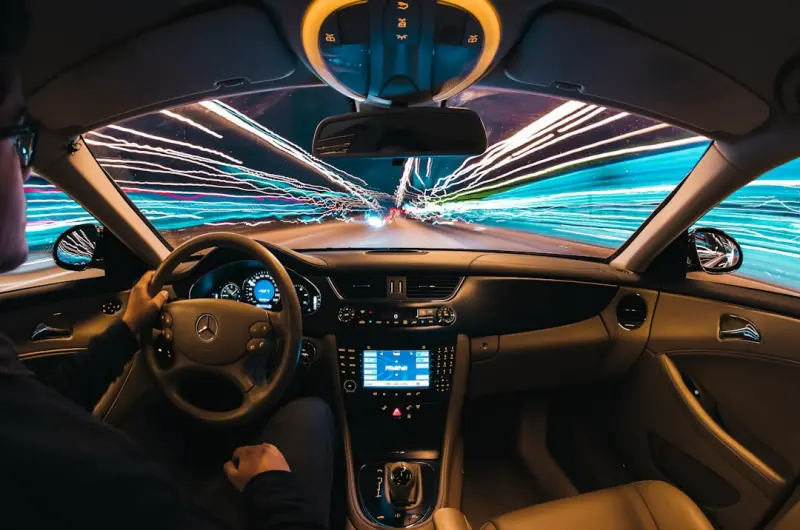
Why the Law Is Racing to Keep Up with Driverless Cars
When I first saw a prototype of a self‑driving sedan cruising through a downtown test lane, my mind went straight to the courtroom. Not because I’m a lawyer by trade, but because every breakthrough in technology inevitably drags a suitcase full of legal questions behind it. Autonomous vehicles (AVs) are no longer a futuristic thought experiment; they’re on public streets, in rideshare fleets, and in the hands of early adopters. That acceleration forces legislators, insurers, manufacturers, and everyday drivers to confront a maze of liability, regulatory, and ethical dilemmas that traditional traffic law was never designed to address.
From Driver Error to Algorithmic Fault
For more than a century, the cornerstone of motor‑vehicle liability has been the “driver’s fault” model. When a crash occurs, investigators look for negligence—speeding, distracted driving, impaired judgment—and assign responsibility accordingly. With an AV, the human driver may be a passive overseer, a “safety driver,” or even absent entirely. The question shifts: Who is at fault when a machine makes the decision?
Manufacturers argue that the vehicle’s software is the product, so any malfunction falls under product liability. Critics counter that software is inherently iterative, receiving over‑the‑air updates that can change behavior mid‑life, blurring the line between a static product and a service. This dynamic nature raises novel questions about the applicability of existing “defect” standards.
Regulatory Patchwork: Federal, State, and International Gaps
The United States currently relies on a patchwork of federal guidelines (such as the National Highway Traffic Safety Administration’s Federal Automated Vehicles Policy) and a smorgasbord of state statutes. Some states, like California and Arizona, have embraced testing with permissive regulations, while others, like Michigan, have taken a more cautious approach, requiring specific permits and stringent reporting.
Internationally, the European Union is moving toward a unified regulatory framework, emphasizing “type‑approval” for automated driving systems. However, the speed of legislation lags behind the rapid deployment cycles of tech companies. The result? Companies must navigate a shifting legal landscape that can vary dramatically from one jurisdiction to the next—an operational nightmare that demands robust compliance strategies.
Insurance: From Personal Policies to Platform Coverage
Traditional auto insurance is premised on the driver’s risk profile. With AVs, insurers are forced to rethink underwriting. Should premiums be based on the manufacturer’s safety record, the software’s performance metrics, or the rider’s usage pattern? Some insurers are experimenting with “product liability” policies that protect manufacturers, while others are offering “fleet” policies for companies operating large numbers of driverless taxis.
Moreover, the rise of “mobility‑as‑a‑service” (MaaS) platforms complicates matters. When a rideshare app dispatches a driverless car, who bears responsibility if the vehicle collides with a pedestrian? The answer may involve a three‑way split: the OEM, the platform, and the passenger (who may have consented to a “self‑driving” ride). This tri‑party risk matrix is still in its infancy, and regulators are watching closely to ensure that consumers are not left unprotected.
The Role of Data: Transparency, Privacy, and Accountability
Every autonomous vehicle is a data collector on wheels. Sensors capture high‑resolution video, LIDAR point clouds, GPS traces, and even biometric data from occupants. The legal implications of this data are profound. Companies must balance the need for transparency—providing accident investigators with raw sensor logs—with privacy obligations that protect rider information.
In this context, the Data fiduciary revolution offers a useful lens. Treating AV operators as data fiduciaries would impose duties of loyalty, care, and confidentiality, potentially reshaping how crash data is stored, shared, and used in litigation. It also raises the specter of “data‑driven liability”: could an AV be deemed negligent if its data logs reveal that it ignored a known safety update?
Algorithmic Transparency and the Right to Explain
One of the most contentious legal frontiers is the demand for algorithmic explainability. If an AV’s decision‑making algorithm chooses to swerve into a side street to avoid a sudden obstacle, who can explain that choice? Some jurisdictions are pushing for “right‑to‑explain” statutes that would require manufacturers to disclose the reasoning behind critical AI decisions in understandable terms.
This demand dovetails with the broader debate over AI accountability, reminiscent of the challenges discussed in AI surveillance and employment law. Just as employers must justify automated monitoring tools, vehicle makers may soon be obligated to justify autonomous maneuvers. The legal community is still grappling with how to define “reasonable explanation” for a machine that processes billions of data points per second.
Ethical Algorithms: The “Trolley Problem” on Real Streets
Philosophers have long debated the classic “trolley problem”—a hypothetical scenario where a decision-maker must choose between harming one group or another. Autonomous vehicles bring this dilemma out of thought experiments and onto real streets. If an AV must decide between colliding with a jaywalking pedestrian or swerving into a barrier that could injure its occupants, whose safety takes precedence?
Legally, the answer may lie in the concept of “reasonable foreseeability.” Manufacturers must demonstrate that their algorithms prioritize the least harmful outcome based on prevailing traffic norms and statutory duties of care. However, there is no universal consensus on the moral hierarchy embedded in these systems, and courts may be called upon to interpret the “reasonable driver” standard for non‑human actors.
Cross‑Border Challenges: Export Controls and Intellectual Property
Autonomous driving technology is a hotbed of intellectual property (IP) and export‑control concerns. Companies developing advanced perception stacks often rely on patents for sensor fusion, mapping, and decision layers. When these technologies are exported—whether as software, hardware, or as a service—they may trigger national security reviews under regimes like the U.S. Export Administration Regulations (EAR).
Additionally, the rise of open‑source AV platforms (think OpenPilot or Autoware) raises questions about licensing compliance and liability for downstream users. If a developer builds a commercial fleet on top of an open‑source stack and an accident occurs, who bears the legal responsibility? The answer may hinge on the specific open‑source license and the extent of customization.
Litigation Landscape: Early Cases and Emerging Precedents
While the courtroom docket for AVs is still thin, a few early cases are already shaping the narrative. In a high‑profile crash involving a self‑driving Uber prototype, the company settled with the victim’s family, but the settlement hinged on a complex mix of driver negligence (the safety driver was distracted) and alleged software failure. That case underscored the difficulty of parsing human versus machine fault.
Other lawsuits have targeted OEMs for alleged “defective design” of sensor suites, claiming that insufficient redundancy contributed to collisions. These cases often invoke the doctrine of “strict liability,” which holds manufacturers accountable for defects regardless of negligence. As more data becomes available—thanks to the massive logging capabilities of AVs—plaintiffs will have a richer evidentiary base to argue causation.
Policy Recommendations: Steering the Law Toward Clarity
Given the complexity, a proactive legal framework is essential. Here are a few policy levers that could bring order to the chaos:
- Standardized Data Reporting: Mandate a universal format for post‑crash data logs, ensuring that investigators can access consistent, tamper‑evident information.
- Tiered Liability Schemes: Create a graduated liability model that assigns primary responsibility to manufacturers for hardware failures, to software providers for algorithmic errors, and to operators for misuse.
- Insurance Pooling: Encourage the formation of industry‑wide insurance pools that spread risk across manufacturers and platform providers, similar to the “no‑fault” schemes used in some states.
- Algorithmic Audits: Require periodic, third‑party audits of autonomous driving software to verify compliance with safety standards and ethical guidelines.
- International Harmonization: Pursue bilateral agreements that align testing certifications, data privacy standards, and liability rules across borders to prevent regulatory arbitrage.
Preparing for the Road Ahead
For legal practitioners, the emergence of autonomous vehicles is both a challenge and an opportunity. It demands a hybrid skill set—understanding of tort law, product liability, data privacy, and emerging AI regulations. Law firms that invest in technical expertise, perhaps hiring engineers as consultants, will be better positioned to counsel clients navigating this evolving terrain.
For businesses, the key is to embed legal risk assessment early in the product development cycle. Conduct “legal design reviews” alongside safety and engineering reviews. Treat compliance not as a afterthought but as a core component of the AV’s value proposition—much like how safety ratings have become a marketing differentiator for traditional cars.
Finally, for policymakers, the imperative is to strike a balance that encourages innovation without compromising public safety. By crafting clear, forward‑looking statutes and fostering collaboration between regulators, industry, and academia, we can ensure that autonomous vehicles fulfill their promise of reducing accidents while respecting the rule of law.

Steven McClurry is a freelance writer. He loves to write controversial topics and on a wide rang of topics. When is not online he is hanging out at his college campus or playing online games.
Related Posts

The Legal Ripple Effect: How Emerging Tech Is Redefining Law
Discover the transformative impact of emerging technology on law, from AI-driven research to digital... Read More

Deepfake Technology and the Law: Protecting Reputation, Truth, and Justice
Deepfakes are reshaping the legal landscape, confronting courts with new privacy, IP, and criminal i... Read More

Legal Frontiers: How Technology Is Reshaping Family, Employment, and Criminal Law
A deep dive into the digital revolution sweeping family, employment, and criminal law, highlighting ... Read More
Top Posts

When Social Media Becomes Evidence: A Personal Injury Lawyer’s Playbook
Learn to turn everyday social media updates into solid legal evidence, preserve crucial digital footprints, and work with your attorney to strengthen personal i...Read More

Cross‑Border Telehealth: Legal Pitfalls and Practical Solutions
Telehealth transcends borders, but legal hurdles remain. This article dissects licensing, AI liability, privacy, and insurance challenges for providers deliveri...Read More

Wearable Tech and the Next Wave of Personal Injury Claims
Wearable devices now capture vital data that can prove or disprove injury claims. This post examines how lawyers can use this technology while safeguarding clie...Read More

Virtual Reality Injuries: New Frontiers in Personal Injury Law
Virtual reality is creating a surge of new injury claims—from physical collisions to equipment malfunctions. This article examines liability, evidence collect...Read More
0 Comments
Post Comment
You will need to Login or Register to comment on this post!