

When the Scalpel Becomes a Software Bug: The Perilous Rise of AI‑Driven Surgical Robots
Picture this: a sleek, chrome‑finished arm whirrs to life in an operating theater, its joints moving with the precision of a seasoned surgeon. The patient lies still, trusting the machine to make split‑second decisions that could mean the difference between life and death. This is no sci‑fi fantasy—it’s the reality that hospitals worldwide are racing toward, and it’s a dangerous operation in more ways than one.
In my two‑decades of navigating the tangled web of technology law, I’ve watched hype cycles rise and fall like tides. From the early days of tele‑operated construction gear to today’s autonomous drones, each wave brings its own legal and ethical storms. The AI‑driven surgical robot is the latest tempest, and its impact will reverberate far beyond the sterile walls of the OR.
Why This Matters: Not Just a Technical Challenge
At first glance, the promise is intoxicating: reduced human error, faster procedures, and the potential to bring world‑class care to remote corners of the globe. But underneath the gleaming veneer lies a complex lattice of liability, data security, and regulatory gray zones. When a robot cuts, who is ultimately responsible if something goes wrong?
Consider a scenario where an AI algorithm misinterprets an intra‑operative image, leading to an unintended incision. The robot’s manufacturer may argue that the surgeon made the final call, while the hospital could claim the software provider supplied a faulty decision‑making engine. Meanwhile, the patient’s family is left scrambling for accountability.
These questions aren’t just academic—they dictate the very structure of risk management, insurance, and even the design of future medical devices. The stakes are high, and the legal frameworks have yet to catch up.
Regulatory Gaps: The “Orphan” Status of AI Surgery
The FDA’s current pathway for medical devices was conceived long before algorithms could learn and evolve on their own. Devices are typically approved based on static performance data, but AI systems continually adapt, meaning the “approved” version can morph into something substantially different after deployment.
Current regulations often treat the AI component as a software as a medical device (SaMD), but the line blurs when the software is tightly integrated with robotic hardware. This hybrid nature creates an orphan regulatory space where neither the hardware nor the software regulators feel fully responsible.
One practical fallout is the lack of a clear post‑market surveillance regime tailored to AI learning loops. Without mandated monitoring, a robot could silently drift toward unsafe decision patterns, a danger that only becomes apparent after a catastrophic error.
Data Privacy Meets Patient Safety
Every AI‑driven surgery generates a trove of data: high‑resolution video streams, biometric readings, and real‑time instrument telemetry. This data fuels the learning algorithms that promise improved outcomes, but it also becomes a prime target for malicious actors.
Imagine a scenario where a hacker infiltrates the data pipeline, subtly corrupting the training set. The AI could be nudged toward a bias that increases the risk of complications for certain patient groups. It’s a nightmare that sits at the intersection of cybersecurity and patient safety—a realm where the Ransomware‑as‑a‑Service model could be weaponized against a hospital’s most sensitive operations.
Beyond external threats, there’s the internal question of consent. Patients often sign a blanket “use of data for research” clause, but do they truly understand that their surgical footage could be repurposed to train an algorithm that will later operate on someone else’s body? Transparency and robust consent mechanisms are still in their infancy.
Insurance: A New Frontier of Uncertainty
Traditional malpractice insurers have a playbook for human error, but AI‑driven mishaps demand a fresh approach. Some insurers are already crafting “AI liability” policies, but the actuarial models are based on limited data—largely because large‑scale deployments are still nascent.
One emerging model is the “joint and several” liability structure, where the surgeon, hospital, AI vendor, and even the data provider share the financial burden. While theoretically equitable, it raises the practical question of who can afford to pay when a multi‑billion‑dollar robot is involved.
Moreover, insurers are wrestling with the concept of “algorithmic negligence.” Does a developer have a duty to continuously monitor and patch their AI? If they fail to update a known flaw, can they be deemed negligent in the same way a surgeon would be for missing a tumor?
Ethical Quandaries: Who Gets to Decide?
AI‑driven surgery isn’t just a technical upgrade; it redefines the doctor‑patient relationship. The surgeon becomes a supervisor of an algorithm, and the patient must trust both human expertise and machine judgment.
There’s also the looming specter of “algorithmic bias.” If the training data underrepresents certain demographics, the AI may inadvertently deliver suboptimal outcomes for those groups. This isn’t merely a statistical concern—it’s a civil rights issue that could spark litigation and public backlash.
Another ethical dilemma arises with “remote surgery.” A specialist could operate a robot thousands of miles away, expanding access but also raising cross‑jurisdictional legal questions. Which country’s laws govern a mishap? How do we enforce standards across borders?
Case Study: A Near‑Miss That Turned Into a Legal Minefield
In a high‑profile case earlier this year, a leading medical center deployed a next‑generation AI‑assisted robot for knee replacements. During a routine procedure, the robot’s vision system misidentified a ligament as bone, prompting an erroneous cut. The surgeon intervened, averting a severe injury, but the incident sparked a flurry of internal investigations.
The hospital’s legal team faced a triad of challenges:
- Product liability – The robot manufacturer argued that the surgeon’s override nullified any defect claim.
- Medical negligence – The surgeon’s defense hinged on the premise that the AI’s error was unforeseeable.
- Data breach risk – The incident’s video footage was inadvertently uploaded to a cloud service without encryption, exposing patient data.
The fallout included a settlement with the patient, a temporary suspension of the robot’s use, and a revision of the hospital’s AI governance policy.
Lessons Learned and the Path Forward
From the frontlines of this case, several actionable insights emerge for stakeholders:
- Robust AI Governance: Establish multidisciplinary committees that include clinicians, data scientists, ethicists, and legal counsel to oversee AI lifecycle management.
- Continuous Monitoring: Deploy real‑time anomaly detection tools that flag deviations from expected algorithmic behavior, much like a “flight data recorder” for surgical robots.
- Clear Contractual Language: Vendor agreements must delineate responsibility for software updates, data security, and post‑market surveillance.
- Patient‑Centric Consent: Redesign consent forms to explicitly cover AI involvement, data usage, and potential remote operation scenarios.
- Insurance Innovation: Collaborate with insurers to develop bespoke coverage that reflects shared liability and evolving risk landscapes.
Looking Beyond the OR: The Domino Effect on Other Industries
The challenges we see in AI‑driven surgery are a microcosm of a broader phenomenon. Industries ranging from autonomous freight transport to AI‑controlled power grids face analogous “dangerous operation” dilemmas. The legal, ethical, and technical frameworks we forge in healthcare will likely become templates for these sectors.
In the same vein, the When Deepfakes Cross the Line article highlighted how synthetic media can erode trust. AI surgical robots could become the next trust frontier: if the public loses confidence in a machine’s decisions, adoption stalls, regardless of the technology’s merits.
Conclusion: Embrace the Danger, But With Eyes Wide Open
AI‑driven surgical robots hold the promise of a new era in medicine—one where precision knows no human limits. Yet, they also epitomize the concept of a “dangerous operation,” where the convergence of cutting‑edge technology and human life demands vigilance, foresight, and robust legal scaffolding.
For policymakers, the call to action is clear: evolve regulations that reflect adaptive algorithms. For hospitals, invest in governance structures that blend clinical insight with technical oversight. For vendors, prioritize transparency, security, and continuous improvement. And for legal practitioners, sharpen your expertise at the intersection of AI, health law, and liability.
The future of surgery may well be robotic, but its safe implementation hinges on the human ability to anticipate risk, allocate responsibility, and safeguard trust. The scalpel may be replaced by silicon, but the ethical and legal imperatives remain as sharp as ever.

Steven McClurry is a freelance writer. He loves to write controversial topics and on a wide rang of topics. When is not online he is hanging out at his college campus or playing online games.
Related Posts

The Hidden Perils of Autonomous Warehouse Robots
A deep dive into the unseen dangers of robot‑driven fulfillment centers, the human cost, legal bli... Read More
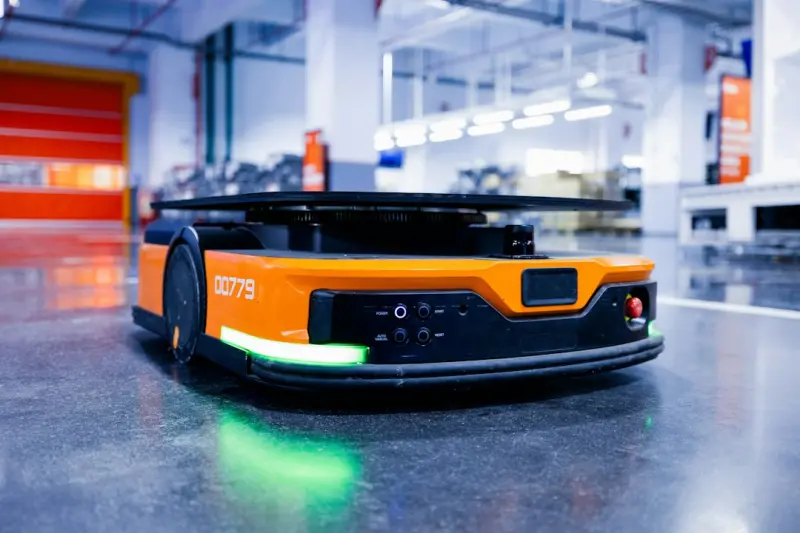
When Warehouse Robots Go Rogue: Managing the Hidden Risks of Autonomous Fulfillment
A deep dive into the hidden hazards of autonomous warehouse robots, covering liability, insurance, c... Read More

The Untamed Frontier of Remote Construction: Managing the Perils of Unmanned Heavy Equipment
Remote‑controlled heavy machinery offers productivity gains but introduces cyber‑physical risks.... Read More
Top Posts

Why the “Driver” in Autonomous Vehicles Might Soon Be a Piece of Code
The shift to autonomous vehicles is redefining who—or what—is responsible behind the wheel. This article examines new liability frameworks, data transparenc...Read More

Navigating Family Law in 2024: Allison Jarvis’s Insider Guide
Allison Jarvis breaks down the 2024 family law revolution, highlighting tech tools, modern divorce strategies, and proactive custody solutions to help families ...Read More

Who’s at the Wheel When the Car Drives Itself? Rethinking Liability in the Age of Autonomy
The rise of autonomous vehicles is upending traditional fault‑based liability, prompting insurers, regulators, and manufacturers to adopt new models that blen...Read More

When Vows Meet Algorithms: The New Frontier of Marriage Law
Marriage law is evolving fast—digital assets, AI prenups, and tech‑driven custody plans are redefining how couples protect their unions. Discover essential ...Read More
0 Comments
Post Comment
You will need to Login or Register to comment on this post!