
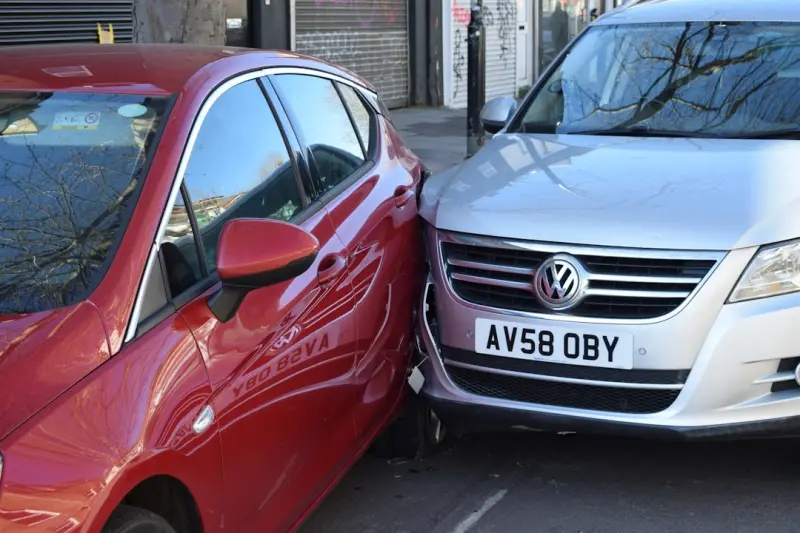
Why Autonomous Vehicles Are Redefining Personal Injury Law
When a self‑driving car collides with a pedestrian, the courtroom drama shifts from a simple question of “who was at fault?” to a complex tapestry of software codes, sensor data, and corporate policies, forcing attorneys to become part technologists and part detectives, and compelling victims to confront a legal landscape that was unimaginable a decade ago; this seismic shift is not merely academic—it directly impacts the compensation a crash survivor can secure, the speed at which a claim progresses, and the very definition of negligence in the digital age. Understanding the new contours of autonomous vehicle liability is essential for anyone who has ever stepped onto a crosswalk, boarded a rideshare, or simply trusted a car to navigate itself, because the stakes now include algorithmic decision‑making, manufacturer warranties, and the evolving duties of human operators who may be supervising the machine from a distance.
The Three Pillars of Responsibility in a Driverless Crash
The first pillar rests on the vehicle’s manufacturer, whose duty is to ensure that the artificial intelligence steering the car can reliably interpret road conditions, avoid obstacles, and prioritize human safety, meaning that a defect in the software or a failure to issue timely over‑the‑air updates can be treated much like a faulty brake line in a conventional car; the second pillar belongs to the software developer, who must design and test the decision‑making algorithms against a myriad of real‑world scenarios, and whose negligence may be exposed through forensic data logs that reveal a missed detection of a pedestrian. The third pillar involves the human occupant or remote operator, whose role may be limited to taking control in an emergency, yet whose inattention or delayed reaction can still constitute contributory negligence, creating a layered liability web that challenges traditional fault analysis.
How Insurance Policies Are Evolving to Cover the Unknown
Insurance carriers are scrambling to rewrite policy language that once spoke exclusively of driver error, now inserting clauses about software malfunctions, data breaches, and third‑party liability, which means that a victim’s path to compensation often begins with a careful review of both the vehicle owner’s auto insurance and the manufacturer’s product liability policy; this dual‑coverage model can lead to disputes over primary versus secondary responsibility, especially when insurers invoke the “act of nature” defense for events that the autonomous system failed to anticipate, such as sudden weather changes that obscure sensors.
Collecting Evidence When the Crash Is Logged in Code
In a conventional accident, investigators rely on skid marks, witness statements, and physical damage, but a driverless collision generates a digital breadcrumb trail that includes sensor readings, GPS coordinates, and a timestamped sequence of algorithmic decisions, all of which must be extracted, preserved, and interpreted by expert analysts who can translate raw bytes into a narrative that a judge or jury can understand; this process often requires subpoenas to the OEM, cooperation from the software provider, and sometimes even reverse‑engineering of proprietary code, turning the discovery phase into a high‑tech treasure hunt that can stretch the timeline of a claim well beyond the usual 90‑day window.
When Insurance Companies Play Bad Faith: Modern Legal Challenges
Victims frequently encounter insurers who downplay the severity of injuries or question the reliability of the digital evidence, invoking the same tactics seen in traditional personal injury disputes but amplified by the novelty of autonomous technology; in these moments, it becomes crucial to reference precedents such as the when insurance companies play bad faith article, which outlines how to combat unjust denial tactics, file complaints with state regulators, and, if necessary, pursue bad‑faith litigation that can recover punitive damages and compel insurers to honor their contractual obligations.
Pre‑Existing Conditions and the New Tech Frontier
One of the most perplexing issues arises when a victim with a chronic ailment suffers an exacerbation after a driverless crash, prompting defense teams to argue that the injury is unrelated to the incident, a strategy reminiscent of the arguments discussed in the piece when hidden injuries surface, which emphasizes the importance of thorough medical documentation, expert testimony linking the collision to the aggravation, and a clear narrative that separates baseline health from accident‑induced trauma, thereby safeguarding the claimant’s right to full recovery costs.
Practical Steps for Victims to Protect Their Rights
- Immediately request a copy of the vehicle’s data log and preserve it in its original format.
- Seek medical attention promptly and inform providers that the injury resulted from an autonomous vehicle incident.
- Engage a personal injury attorney experienced in technology‑driven cases to navigate the multifaceted liability landscape.
- Document all communications with insurers, manufacturers, and software developers, noting dates, names, and content.
Following these steps not only strengthens the evidentiary foundation of a claim but also signals to insurers that the victim is proactive and well‑informed, often encouraging a faster, more equitable settlement before the case escalates to costly litigation.
The Future of Courtrooms: AI Experts as Standard Witnesses
As autonomous vehicles become more prevalent, courts are likely to see an influx of AI and robotics experts who can decode machine learning models, explain sensor limitations, and testify about industry standards, effectively turning the courtroom into a hybrid of legal argument and technical symposium; this evolution demands that personal injury lawyers develop a working knowledge of algorithmic bias, data integrity, and the regulatory frameworks governing autonomous systems, ensuring that they can cross‑examine experts, challenge assumptions, and present clear, layperson‑friendly explanations of why a particular software decision was unreasonable.
Conclusion: Embracing the Challenge While Keeping the Human Focus
Although the rise of autonomous vehicles introduces layers of complexity that can dazzle even seasoned litigators, the core mission of personal injury law—securing fair compensation for those whose lives are upended by negligence—remains unchanged; by staying ahead of technological trends, leveraging digital evidence, and partnering with specialists who can translate code into accountability, victims can turn the promise of safer roads into a reality where responsibility is clearly assigned and justice is served, proving that even in a world of self‑driving cars, the human story remains at the heart of the legal process.

Related Posts
Inside the Lens: How Body Camera Footage Is Rewriting Personal Injury Law
Body‑camera footage is rapidly becoming a cornerstone of personal injury litigation, offering obje... Read More

Turning a Personal Injury Setback into a Strategic Victory
Discover how early documentation, smart witness handling, and awareness of modern tech can turn a pe... Read More
E‑Scooter Slip‑Ups: What Every Rider and Business Needs to Know About Personal Injury Claims
A deep dive into the surge of e‑scooter accidents, the legal landscape of personal injury claims, ... Read More
Top Posts

Navigating the Shifting Tides of Modern Insurance Law
A deep dive into how technology, regulation, and climate change are reshaping insurance law, offering actionable advice for practitioners and consumers....Read More

Guarding Trade Secrets in a Distributed Workforce
Remote work reshapes how companies protect trade secrets. This article outlines legal foundations, technical safeguards, cultural practices, and cross‑border ...Read More

Tech‑Driven Child Custody: New Tools for Modern Parents
A deep dive into how emerging technologies—from AI‑assisted parenting plans to blockchain‑based custody contracts—are transforming child custody, offeri...Read More
When Delivery Robots Collide: Personal Injury Law in the Age of Autonomous Streets
A deep dive into the emerging legal complexities surrounding autonomous delivery robots, outlining liability, regulatory gaps, and practical steps for injury vi...Read More
0 Comments
Post Comment
You will need to Login or Register to comment on this post!